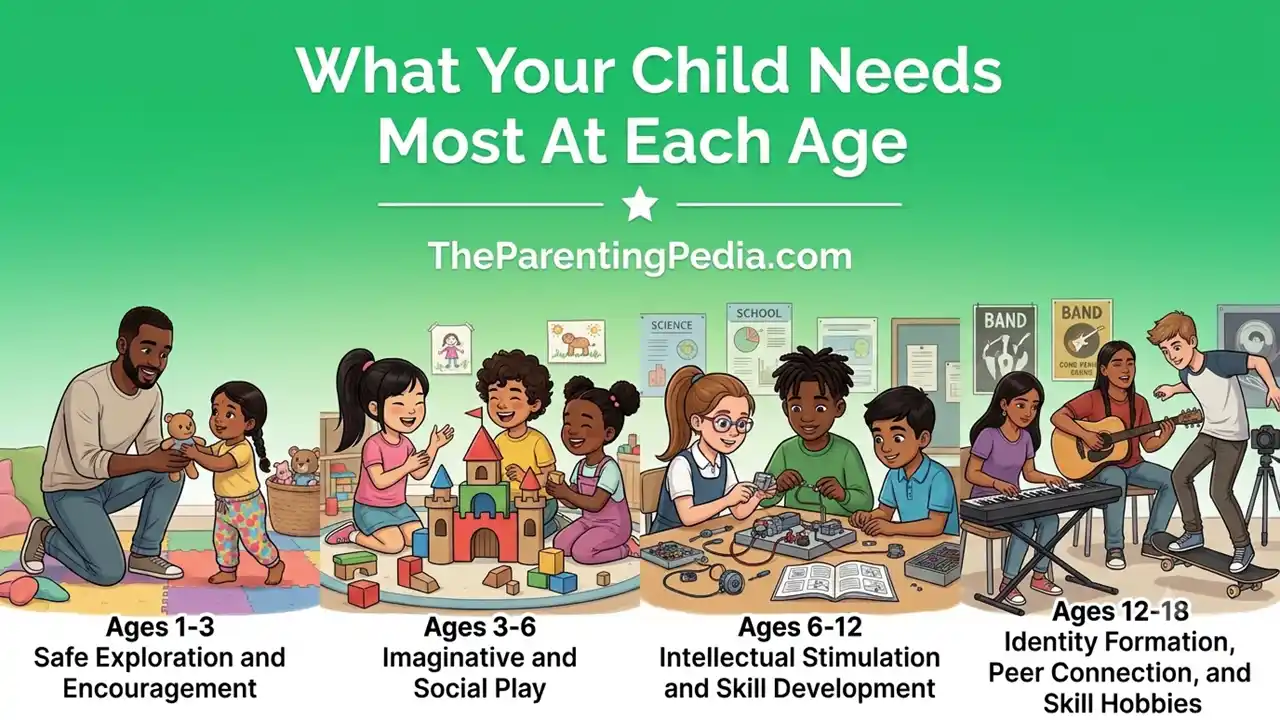
Every stage of childhood brings new questions. Babies need comfort and dependable care; toddlers want to explore; school-age children need encouragement and belonging; teenagers need independence alongside family support. Understanding what your child needs most at each age helps you adjust your guidance without comparing your child with others. This matters because a response that reassures a toddler may frustrate a teenager. A helpful guide makes room for those differences while respecting each child’s pace, personality and circumstances in daily life.
Table of Contents
Why children’s needs change
Children’s abilities, relationships and feelings change over time. A young child may need help naming an emotion; an older child may be ready to discuss a problem. Both need love, but in different forms.
Age ranges are guides, not deadlines. Development varies with temperament, experiences, disability and family circumstances. Notice what helps your child feel safe, capable and connected.

How to use this guide to understand what your child needs most at each age
Treat these stages as a flexible map, not a checklist your child must complete on schedule. Ask yourself what is changing now: does your child need more help with a skill, more chances to practise, reassurance after a setback or greater choice? What your child needs most at each age can also vary from one child to another, even within the same family. Adjust support to your child’s temperament, circumstances and current abilities.
Japan’s Children and Families Agency also highlights the importance of supporting development through its Vision for the First 100 Months of Development.
What your child needs at each stage
Birth to 12 months: Responsive care and security
Babies rely on adults for feeding, sleep, comfort and safety, and learn through warm interaction. Talk or sing during daily care, respond to your baby’s cues and offer safe opportunities to move and explore while awake. Smiling back when your baby makes a sound encourages early communication. Follow safe-sleep advice and attend routine health visits. Raise concerns about feeding, movement, hearing, vision or interaction with your baby’s healthcare professional.
1–3 years: Safe exploration and patient boundaries
Toddlers want to do things themselves but are still learning to communicate and manage strong feelings. Make spaces safe to explore, offer two simple choices and give clear instructions. During a meltdown, stay close: “You’re upset because playtime is over. I’m here.” Keep limits consistent without expecting adult-level self-control.
For more examples, read How to Guide Your Child’s Behavior. Reading, naming objects and involving your toddler in small tasks support learning and independence.
3–5 years: Play, language and emotional coaching
Preschoolers learn through play, conversation and relationships. Make time for pretend play, stories, drawing, outdoor activity and friendships. For practical conversation ideas, see How to Communicate Better With Young Children. Help name feelings: “You look disappointed that the game ended.” Practise taking turns and resolving small disagreements. Praise effort and kindness, not perfection. Discuss ongoing concerns about communication, social interaction or everyday skills with a health professional or early-childhood educator.
6–8 years: Encouragement, friendships and routines
Starting school brings new learning and social experiences. Take an interest without turning every conversation into a test about grades. Ask what was enjoyable or difficult about the day. Read together, protect playtime and practise simple responsibilities such as packing a school bag. Listen when friendship problems arise, then help your child consider kind and safe responses. Notice effort and progress, not only results.
9–11 years: Respect, responsibility and a listening ear
Children in this age group often want more say in routines, hobbies and friendships. Offer responsibilities, involve them in family decisions and explain rules. Discuss peer pressure, online behaviour and privacy. If your child shares a worry, avoid dismissing it or taking over. Ask, “Would you like me to listen, or help you think of a next step?”
For additional early-childhood guidance, explore South Africa’s National Parenting Support Programme for Children from Birth to Five Years, which provides support for parents and caregivers.
12–18 years: Trust, privacy and guided independence
Adolescence brings physical, emotional and social changes. Teenagers still need family support as they seek more privacy and time with friends. Keep communication open. Agree on fair safety and digital boundaries, then give responsibility as your teen shows readiness. Invite their views, even when you disagree. Independence grows when teenagers can practise decisions and know they can return for help.

Five needs that remain important at every age
At every age, return to these foundations. Children also learn by watching how adults speak and respond to others; explore Children Learn by Example: 7 Parenting Habits That Shape Their Future.
- Connection: Give attention and affection without making them conditional.
- Predictable limits: Set clear, age-appropriate rules and follow through calmly.
- Play and discovery: Protect time for play, interests, movement and curiosity.
- Healthy basics: Support sleep, nourishing food, movement and preventive healthcare.
- Being heard: Listen before judging, lecturing or trying to fix a feeling.
To understand what your child needs most at each age, combine these foundations with attention to the child in front of you. A quiet child may need gentle invitations to talk; an energetic child may need safe ways to move; a teenager may need privacy with agreed check-ins. Ask, observe and adjust.
A warm and supportive parenting approach can help you meet your child’s changing needs. Learn more about the power of positive parenting in child development.
When to seek extra support
Speak with your child’s doctor, school or another qualified professional about ongoing concerns involving development, communication, learning, behaviour or emotional wellbeing. Seek advice promptly if your child loses previously acquired skills or has a sudden, severe change. Milestone checklists can support conversations, but they are not a diagnosis or a way to rank children. Share what you have noticed so a professional can advise whether screening or support is appropriate.
Frequently Asked Questions
Do children need different things at different ages?
Yes. Babies need responsive care, younger children need safe exploration and help with feelings, school-age children need encouragement and belonging, and teenagers need support alongside growing responsibility and privacy.
What matters most for a child’s emotional development?
A dependable relationship matters. Listening, responding warmly, naming feelings and setting calm boundaries support children as they learn to manage emotions and relationships.
Should I compare my child with age-based milestones?
Use milestones as prompts for observation and discussion, not as a scorecard. Children develop at different rates. Discuss concerns or lost skills with a healthcare professional.
What should I look for to understand what your child needs most at each age?
Notice behaviour changes, listen and spend time together without distractions. Ask open questions. There is no single formula for what your child needs most at each age; begin by listening, then work out whether practical help, reassurance or space would be most useful.
Conclusion
Parenting changes as children grow, but the essentials remain: connection, safety, encouragement and a dependable adult who listens. Understanding what your child needs most at each age is about noticing who your child is becoming, not following a perfect timetable. Keep expectations realistic, offer age-appropriate freedom and seek guidance when worried. Your child does not need you to get every moment right; they need you to stay interested, responsive and willing to adapt. Small, steady responses matter more than perfect decisions.
Author’s Note
TheParentingPedia.com creates evidence-informed parenting content using trusted child-development and public-health resources. This article is for general educational purposes and is not a substitute for personalised advice from a qualified healthcare, mental-health or child-development professional. Consider having this article reviewed by a qualified child-development professional.
Sources & Further Reading

TheParentingPedia editorial team creates practical, research-informed parenting content to help parents navigate everyday challenges, child development, behavior, and family life. Our articles draw on reputable parenting and child-development sources and are reviewed for clarity, accuracy, and practical usefulness.