
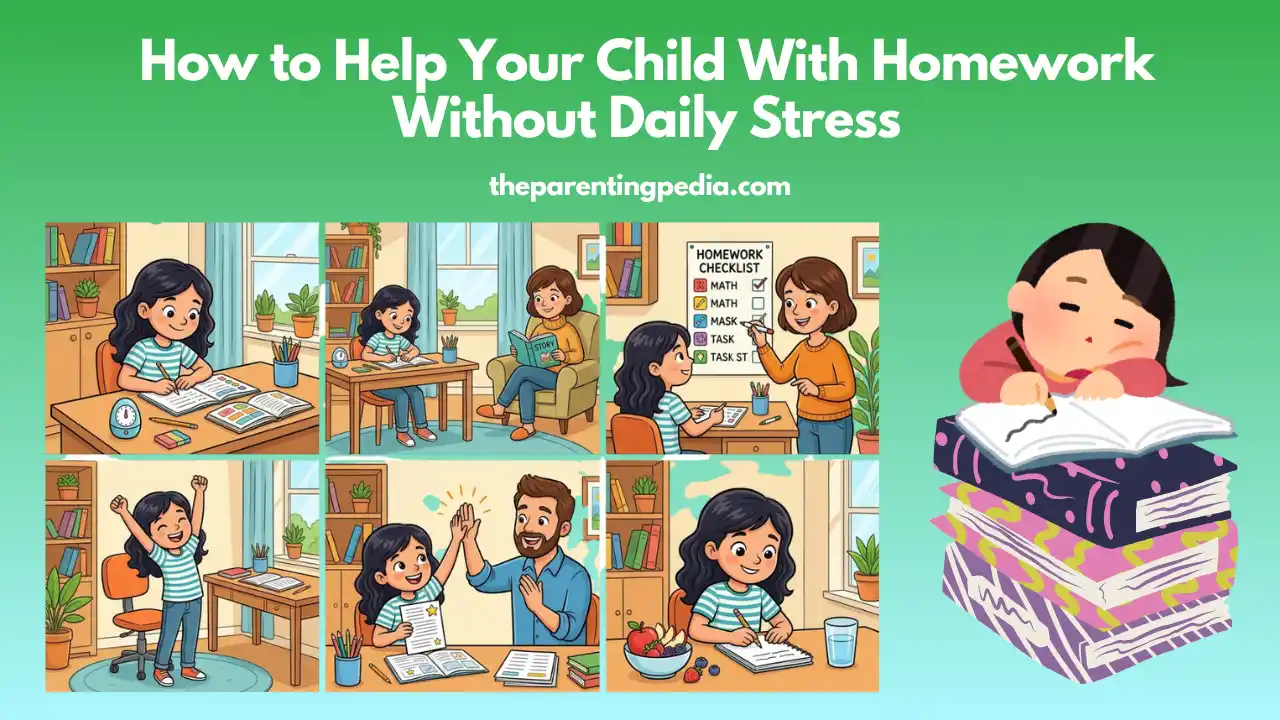
Every evening, many parents face the same challenge. Homework time begins with good intentions but often ends in frustration, arguments, excuses, or tears. If you’re trying to help your child with homework, it can be difficult when they are tired after school and you’re also juggling work, household responsibilities, and other daily tasks.
The good news is that homework does not have to be stressful. With a few simple habits and a positive approach, you can help your child with homework while keeping your home calm and encouraging learning instead of pressure.
Table of Contents
Why Homework Feels Stressful for Children
Homework is meant to help children practice what they learn in school. However, many children feel stressed because they are already tired after a full day of classes.
Some common reasons include:
- They don’t understand the lesson.
- There are too many distractions at home.
- They feel pressure to get every answer right.
- Homework takes longer than expected.
- Parents become frustrated when mistakes happen.
Understanding these reasons is the first step toward creating a better homework routine.
Educational experts generally recommend that parents guide children through homework instead of completing it for them.
This approach helps build confidence, problem-solving skills, and independent learning habits over time.
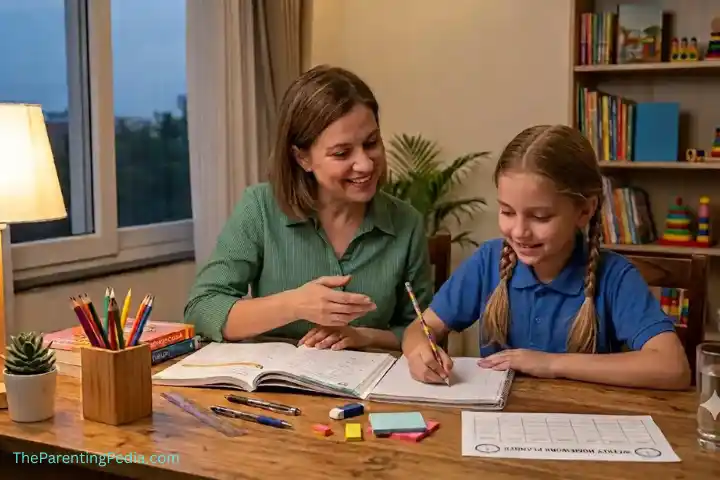
Create a Calm Homework Routine
A predictable routine helps children know what to expect every day.
Building a daily routine can make homework time much easier. Read our guide on morning routine for school going kids to help your child stay organized throughout the day.
Choose the Right Time
Allow your child to relax for 20–30 minutes after school before starting homework. A healthy snack or short playtime can help them recharge.
Pick a Quiet Study Area
Choose a place with:
- Good lighting
- Comfortable seating
- Minimal noise
- All school supplies nearby
Keeping the study area organized reduces distractions.
Help Without Doing the Homework
Many parents accidentally complete difficult questions for their children. While this may save time, it doesn’t help children learn.
Instead, try asking questions like:
- “What do you think the teacher explained?”
- “Can you solve the first step yourself?”
- “Which part seems difficult?”
These questions build confidence and problem-solving skills.
Praise Effort, Not Just Marks
Instead of saying,
“You got full marks!”
Try saying,
“I noticed how hard you worked today.”
Children who feel appreciated for their effort become more confident learners.
Break Homework Into Small Tasks
Large homework assignments can feel overwhelming.
Use Small Goals
For example:
- Finish one worksheet.
- Take a 5-minute break.
- Complete reading.
- Finish writing work.
Small goals make homework feel easier and help children stay motivated.
Reduce Distractions During Homework
Phones, television, toys, and loud conversations can easily distract children.
Simple Ways to Stay Focused
- Switch off the TV.
- Keep mobile phones away.
- Use only the books needed.
- Encourage short breaks after completing tasks.
A distraction-free environment improves concentration.
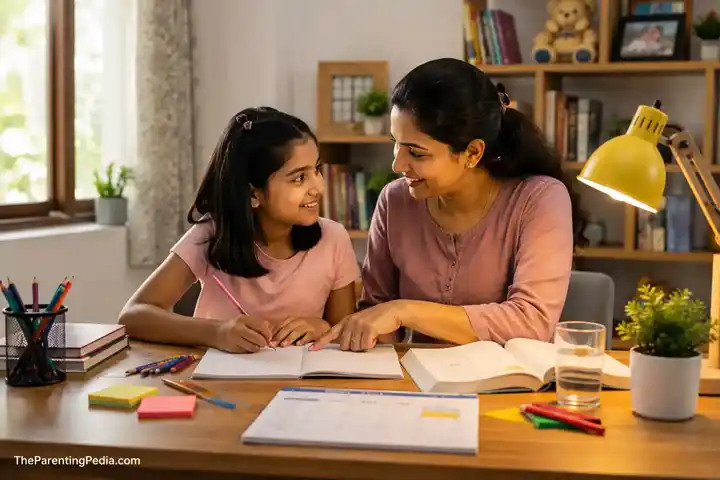
Encourage Independence
One of the biggest goals of homework is helping children become independent learners.
Let Them Solve Problems
If your child gets stuck, avoid giving the answer immediately.
Instead:
- Give hints.
- Explain the method.
- Encourage another attempt.
Children learn much more when they discover answers themselves.
If your child often ignores instructions, these practical tips on how to handle a child who doesn’t listen can help improve communication.
Celebrate Small Wins
Every completed assignment deserves encouragement.
Simple words like:
- “Well done.”
- “You kept trying.”
- “I’m proud of your effort.”
can greatly improve your child’s confidence.
Know When to Ask for Help
Sometimes homework stress isn’t about laziness.
If your child regularly:
- avoids homework,
- becomes anxious,
- cries frequently,
- or struggles in one subject,
consider speaking with the teacher. Teachers can explain classroom expectations and suggest additional support if needed.
Working together with teachers creates the best learning experience for children.
For more practical homework support and parent resources, visit UNICEF Parenting.
💡 Remember: Your goal isn’t perfect homework—it’s helping your child become a confident, independent learner. Praise effort, stay patient, and let your child solve problems with your guidance instead of doing the work for them.
Simple Homework Tips for Parents
Here are a few easy habits that make homework time smoother:
- Keep a regular homework schedule.
- Avoid comparing your child with others.
- Encourage questions.
- Give healthy snacks before homework.
- Celebrate progress instead of perfection.
- Stay calm even when mistakes happen.
Remember, learning takes time. Patience is one of the best gifts you can give your child.
FAQs
How long should homework take each day?
Ans: It depends on your child’s age, but most primary school children benefit from 20–60 minutes of focused homework.
Should I help my child with every homework questio
Ans: No. Guide your child when needed, but encourage them to solve problems independently.
What if my child refuses to do homework?
Ans: Stay calm, understand the reason, and break homework into smaller tasks instead of forcing them.
Is it okay to take breaks during homework?
Ans: Yes. Short 5-minute breaks after completing tasks can improve focus and reduce stress.
How can I motivate my child to finish homework?
Ans: Praise effort, create a routine, and celebrate small achievements rather than focusing only on marks.
When should I talk to my child’s teacher about homework?
Ans: Speak with the teacher if your child consistently struggles, feels anxious, or spends much longer than expected on homework.
Helping children manage homework becomes easier when they know how to plan their day. Read our article on time management for children for more useful ideas.
Conclusion
Helping your child with homework does not mean sitting beside them every minute or solving every problem. It means creating a calm routine, offering guidance, and encouraging independence.
When children feel supported instead of pressured, homework becomes an opportunity to learn, grow, and build confidence. Small daily changes can make homework time less stressful for both parents and children.
Reviewed by The Parenting Pedia Editorial Team | Updated July 2026

TheParentingPedia editorial team creates practical, research-informed parenting content to help parents navigate everyday challenges, child development, behavior, and family life. Our articles draw on reputable parenting and child-development sources and are reviewed for clarity, accuracy, and practical usefulness.