Think about a typical weekday for a child.
School in the morning. Homework in the afternoon. Perhaps soccer practice, piano lessons, tutoring, or another activity after that. Then dinner, a little screen time, getting ready for bed—and suddenly the day is over.
There may be very little time when a child can simply ask, “What do I want to do now?”
That quiet, unplanned part of childhood is easy to overlook. Parents naturally want to give their children opportunities to learn, grow, stay active, and prepare for the future. But children also need time when nobody is telling them what to do.
That is where free time for kids becomes important.
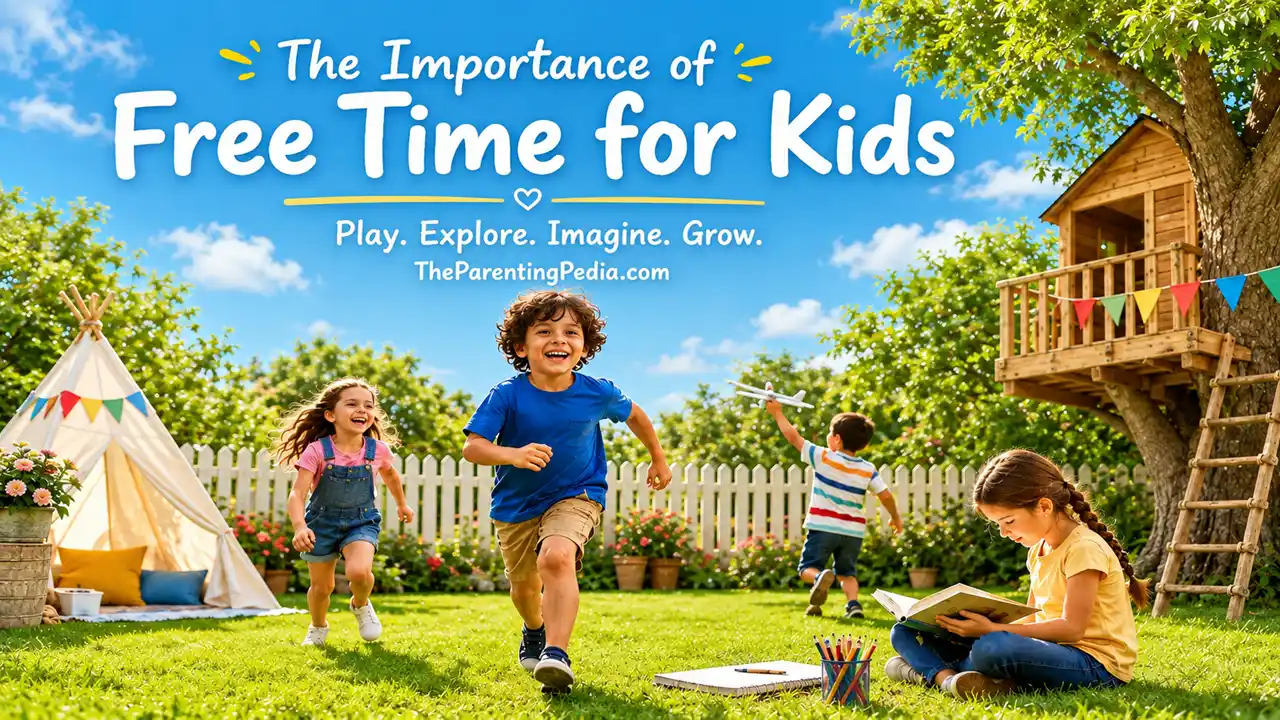
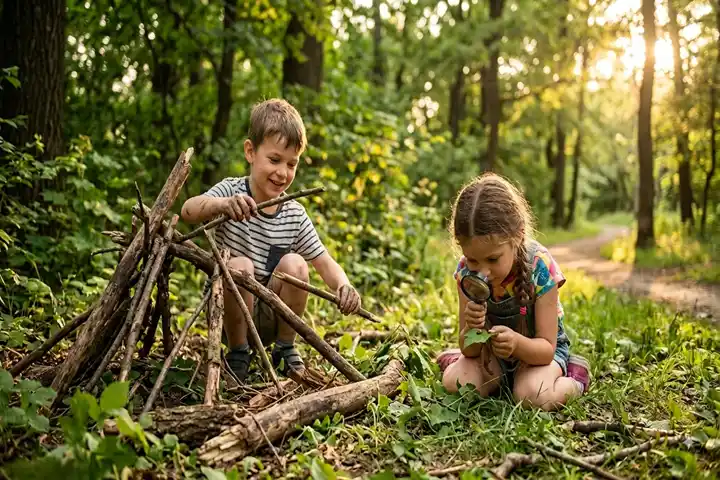
Free time does not mean children should spend hours watching television or scrolling through a tablet. It means having some unstructured time to play, imagine, explore, talk, daydream, read, build something, go outside, or simply do nothing for a while.
Research and guidance from the American Academy of Pediatrics and UNICEF highlight the developmental value of play, including opportunities for creativity, problem-solving, social-emotional development, independence, and healthy relationships.
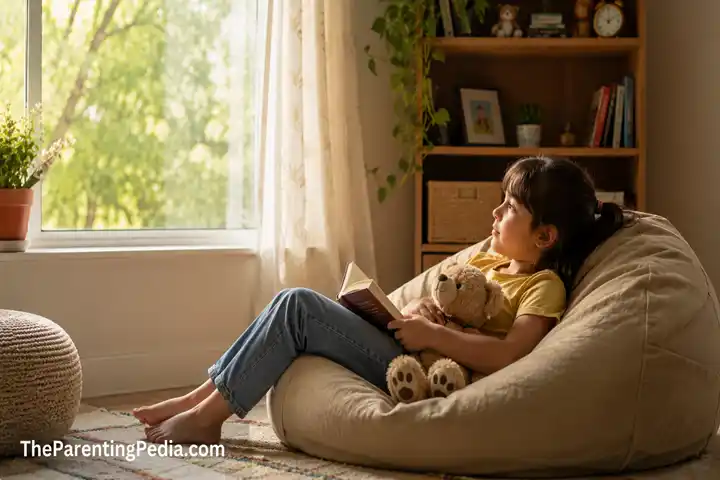
Table of Contents
Why Do Kids Need Free Time?
Children learn from structured activities, but they also learn when adults step back and let them take the lead.
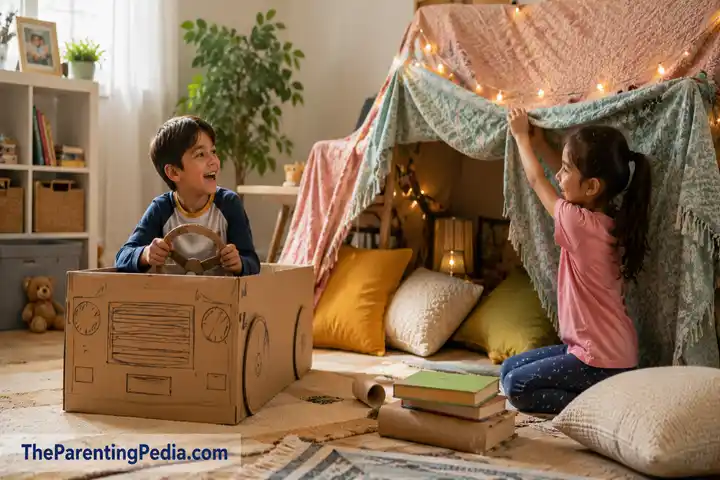
During free play, a child might turn a cardboard box into a spaceship, invent a game with siblings, build a strange-looking tower from blocks, or spend twenty minutes drawing something that makes perfect sense only to them.
There is no worksheet. No grade. No correct answer.
That freedom matters.
UNICEF explains that free play gives children the opportunity to choose what they play with, how they play, and what direction their play takes. This can support imagination, independence, creativity, and problem-solving.
The American Academy of Pediatrics similarly describes play as important for children’s cognitive, physical, social, and emotional well-being.
In other words, free time isn’t necessarily “doing nothing.”
Sometimes, it is when children are doing some of their most important growing.
The American Academy of Pediatrics explains that play supports children’s social-emotional, cognitive, language and self-regulation skills, making unstructured play an important part of healthy development.
Free Time Gives Children Room to Be Creative
Creativity needs breathing room.
When every part of a child’s day is planned, there may be fewer opportunities to invent something independently.
Imagine a child who comes home from school and says, “I’m bored.”
A parent’s first reaction might be:
“Go do your homework.”
Or:
“Here, watch something.”
But boredom isn’t always a problem that needs to be immediately solved.
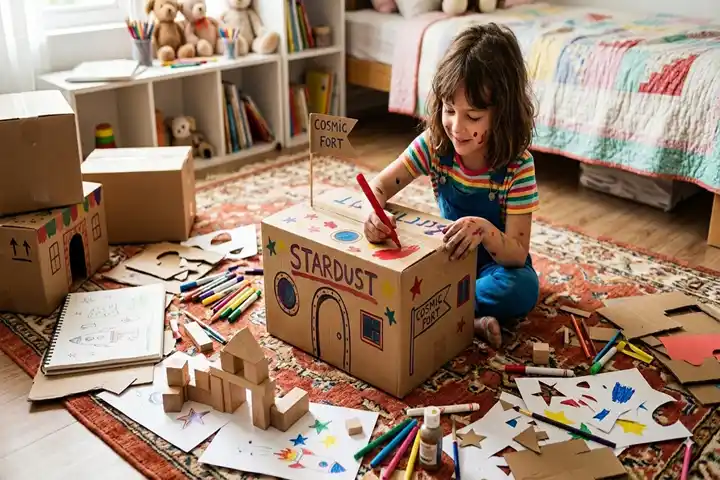
A child who has nothing planned might eventually find a cardboard box, some crayons, a blanket, and a few toy figures—and suddenly create an entire imaginary world.
That process is valuable.
The child is deciding what to do, experimenting, changing plans, solving little problems, and using imagination.
UNICEF notes that children can express creativity differently during free play; one child may want to draw while another prefers puzzles or independent play.
Child Mind Institute notes that imaginative, social and outdoor play can support children’s cognitive, social, emotional, physical and creative development.
Don’t Turn Every Free Moment Into a Lesson
Parents sometimes feel pressure to make every activity educational.
But free play doesn’t always need a learning objective.
You don’t have to say:
“Let’s count the blocks.”
“Let’s practice vocabulary.”
“Let’s learn about colours.”
Sometimes, simply allowing your child to build, pretend, explore, and make mistakes is enough.
Free Time Can Help Children Become More Independent
When adults constantly organize children’s activities, children may become accustomed to waiting for instructions.
Free time gives them a chance to make small decisions for themselves.
They might decide:
- what game to play
- which toy to use
- whether to play alone or with a sibling
- how to solve a problem
- when to change activities
- what story to invent
These may seem like tiny choices, but childhood is full of opportunities to practise independence.
UNICEF highlights independent play as an opportunity for children to use their imagination, solve problems, and begin developing independence from an early age.
Free Time Gives Kids a Break From Constant Pressure
Children can feel pressure too.
Schoolwork, tests, sports, competitions, social expectations, activities, and even pressure to perform well can make a child’s day feel like a series of responsibilities.
The goal isn’t to remove every structured activity.
Sports, music, clubs, lessons, and academic support can all be valuable.
The problem comes when there is no breathing space between them.
The American Academy of Pediatrics has specifically discussed the need to balance enrichment and achievement with free, unscheduled time, noting that some children may experience stress when life becomes excessively hurried or pressured.
A child needs moments when they aren’t being evaluated.
They don’t need to win.
They don’t need to get a grade.
They don’t need to impress anyone.
They can simply be themselves.
Parents can also reduce daily pressure by creating calmer routines around schoolwork, as explained in our guide on how to help your child with homework without daily stress
How Much Free Time Do Kids Need?
There isn’t one perfect number of minutes that works for every child.
A younger child’s needs will be different from those of a teenager. Family schedules, school demands, extracurricular activities, personality, and age all matter.
Instead of obsessing over an exact number, parents can ask:
“Does my child have some regular time during the day when they can choose what to do?”
If the answer is always no, the family schedule may need some adjustment.
Even small pockets of unstructured time can make a difference.
Twenty minutes after school may be better than nothing.
A relaxed Saturday morning may provide more freedom than a tightly scheduled weekend.
The goal is not to create another item on your parenting checklist.
The goal is to create space.
The American Academy of Pediatrics’ updated 2026 guidance emphasizes that school recess is an important part of children’s learning, healthy development and well-being, rather than simply extra time away from class.
How Parents Can Create More Free Time for Kids
You don’t necessarily need to cancel every activity or completely change your family’s routine.
Start small.
Look at the Weekly Schedule
Take a quick look at your child’s week.
Are there activities that your child genuinely enjoys?
Are there activities they constantly resist?
Is every afternoon filled?
You may discover that one or two small changes can create more breathing room.
Protect Some Screen-Free Time
Free time becomes less useful if every unstructured moment automatically becomes screen time.
Try creating periods when your child can choose from books, toys, drawing, outdoor play, music, crafts, or simply talking with family members.
Creating a healthy balance between technology and other activities is also important, and parents can learn more about setting healthy limits in our guide to how to say no to kids without feeling guilty.
Keep Simple Materials Available
You don’t need expensive toys.
A cardboard box, paper, crayons, blocks, puzzles, balls, blankets, and household objects can become starting points for imaginative play.
The American Academy of Pediatrics has noted that simple toys can encourage imagination more effectively than some highly passive toys.
Let Your Child Be Bored Sometimes
This may be one of the hardest things for parents.
Your child says, “I’m bored.”
You feel responsible for fixing it.
But you don’t always have to.
You can calmly say:
“That’s okay. You can think of something to do.”
Then give your child some time.
They may complain at first.
Then something interesting often happens.
They start creating their own idea.
What If My Child Doesn’t Know How to Use Free Time?
This is common, especially if a child is used to constant entertainment or adult direction.
Don’t expect them to suddenly become experts at independent play.
Start with short periods.
You might say:
“I’m going to finish making dinner. You can choose something to do for the next 15 minutes.”
If they ask what they should do, offer two or three possibilities rather than planning the entire activity.
“Would you like to draw, build something, or play outside?”
Over time, gradually step back.
The aim is for your child to discover that they can create their own fun.
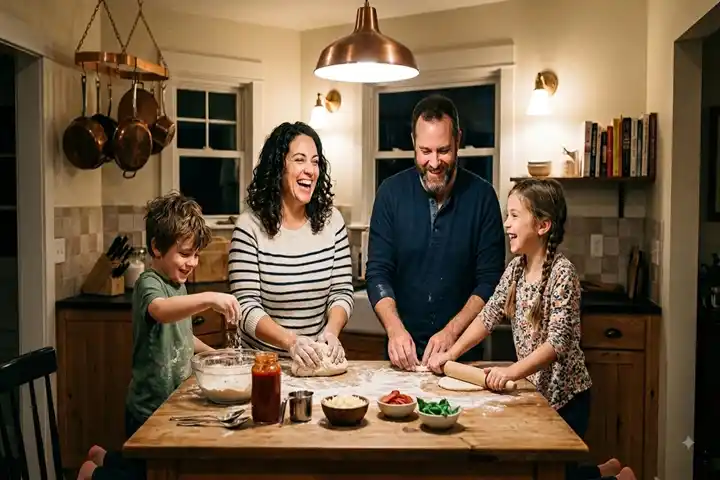
Free Time Is Not Wasted Time
Perhaps the most important message for parents is this:
Free time for kids isn’t time stolen from learning.
Play itself can be a way of learning.
Children practise communication, decision-making, creativity, movement, cooperation, problem-solving, and emotional skills while playing. The AAP’s clinical guidance also emphasizes that play supports executive function and social-emotional development.
So when your child spends twenty minutes building a fort from sofa cushions, don’t automatically think:
“They should be doing something productive.”
They may already be doing something productive.
It just doesn’t look like traditional work.
FAQs:
Is free time the same as screen time?
No. Free time can include screens, but unstructured time is more beneficial when children also have opportunities for imaginative, physical, social, and independent activities.
Should parents play with their children all the time?
No. Parent-child play is valuable, but children also benefit from opportunities to play independently and make their own choices.
What if my child says they are bored?
Don’t feel pressured to solve boredom immediately. Give your child time and a few safe options, then allow them to decide what to do.
Can teenagers benefit from free time too?
Absolutely. Older children and teenagers also need some unscheduled time to relax, pursue interests, spend time with friends or family, and decompress from school and other responsibilities. The AAP has emphasized that older children and adolescents need some available free time as part of a healthy balance.
Conclusion
Childhood doesn’t have to be filled from morning until bedtime.
Children need opportunities to learn, practise skills, participate in activities, and develop their interests. But they also need room to breathe.
Free time for kids gives them a chance to make choices, explore their imagination, experience boredom, solve their own little problems, and simply enjoy being children.
So the next time your child has nothing scheduled for an hour, don’t automatically see that empty space as something that needs filling.
Sometimes, an empty afternoon is exactly what a growing child needs.
Author’s Note:
At TheParentingPedia, we create evidence-informed parenting content designed to help parents and caregivers make confident decisions. This article draws on guidance from trusted child-development and pediatric resources and is written in simple, practical language for families.

TheParentingPedia editorial team creates practical, research-informed parenting content to help parents navigate everyday challenges, child development, behavior, and family life. Our articles draw on reputable parenting and child-development sources and are reviewed for clarity, accuracy, and practical usefulness.