The school bus is due, shoes are missing, and your voice suddenly rises. A moment later, your child is silent and you feel guilty. If this sounds familiar, you may be wondering what to do after you yell at your child. You cannot rewind the moment, but you can respond with care and accountability. Repair means acknowledging the shouting, listening to your child, and choosing a better response next time. One mistake is not the same as a repeated pattern, but repair works best when followed by change.
Table of Contents
Why Repair Matters After Yelling
Your child may cry, go quiet, argue back, or act as if nothing happened. Ask how they feel rather than guessing. The American Academy of Pediatrics advises parents to cool down, apologise after handling a situation poorly, and explain how they will respond differently. Its guidance warns that yelling or shaming is ineffective and can harm children’s mental health.
A longitudinal study of 976 two-parent families linked harsh verbal discipline at age 13 with increased conduct problems and depressive symptoms by age 14. The study focused on adolescents and does not predict the outcome of one outburst; it reinforces why harsh verbal discipline should not become a pattern.
What to Do After You Yell at Your Child
If you are trying to work out what to do after you yell at your child, use these steps. You do not need a perfect speech; you need a calm, honest response.
1. Calm Yourself Before You Try to Fix It
If your child is safe, pause before continuing. Take a few slow breaths, drink water, or step away briefly. Tell your child you will return when you are calmer: “I’m upset, so I’m taking a minute. Then we’ll talk.”

2. Check How Your Child Is Feeling
When you are calmer, approach gently and notice your child’s response. They may cry, go quiet, seem angry, or act as though nothing happened. Try: “I shouted, and that may have felt upsetting. How are you feeling?” Listen without arguing about their feelings. If they are not ready to talk, give them time and show through your actions that the conversation is safe.
The UK’s NHS offers further guidance on talking to children about feelings, including allowing them time to open up when they are not ready to talk.
3. Apologise for Shouting Without Making Excuses
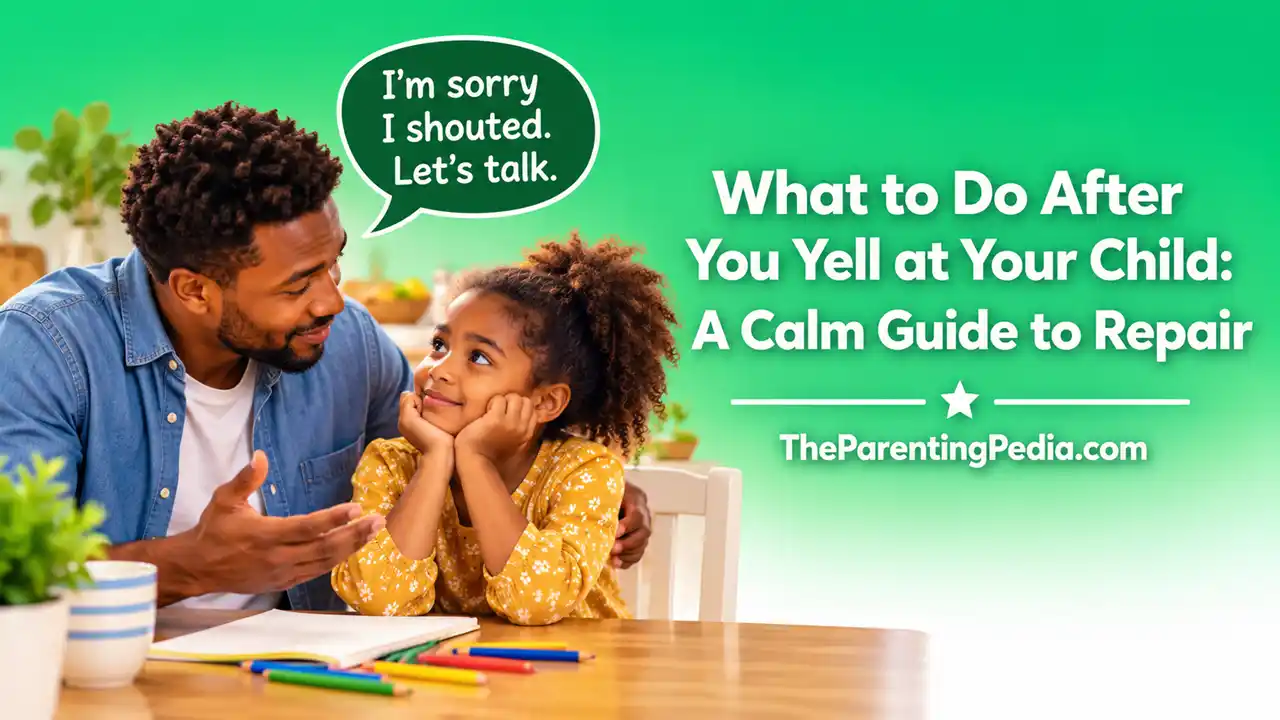
Offer a simple apology that takes responsibility: “I’m sorry I shouted at you. I was frustrated, but shouting was not a respectful way to speak to you.” Avoid “you made me angry,” which shifts responsibility onto your child. You can acknowledge anger without apologising for the feeling itself. Part of what to do after you yell at your child is to own your reaction without asking your child to comfort you or forgive you immediately.
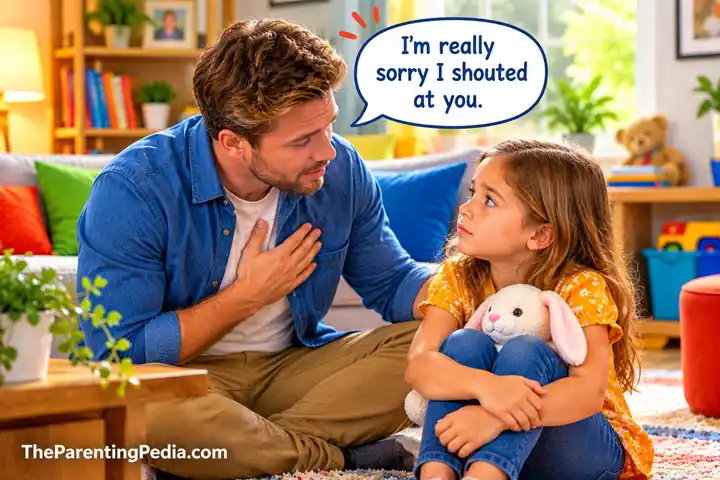
4. Keep the Boundary, If the Rule Still Matters
Apologising does not mean every limit must disappear. If shoes still need to be found, say: “I’m sorry I raised my voice. We still need your shoes. Let’s look together.” You can take responsibility for shouting while keeping a reasonable rule in place. Do not impose a harsher consequence out of guilt.
Learning what to do after you yell at your child means separating behaviour from the relationship. Correct a choice without labelling your child. For firm, respectful guidance, read our guide to positive discipline alternatives to punishment.
5. Reconnect Without Forcing a Hug or Forgiveness
After apologising, offer warmth in a way that fits your child. A younger child may want a cuddle; an older child may prefer space or a quiet conversation later. Ask before hugging if you are unsure, and do not insist they say “it’s okay” to comfort you. The goal is to show that you can listen after a difficult moment.
6. Talk Later and Make a Realistic Plan
When everyone is settled, briefly revisit what happened. Ask what made the situation difficult and explain what you will try next time. Perhaps mornings are rushed, or you shout when tired. Pick one change, such as preparing school items the night before or pausing for three breaths. Keep the promise realistic; repeated apologies without changed behaviour can lose meaning.
If anger is building up often, read our guide to understanding parental anger to explore common triggers that can make patience harder.
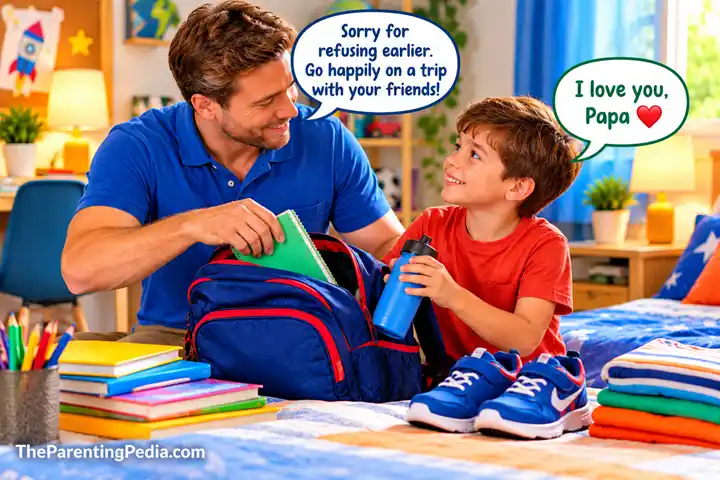
Common Mistakes to Avoid After Yelling
Do not pretend nothing happened if your child was affected. Avoid giving treats to relieve guilt, lecturing while emotions are high, or asking your child to reassure you. Harsh self-criticism is not helpful either. Let guilt remind you to repair, then focus on the next useful action.
How to Reduce the Chances of Yelling Next Time
Notice your triggers early. These adjustments may help:
- Notice early warning signs. A tight jaw or racing heart can be a cue to pause.
- Plan for pressure points. Prepare school items the night before and leave extra time for rushed mornings.
- Use clear words. Get your child’s attention and give one age-appropriate instruction instead of shouting across the room.
- Practise slow breathing and a calming phrase before a conflict, when you are already settled.
- Look after your own stress. Rest, shared caregiving, and breaks may reduce the pressure that builds up.
You can also try the strategies in our guide to getting your child to listen without repeating yourself. These habits may make shouting less likely over time.
When to Seek Extra Support
Speak with a doctor, counsellor, or qualified parenting professional if you yell frequently, struggle to control your anger, or worry you may hurt your child. If anyone may be in immediate danger, seek local emergency help. Asking for support is a practical step toward safety and change.
For more ideas on communication, emotional expression, and positive discipline, explore NICRO’s positive parenting resources in South Africa.
Frequently Asked Questions
What to do after you yell at your child if they are still upset?
Calm down, apologise, and listen. Give your child time rather than demanding instant forgiveness.
Should I apologise even if my child misbehaved?
Yes. Take responsibility for shouting while still addressing your child’s behaviour. An apology does not remove an appropriate boundary; it models accountability and respectful communication.
Is it too late to apologise the next day?
No. A next-day apology still matters. Be specific about what you regret and what you will try to change.
When should I get help with anger?
Seek support if yelling is frequent, arguments are escalating, or you fear you could harm your child. A professional can help you identify triggers and plan safer responses.
Conclusion
Knowing what to do after you yell at your child means pausing, apologising, listening, keeping reasonable boundaries, and reconnecting. You do not have to parent perfectly, but repeated shouting deserves change. Begin with one repair today and one realistic adjustment for tomorrow.
Author’s Note
TheParentingPedia.com creates evidence-informed parenting content using trusted public-health guidance, child-development resources, and relevant research. This article is for general education and does not replace personalised advice from a qualified professional. Consider review by a qualified child-development professional before publication.
Sources & Further Reading
- American Academy of Pediatrics, HealthyChildren.org — What’s the Best Way to Discipline My Child?
- Raising Children Network — Anger management for parents
- UNICEF Asia-Pacific — How to stay calm during stressful parenting moments
- Wang, M.-T. & Kenny, S. (2014). Longitudinal Links Between Fathers’ and Mothers’ Harsh Verbal Discipline and Adolescents’ Conduct Problems and Depressive Symptoms. Child Development, 85(3), 908–923.

TheParentingPedia editorial team creates practical, research-informed parenting content to help parents navigate everyday challenges, child development, behavior, and family life. Our articles draw on reputable parenting and child-development sources and are reviewed for clarity, accuracy, and practical usefulness.