A good student is not simply a child who gets high marks, completes homework on time, or always stands first in class. True learning goes beyond textbooks and examinations. It involves developing curiosity, thinking independently, making honest choices, and understanding how to manage learning effectively.
As parents, we play an important role in shaping these abilities. The qualities of a good student develop gradually through everyday experiences, encouragement, conversations, and opportunities to learn. Instead of focusing only on academic results, parents should help children build habits and values that will support them throughout life.
Table of Contents
What Makes a Child a Good Student?
Every child has a different personality, learning style, strengths, and interests. Some children understand concepts quickly, while others need more time and practice. Neither makes a child better or worse.
A good student is someone who remains interested in learning, makes an effort to understand new ideas, accepts mistakes, and takes responsibility for their work.
Academic achievement is important, but it should not become the only measure of a child’s ability. Developing the right learning habits and values can help children become confident, responsible, and independent learners.
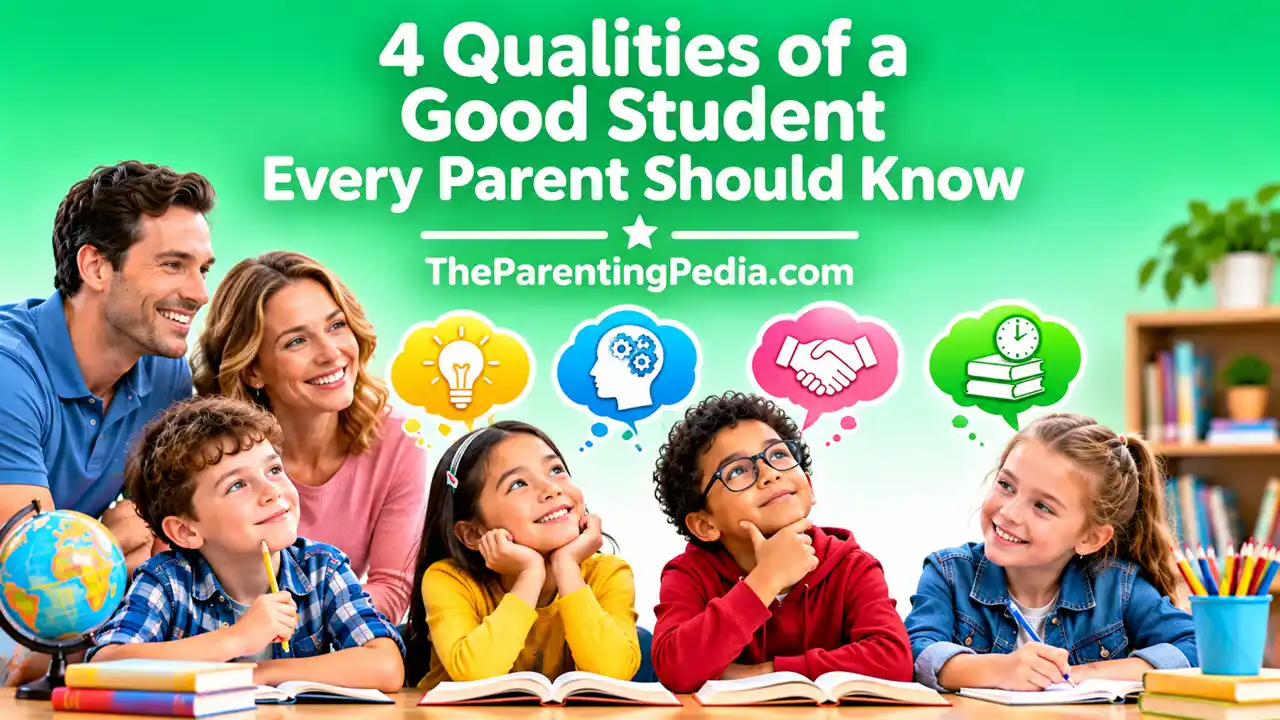
4 Important Qualities Every Good Student Should Develop
Here are four essential qualities parents can encourage in their children through simple activities and everyday interactions.
1. Curiosity – The Desire to Learn
Curiosity is one of the most valuable qualities a student can develop. Curious children naturally want to understand how things work, why something happens, and what they can discover next.
For example, when a child sees a rainbow, they might ask, “How do different colours appear in the sky?” Instead of simply giving a short answer, parents can explain the basic idea, show a picture, or explore the topic together.
How parents can encourage curiosity:
- Welcome your child’s questions instead of dismissing them.
- Read interesting books and stories together.
- Encourage exploration through educational games and experiments.
- Visit museums, libraries, parks, and interesting places.
- Allow children to explore topics that genuinely interest them.
You can also encourage curiosity through educational games for kids at home.
Remember, children should feel comfortable asking questions, even when those questions seem simple or unusual. Their questions are opportunities to learn.
2. Critical Thinking – The Ability to Think Independently
A good student should not simply memorise information and repeat it during examinations. Children also need to understand what they learn, examine information, and develop their own opinions.
Critical thinking helps children compare ideas, identify mistakes, consider different viewpoints, and find sensible solutions to problems.
For example, if your child reads a story in which two friends disagree, ask, “Why do you think they behaved differently? What could they have done to solve the problem?”
Such conversations encourage children to look beyond the obvious answer.
Singapore’s Ministry of Education also emphasises critical, adaptive and inventive thinking, along with responsibility and integrity, as important competencies for students preparing for the future.
How parents can develop critical thinking:
- Ask open-ended questions such as “What do you think?” and “Why?”
- Encourage children to explain their answers.
- Let them solve age-appropriate puzzles and problems.
- Discuss everyday situations and different possible solutions.
- Teach them to check information instead of believing everything they see online.
Avoid immediately correcting every answer. Give your child time to think, explain, and sometimes change their opinion.
3. Integrity – Honesty and Strong Moral Values
Academic knowledge is important, but honesty and good character are equally valuable. A child who understands the importance of integrity learns to take responsibility for their actions.
For example, imagine your child receives low marks in a test. Instead of admitting that they did not prepare properly, they blame the teacher or make excuses.
This is an opportunity to teach honesty without making the child feel ashamed.
Explain that making mistakes is normal, but hiding mistakes or cheating does not help anyone learn.
How parents can encourage integrity:
- Teach children to tell the truth, even when it is difficult.
- Discourage copying homework or cheating during examinations.
- Encourage them to admit mistakes and accept responsibility.
- Appreciate honest behaviour, even when the result is not perfect.
- Demonstrate honesty through your own everyday actions.
Children learn many values by observing their parents. When adults admit their mistakes, keep promises, and treat others fairly, children receive powerful examples of responsible behaviour.
Read more about how children learn by example.
4. Knowing When Enough Is Enough – Learning to Maintain Balance
Being dedicated to studies is good, but children should also understand that studying endlessly or trying to achieve perfection is not healthy.
Some children spend too much time correcting small mistakes, worry excessively about marks, or become disappointed when their work is not perfect.
Parents should teach children that doing their best is more important than achieving perfection in everything.
For example, if your child has completed homework carefully, checked the answers, and followed the instructions, encourage them to finish the task rather than repeatedly checking the same work.
How parents can encourage a healthy balance:
- Help children set realistic study goals.
- Encourage short breaks between study sessions.
- Teach them to prioritise important tasks.
- Allow sufficient time for hobbies, play, and relaxation.
- Appreciate effort and improvement instead of demanding perfection.
Children should understand that education is a lifelong journey. They do not need to know everything or accomplish everything in one day.
Children also need enough free time to relax, explore their interests and enjoy unstructured play. Learn more about the importance of free time for kids and how it supports their overall development.
How Parents Can Help Children Develop These Qualities
Parents do not need expensive educational materials or complicated learning programmes to encourage these abilities. Small, consistent efforts at home can make a meaningful difference.
Finland’s National Core Curriculum for Basic Education emphasises thinking, learning how to learn, problem-solving, student participation, and taking responsibility for schoolwork, highlighting the importance of developing skills beyond academic knowledge.
| Everyday parenting habit | What children can learn |
|---|---|
| Asking questions during conversations | Curiosity |
| Discussing different solutions to problems | Critical thinking |
| Encouraging honesty and responsibility | Integrity |
| Following realistic daily routines | Balance and self-management |
| Appreciating effort and improvement | Confidence and motivation |
Here are some additional ways to support your child’s learning:
- Create a positive learning environment: Provide a comfortable space where children can read, study, and explore their interests.
- Listen to your child: Give children opportunities to express their thoughts without fear of criticism.
- Avoid unnecessary comparisons: Every child develops at a different pace. Comparing children with siblings or classmates can create unnecessary pressure.
- Encourage independent learning: Guide children when they need help, but allow them to complete age-appropriate tasks themselves.
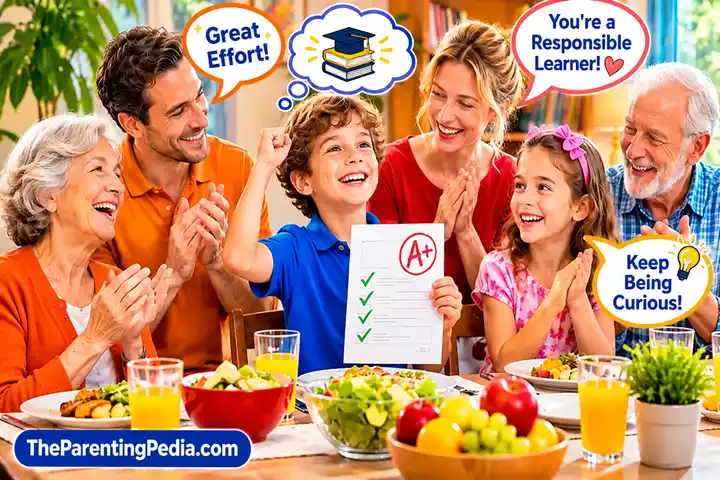
- Celebrate small improvements: Recognise effort, honesty, persistence, and progress rather than focusing only on examination results.
The OECD’s PISA research also highlights a positive association between parental involvement, students’ motivation, and their learning strategies. Everyday conversations about school and learning can make a meaningful contribution.
Common Parenting Mistakes to Avoid
Even well-intentioned parents sometimes create unnecessary academic pressure. Avoid these common mistakes:
- Expecting children to achieve top marks in every examination.
- Comparing their performance with other children.
- Punishing them for asking questions or making mistakes.
- Completing homework on their behalf.
- Ignoring their interests outside academics.
- Making children feel that their worth depends on their grades.
Instead, create an environment where children feel supported, respected, and encouraged to improve.
Frequently Asked Questions
1. What are the most important qualities of a good student?
Curiosity, critical thinking, integrity, and the ability to maintain a healthy balance are four important qualities. They help children become responsible and independent learners.
2. Can a child be a good student without getting high marks?
Yes. Examination results are only one measure of academic performance. A child can demonstrate curiosity, honesty, consistent effort, and a genuine interest in learning even when their marks are average.
3. How can parents motivate children to become better students?
Parents can motivate children by appreciating their efforts, encouraging questions, providing learning opportunities, and setting realistic goals. Avoid using comparisons or excessive pressure.
4. At what age should parents start developing good learning habits?
Parents can begin encouraging curiosity, honesty, and simple learning habits during the early years. Activities and expectations should be appropriate for the child’s age and abilities.
5. Why is critical thinking important for schoolchildren?
Critical thinking helps children understand information, solve problems, consider different viewpoints, and make informed decisions. These abilities are useful both inside and outside the classroom.
Conclusion
A child’s education should be about much more than examination results. Curiosity, independent thinking, honesty, and a healthy approach to learning can help children develop skills that remain valuable throughout life.
Parents can nurture these abilities through everyday conversations, positive examples, encouragement, and patience. Remember, every child learns differently and develops at their own pace. Focus on helping your child become a confident, responsible, and enthusiastic learner rather than expecting perfection.
Author’s Note
This article is intended to help parents understand that being a good student involves more than achieving high marks. Every child has different strengths, interests, and learning abilities. Parents are encouraged to nurture curiosity, independent thinking, honesty, and a healthy approach to learning through everyday activities and positive guidance. The goal is to help children become confident, responsible, and lifelong learners.
Sources & References
The following resources were consulted to support the educational guidance and research discussed in this article:
1. Harvard Gazette: What Makes a Good Student? – Perspectives on curiosity, critical thinking, integrity, and learning.
2. OECD: PISA 2022 Results – Volume V – Research on students, learning experiences, and parental involvement.
3. UNESCO: A Family Guide for the Digital Age – Educational resources relating to digital literacy and responsible learning.

TheParentingPedia editorial team creates practical, research-informed parenting content to help parents navigate everyday challenges, child development, behavior, and family life. Our articles draw on reputable parenting and child-development sources and are reviewed for clarity, accuracy, and practical usefulness.