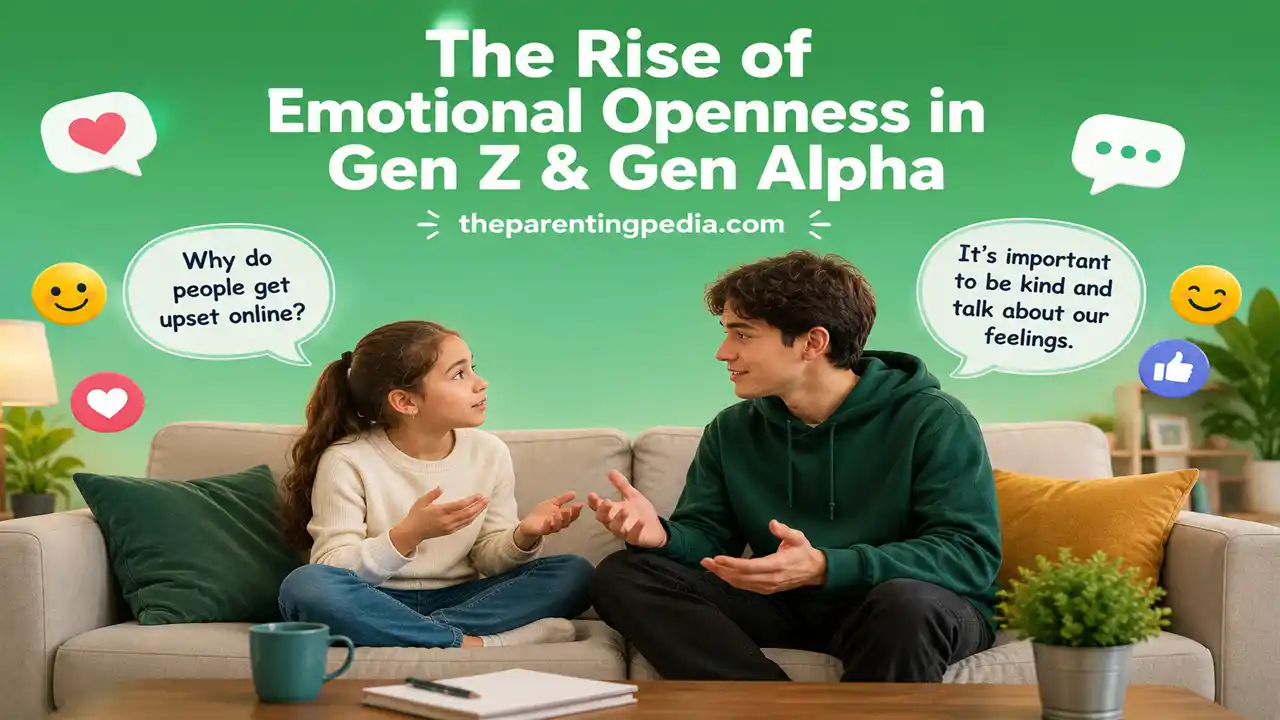
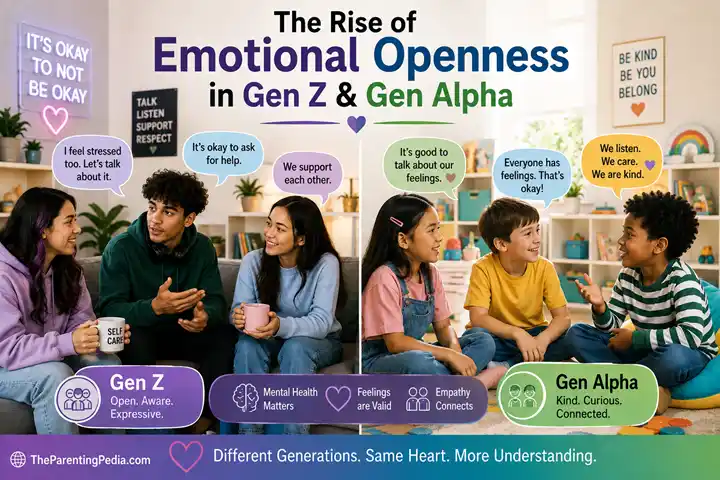
Today’s children are growing up in a world where talking about feelings is more accepted than ever before. Emotional Openness in Gen Z and Gen Alpha is helping children express their emotions more confidently, thanks to the support of parents, teachers, schools, and social media.
As children become more comfortable sharing their thoughts and feelings, they develop stronger confidence, empathy, and healthier relationships. In this guide, you’ll discover why Emotional Openness in Gen Z and Gen Alpha is increasing and how parents can encourage healthy emotional development at home.

Table of Contents
What Is Emotional Openness?
Emotional openness is the ability to recognise, express, and discuss feelings honestly without fear of being judged. It doesn’t mean sharing every emotion with everyone. Instead, it means feeling safe enough to communicate emotions in healthy and respectful ways.
Children who are emotionally open are more likely to:
- Express their feelings using words.
- Ask for help when they need support.
- Show empathy towards others.
- Build healthy friendships.
- Develop confidence and resilience.
Emotional openness is a skill that develops over time through supportive parenting, positive relationships, and everyday conversations.
Parents can strengthen these conversations at home by practicing positive parenting techniques that encourage trust, empathy, and respectful communication.
Why Emotional Openness Matters
Children experience many emotions every day, from excitement and happiness to disappointment, fear, and frustration.
When they learn that these feelings are normal, they’re less likely to bottle them up or express them through aggression or withdrawal.
According to UNICEF Parenting, encouraging children to express their emotions helps build resilience, confidence, and stronger family relationships.
Parents who listen without judgement help children understand that emotions are not something to hide. Instead, they become opportunities to learn, grow, and build stronger relationships.
Helping children recognise and express their feelings is an important part of emotional development. You can also explore our detailed guide on Emotional Literacy for Children to learn practical ways parents can build these skills at home.
Why Gen Z and Gen Alpha Are More Comfortable Talking About Emotions
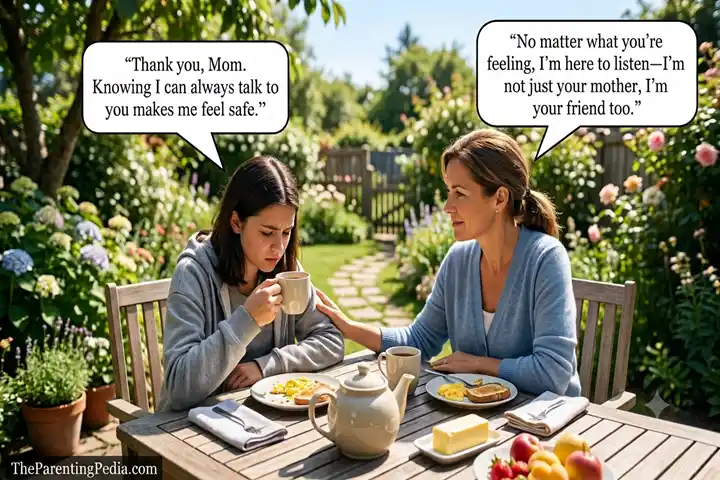
Many children today are growing up in homes where emotional conversations are encouraged. Parents are increasingly asking questions like:
- “How are you feeling?”
- “Would you like to talk about it?”
- “How can I help?”
These simple conversations teach children that expressing emotions is healthy and accepted.
Schools have also contributed by introducing social-emotional learning programs that encourage empathy, emotional regulation, and respectful communication. In addition, books, podcasts, and age-appropriate online content often discuss emotions and mental well-being in ways that are easy for children to understand.
This doesn’t mean every child in Gen Z or Gen Alpha is emotionally open, or that previous generations lacked emotional awareness. Rather, many of today’s children have more opportunities and encouragement to recognise and express their emotions.
A Shift in Parenting Styles
In the past, many children were encouraged to hide difficult emotions.
Common phrases included:
- “Stop crying.”
- “Be brave.”
- “Don’t be so sensitive.”
Although these comments were often intended to build resilience, they sometimes made children feel that expressing emotions was a sign of weakness.
Today, many parents are taking a different approach. They still set clear boundaries and expectations, but they also make space for emotional conversations. Children are encouraged to share how they feel before discussing solutions or consequences.
This balanced approach helps children feel understood while also learning responsibility.
Real-Life Parenting Example
Ten-year-old Emma comes home upset after an argument with a close friend.
Instead of saying,
“You’ll get over it.”
her father says,
“I’m sorry you’re feeling hurt. Do you want to tell me what happened?”
After listening carefully, he helps Emma think about respectful ways to resolve the disagreement.
Rather than dismissing her feelings, he validates her emotions while guiding her towards a positive solution. This helps Emma feel supported and teaches her that expressing emotions is a healthy part of solving problems.
How Parents Can Encourage Emotional Openness at Home
Parents don’t need perfect answers to raise emotionally healthy children. What matters most is creating a home where children feel safe to express their thoughts and emotions without fear of criticism.
Listen Before Offering Solutions
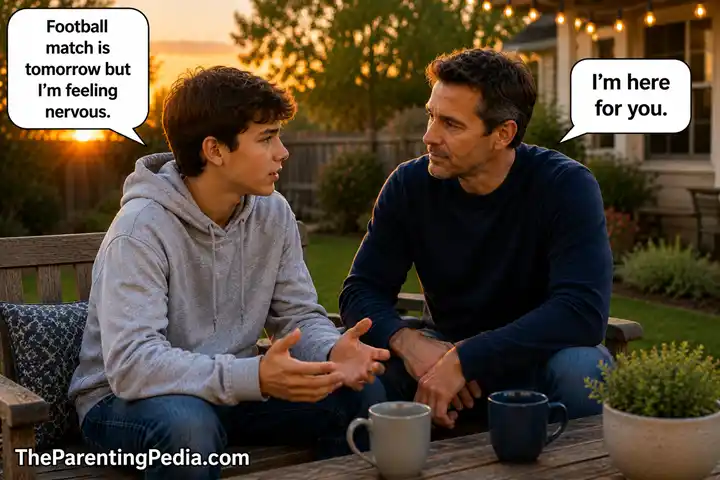
When children share their feelings, resist the urge to fix the problem immediately. Instead, listen carefully and let them know their emotions matter.
For example:
Child: “I’m scared about tomorrow’s test.”
Parent: “I understand why you feel nervous. Let’s prepare together so you feel more confident.”
Feeling heard helps children trust their parents and encourages open communication.
Children are also more likely to express their emotions when parents establish healthy family boundaries that create a safe and respectful home environment.
Accept Feelings While Guiding Behavior
Children need to know that every emotion is normal, but not every behaviour is acceptable.
For example:
- It’s okay to feel angry.
- It’s not okay to hit someone.
- It’s okay to feel disappointed.
- It’s not okay to shout at others.
This teaches children to express emotions in healthy and respectful ways.
Be a Positive Role Model
Children learn emotional habits by watching adults.
When parents talk calmly about their own emotions, children learn that expressing feelings is a sign of confidence, not weakness.
Simple statements like,
“I’m feeling stressed today, so I’m going to take a short walk before we continue talking.”
show children healthy ways to manage emotions.
Everyday Habits That Build Emotional Openness
Small daily routines can help children become more comfortable talking about their emotions.
| Daily Habit | Benefit |
| Ask about their day | Encourages open conversations |
| Read stories about emotions | Builds emotional understanding |
| Listen without interrupting | Strengthens trust |
| Praise honest communication | Increases confidence |
| Solve problems together | Develops resilience and empathy |
These simple habits create a supportive environment where children feel comfortable sharing both happy and difficult emotions.
Signs Your Child Feels Emotionally Safe
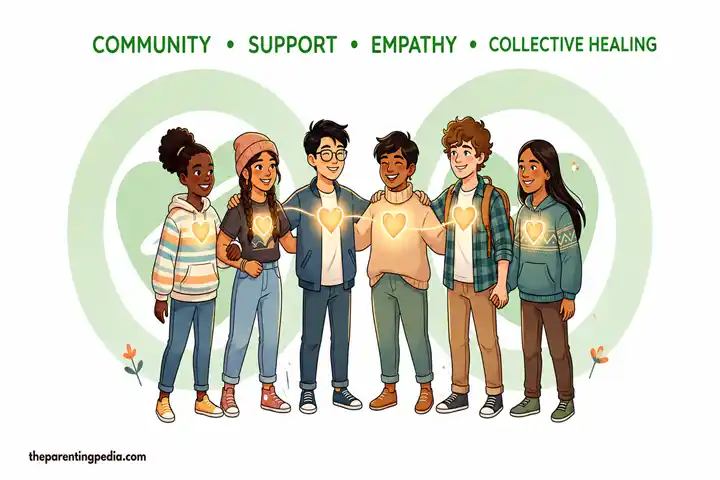
As emotional openness grows, you may notice that your child:
- Talks openly about feelings.
- Asks for help when needed.
- Listens respectfully to others.
- Shows empathy towards family and friends.
- Handles disappointment more calmly.
- Solves conflicts through conversation instead of anger.
Remember that emotional growth is a gradual process. Every supportive conversation helps your child build confidence and resilience.
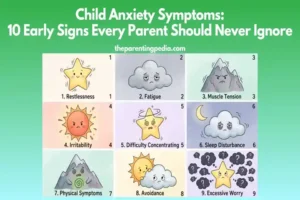
Parents should also learn to recognize the early signs of child anxiety so they can offer timely support when emotional struggles become more difficult to manage.
Frequently Asked Questions (FAQs)
Does emotional openness make children stronger?
Yes. Children who feel safe expressing their emotions often develop better communication skills, healthier relationships, and greater emotional resilience.
Can parents encourage emotional openness without becoming too permissive?
Absolutely. Emotional openness means accepting a child’s feelings while still setting clear boundaries and expectations for behaviour.
How can I encourage my child to talk more about their feelings?
Spend time listening without judgement, ask open-ended questions, and reassure your child that all emotions are normal and worth discussing.
Is emotional openness the same as emotional intelligence?
No. Emotional openness focuses on expressing emotions honestly, while emotional intelligence also includes recognising, understanding, and managing emotions effectively.
The American Academy of Pediatrics also encourages parents to create emotionally supportive environments that promote healthy social and emotional development.

Conclusion
The rise of emotional openness in Gen Z and Gen Alpha reflects a growing understanding that emotions deserve attention, not silence. By listening with empathy, encouraging honest conversations, and modelling healthy emotional habits, parents can help children grow into confident, resilient, and compassionate individuals who feel safe expressing themselves throughout life.

TheParentingPedia editorial team creates practical, research-informed parenting content to help parents navigate everyday challenges, child development, behavior, and family life. Our articles draw on reputable parenting and child-development sources and are reviewed for clarity, accuracy, and practical usefulness.