
Learning does not have to feel like a daily battle. With a few simple changes at home, you can create an environment where your child feels supported, curious and more confident about trying. Small changes in routines, expectations and everyday activities can make schoolwork feel less overwhelming.
The goal is not to do the work for your child. It is to make learning easier for your child by creating a rhythm that feels manageable, encouraging and suited to their needs. What works for one child may not work for another, so pay attention to what helps your child stay comfortable and engaged.
Table of Contents
1. Start With a Calm, Predictable Routine
Children often find it easier to focus when they know what to expect. A simple routine can reduce the daily struggle around homework, reading or practice time.
You do not need a complicated timetable. Try keeping important parts of the afternoon fairly consistent: snack, some free time, homework, dinner and bedtime. Your child can gradually learn when it is time to relax and when it is time to concentrate.
For example, instead of saying, “Go and finish your homework now,” you might say, “After your snack and 20 minutes of play, we’ll sit down for homework.”
A predictable routine can make learning easier for your child because fewer decisions are needed before getting started.
2. Break Big Tasks Into Smaller Steps
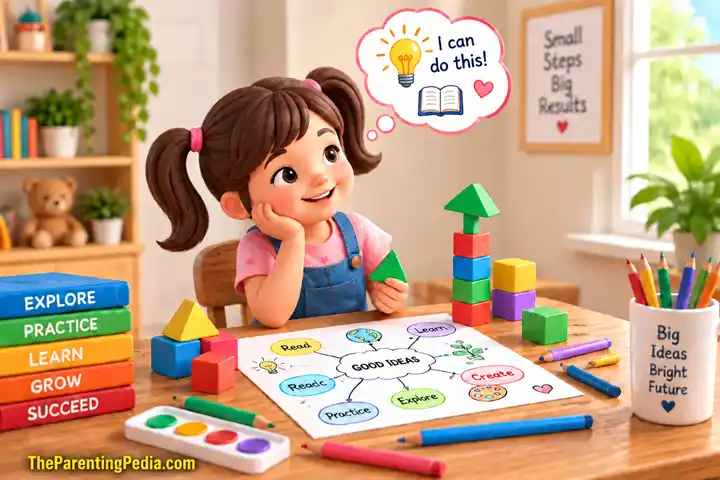
A large assignment can look frightening when a child sees everything at once. Even a task they are capable of doing may feel too difficult simply because they do not know where to begin.
Help your child divide the work into smaller steps. If they have ten maths problems, they might start with the first three. If they need to write a paragraph, begin by choosing the main idea and then finding two supporting points.
You can also use simple language:
- “What is the first thing we need to do?”
- “Let’s finish this part before worrying about the next one.”
- “Would you like to take a short break after this section?”
This approach gives children a clearer starting point without taking over the task.
3. Connect Learning to Everyday Life
Children do not learn only from textbooks and worksheets. Everyday experiences can give them opportunities to practise what they are learning at school.
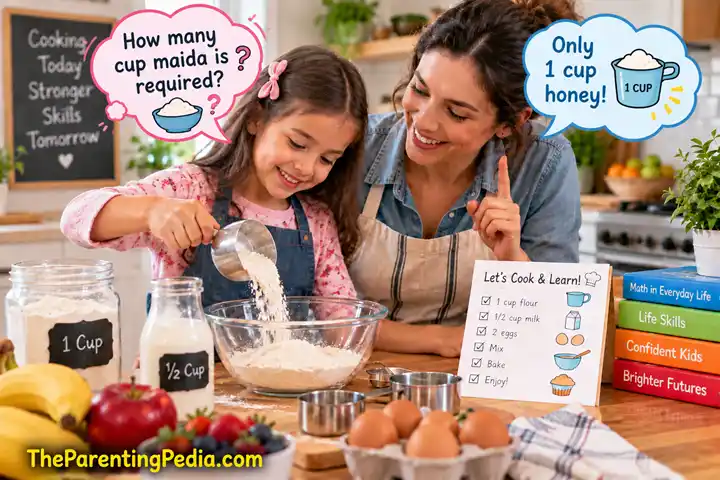
Cooking can involve measuring, counting and fractions. Shopping can involve money and simple mental maths. A trip outdoors can lead to questions about plants, insects, weather or the environment. Reading a recipe, map or game instructions can also build language skills.
Try following your child’s curiosity rather than turning every moment into a lesson. If your child asks why the moon looks different on different nights, that question can become a natural opportunity to explore the topic together.
When learning connects with real life, it can feel more meaningful and make learning easier for your child without adding another formal lesson to the day.
4. Use Play to Reinforce What Your Child Is Learning
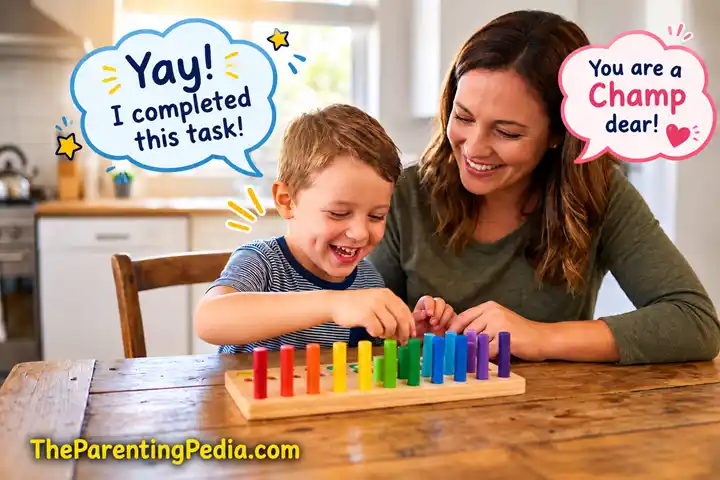
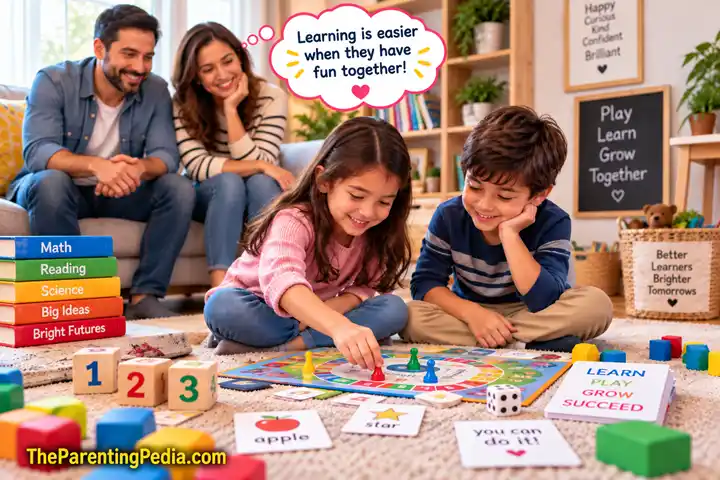
Play is not simply something children do after “real learning” is finished. Play can give children opportunities to think, solve problems, experiment and practise new skills.
You could play a word game while travelling, ask your child to create a shop during pretend play, use cards for simple maths practice or build something together with blocks.
Educational games can also be useful when they match your child’s age and interests. The important thing is to keep the experience enjoyable rather than turning every game into a test.
If your child struggles with a particular skill, try changing the activity instead of immediately repeating the same worksheet. A different approach may help the idea click.
20 Educational Games for Kids at Home That Make Learning Fun
5. Give Your Child Choices
Children are more likely to engage when they feel they have some control over how they approach a task.
This does not mean letting your child avoid necessary work. Instead, offer small choices within reasonable boundaries.
You might ask:
- “Would you like to read before or after dinner?”
- “Do you want to use a pencil or coloured pens for this project?”
- “Would you rather do maths first or spelling first?”
These choices may seem small, but they can reduce unnecessary arguments and help children practise making decisions.
For some children, having a little independence can make learning easier for your child because the activity feels like something they are participating in rather than something being forced on them.
6. Praise Effort, Strategies and Progress
Children need encouragement, especially when something does not come easily.
Instead of focusing only on getting the correct answer, notice the process your child used. You could say, “You kept trying different ways to solve that,” or “I noticed you went back and checked your work.”
Specific praise is more useful than repeatedly saying, “You’re so smart.” It helps children notice the actions that support learning, such as practising, asking questions, checking mistakes and trying another strategy.
If your child gets an answer wrong, avoid making the mistake feel like a failure. You can respond with, “Let’s see where it became confusing,” and work through it together.
A supportive response can make learning easier for your child because mistakes become part of learning rather than something to fear.
7. Protect Time for Sleep, Play and Connection
It is tempting to fill every available hour with homework, tutoring, reading practice or structured activities. But children also need time to rest, play and connect with family.
Sleep, food, physical activity and opportunities for play all support children’s ability to think and learn. Free time also gives children space to explore their own interests without an adult directing every activity.
If your child has had a long school day, they may need some downtime before beginning homework. A short break can sometimes be more productive than pushing through when everyone is tired.
Protecting a healthy balance can make learning easier for your child while also helping home feel like a place for connection rather than constant academic pressure.
The Importance of Free Time for Kids
When Learning Still Feels Unusually Difficult
Sometimes a child may continue struggling even after you have created a calm routine and provided plenty of encouragement.
Watch for patterns rather than judging your child’s ability. For example, your child may consistently struggle with reading, writing, maths, remembering instructions or completing work that seems manageable for classmates.
If difficulties continue, speak with your child’s teacher. You can ask what the teacher is noticing at school and whether there are strategies that may help at home.
Raising Children Network notes that learning difficulties can affect areas such as reading, writing and mathematics, and that early support can be helpful. Learning difficulties: Signs and support — Raising Children Network
The aim is not to compare your child with other children. It is to understand what your child needs and find practical ways to support them.
Final Thoughts
There is no single trick that will make learning easier for your child every day. Some days will still involve forgotten homework, frustration, tiredness or “I don’t want to do it!”
What matters is creating an environment where learning feels manageable and mistakes are safe. A predictable routine, smaller steps, everyday learning, playful practice, reasonable choices and genuine encouragement can all help.
Most importantly, remember that your role is not to become your child’s teacher for every subject. You are there to provide support, encouragement and a safe place to keep trying.
Frequently Asked Questions
How can I make learning easier for my child at home?
Start with a predictable routine, reduce distractions and break large tasks into smaller steps. Give your child short breaks and use everyday activities or play to reinforce learning.
What should I do if my child gets frustrated while learning?
Pause before the frustration becomes overwhelming. Give your child a short break, acknowledge that the task feels difficult and help them identify one small step they can try next.
Does play really help children learn?
Yes. Play can support thinking, problem-solving, exploration and learning. It does not need to look like formal schoolwork to be valuable.
Should I help my child with every homework problem?
Not necessarily. Offer guidance when your child is stuck, but allow them to do as much as they can independently. The goal is to build confidence and skills rather than complete the work for them.
Author’s Note
Every child learns differently. If something works beautifully for one child but not another, that does not mean you are doing anything wrong. Keep observing, adjusting and encouraging your child.
Sources & Further Reading
Related TheParentingPedia Articles
- How to Help Your Child With Homework Without Daily Stress
- 20 Educational Games for Kids at Home That Make Learning Fun
- The Importance of Free Time for Kids
- Supporting Your Child’s DSupporting Your Child’s Development With Effective Parenting
- Connecting Children With Nature: 10 Simple Ways to Build a Lifelong Bond
In-Article Image Recommendations
Image 1: Parent and child calmly working together at a kitchen table
Suggested ALT: make learning easier for your child with a calm homework routine
Image 2: Child learning maths while cooking or measuring ingredients
Suggested ALT: make learning easier for your child through everyday activities
Image 3: Children playing an educational board or card game
Suggested ALT: educational play to make learning easier for your child
Image 4: Child reading or playing outdoors during free time
Suggested ALT: sleep play and free time can make learning easier for your child
H2: SEO Pack
SEO Title: 7 Simple Ways to Make Learning Easier for Your Child
Meta Description: Discover 7 simple ways to make learning easier for your child with calmer routines, smaller steps, playful learning and positive encouragement.
Focus Keyword: make learning easier for your child
Slug: make-learning-easier-for-your-child
Suggested Tags: learning, child learning, parenting tips, homework help, learning activities, educational games, child development, parenting
Suggested Category: Education & Learning
Suggested Featured Image Concept: A warm parent-and-child learning moment at home, with the child engaged in a simple activity and the parent offering calm encouragement.

TheParentingPedia editorial team creates practical, research-informed parenting content to help parents navigate everyday challenges, child development, behavior, and family life. Our articles draw on reputable parenting and child-development sources and are reviewed for clarity, accuracy, and practical usefulness.