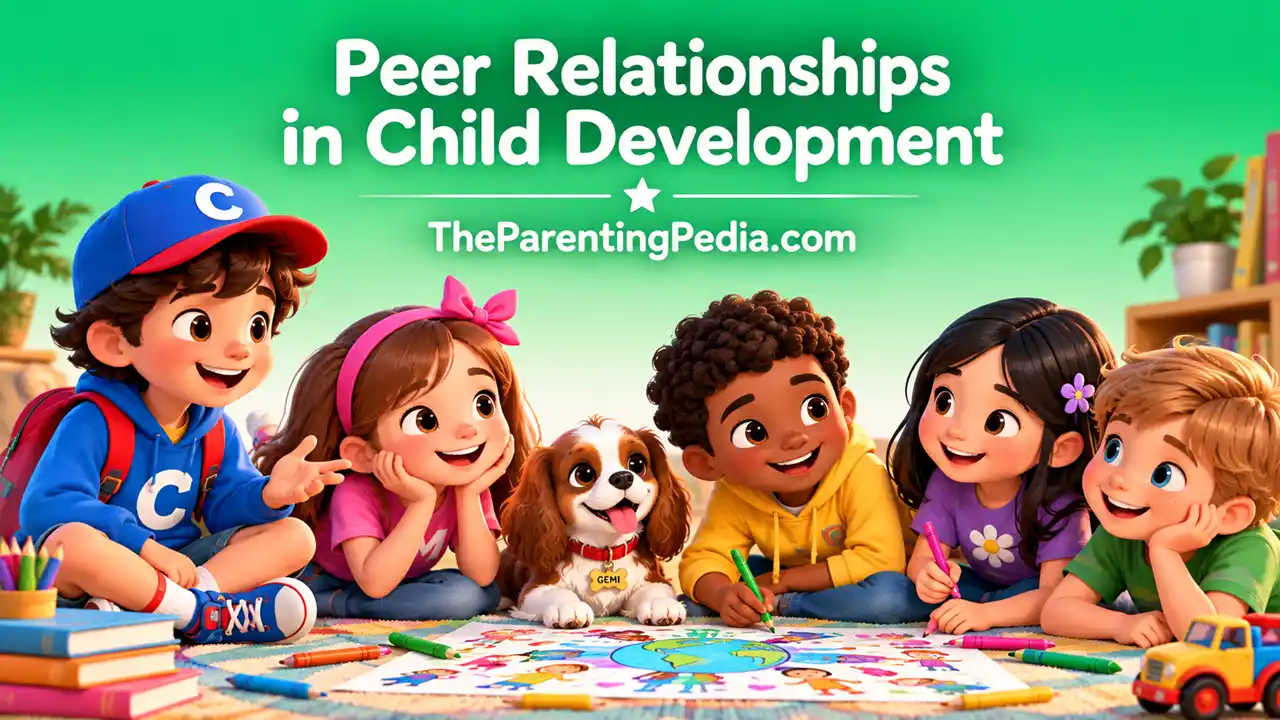
Friends and peers play an important role in a child’s development. As children grow, their friendships can influence how they communicate, cooperate, behave, and understand the world around them.
Positive peer relationships can help children build confidence, empathy, communication skills, and a sense of belonging. If your child struggles with friendships, you may also find our guide on why children feel left out helpful.
In this article, we’ll explore Peer Relationships in Child Development, including their positive and negative effects and why healthy friendships matter.
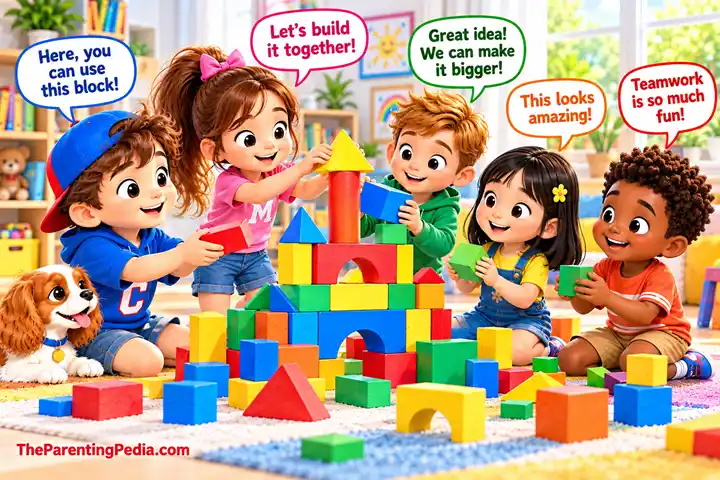
Table of Contents
Why Are Peer Relationships Important in Child Development?
As children grow, they spend more time with classmates, neighbors, teammates, and friends. These interactions give them opportunities to practice social and emotional skills outside the family.
Through everyday interactions, children learn how to communicate, cooperate, share, solve disagreements, and understand different points of view. Friendships can also provide companionship and help children develop a sense of belonging.
The CDC notes that students who feel connected to and supported by their peers tend to show greater engagement and connection with school. (CDC)
How Peer Relationships Change as Children Grow
The role of friendships changes as children move through different stages of development. Younger children often learn social skills through play, while older children may place greater importance on acceptance, friendship, identity, and independence.
| Age Group | Role of Peer Relationships | Skills Children Develop |
|---|---|---|
| Early childhood | Playing and interacting with other children | Sharing, cooperation, taking turns |
| Middle childhood | Building friendships and navigating group situations | Communication, empathy, problem-solving |
| Adolescence | Developing closer friendships and seeking greater independence | Decision-making, identity, boundaries |
If you want this paragraph to contain an internal link, give me the list of your current TPP article URLs/titles, and I’ll select a different relevant article that is not already linked in this article.
Peer Relationships in Early Childhood
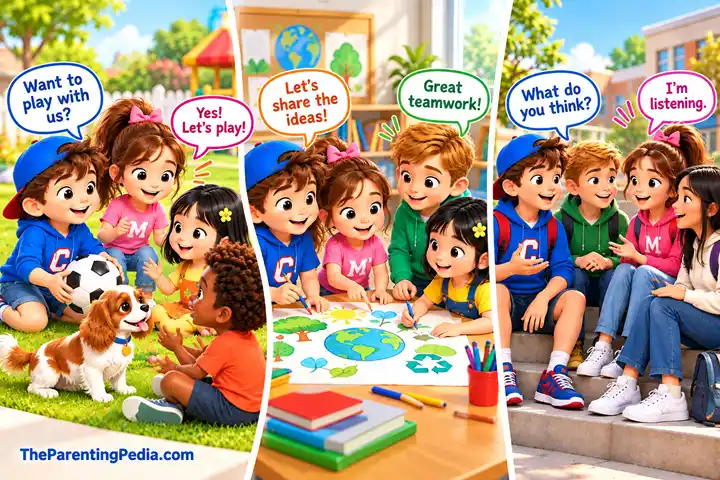
Young children begin learning about friendships through simple activities such as playing together, sharing toys, taking turns, and solving small disagreements.
They are still developing the ability to understand other people’s feelings and perspectives, so adult guidance can be helpful. Parents can use everyday play situations to teach kindness, patience, cooperation, and respectful communication.
Peer Relationships in Middle Childhood
During middle childhood, friendships often become more meaningful. Children may choose friends based on shared interests, activities, personalities, or experiences.
They also become more aware of how other children view them. This can help develop social awareness, but it can also make children more sensitive to rejection, comparison, or pressure to fit in.
Peer Relationships in Adolescence
During adolescence, friendships can become increasingly important as young people develop greater independence.
Teenagers may turn to friends for companionship, advice, emotional support, and shared interests. At the same time, peer influence can become more significant, making healthy boundaries and decision-making especially important. The American Academy of Pediatrics recommends maintaining open communication and staying appropriately involved in children’s friendships as they grow. (HealthyChildren.org)
Positive Effects of Peer Relationships
Healthy friendships can support several areas of a child’s social and emotional development.
Better Communication Skills
Children practice listening, expressing their ideas, taking turns, and responding to different opinions when they interact with friends.
These everyday conversations help children understand that healthy relationships involve both speaking and listening.
Empathy and Understanding
Friendships give children opportunities to recognize that other people can have different feelings, opinions, and experiences.
For example, comforting an upset friend or considering another child’s point of view can help develop empathy.
Cooperation and Problem-Solving
Playing and working with peers often requires children to make decisions together, share materials, compromise, and resolve disagreements.
These experiences can help children become more comfortable solving everyday social problems.
Confidence and Sense of Belonging
Being accepted and supported by friends can help children feel that they belong.
Supportive peer connections can also encourage children to participate in school and group activities. The CDC recommends encouraging healthy, diverse relationships with peers and helping children develop safe and stable relationships. (CDC)
Negative Effects of Peer Relationships
Peer relationships are not always positive. Children may experience peer pressure, exclusion, bullying, or negative social influence.
Peer Pressure
Children may sometimes feel pressured to behave in ways that help them fit into a group.
Parents can help by talking openly about peer pressure and practicing simple ways to say no. Children should understand that they do not have to participate in something simply because their friends are doing it.
Bullying and Social Exclusion
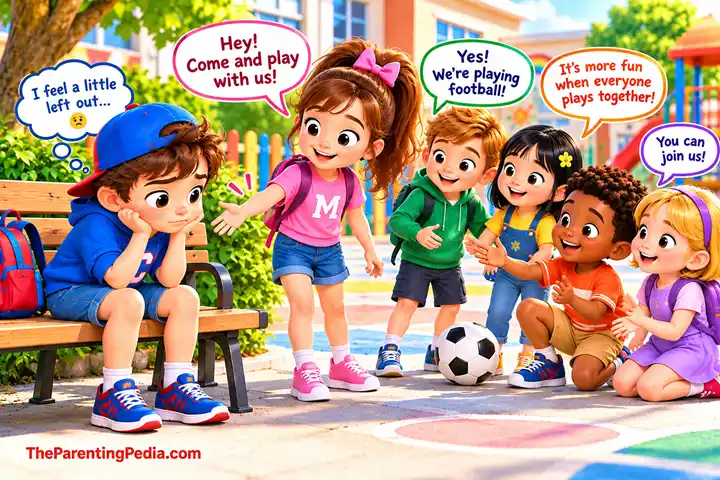
Repeated teasing, bullying, or deliberate exclusion can affect a child’s sense of safety and belonging.
Parents should pay attention to ongoing changes such as withdrawing from friends, avoiding school or activities, or becoming unusually upset after social situations. The CDC specifically recommends paying attention to warning signs such as withdrawal from friends and family and talking with children about negative social experiences. (CDC)
Unhealthy Comparison
Children may compare their appearance, abilities, possessions, popularity, or achievements with those of their peers.
Some comparison is a normal part of growing up, but constant comparison can affect a child’s confidence. Parents can help by focusing on individual strengths, effort, progress, and personal qualities rather than popularity or competition.
How Parents Can Encourage Healthy Peer Relationships
Parents cannot control every friendship their child will have, but they can provide guidance and opportunities for healthy social connections.
Encourage Positive Social Opportunities
Give children opportunities to interact with others through school activities, sports, hobbies, clubs, or age-appropriate play.
Children often develop friendships naturally when they spend time with others who share their interests.
Teach Respect and Empathy
Talk to children about treating others with kindness and respect.
Questions such as “How do you think your friend felt?” can help children consider another person’s perspective and understand how their actions affect others.
Teach Children to Handle Conflict
Friendships will sometimes involve disagreements. Instead of solving every problem for your child, help them learn to communicate calmly, listen, and look for a fair solution.
The American Academy of Pediatrics recommends that parents provide guidance and role-modeling around sharing, conflict resolution, empathy, and communication. (HealthyChildren.org)
Talk About Peer Pressure
As children become older, discuss peer pressure openly.
You can practice simple responses with your child:
- “No, I don’t want to do that.”
- “That’s not a good idea.”
- “Let’s do something else.”
- “I’m going to leave.”
Practicing these responses at home can make children feel more prepared when they face uncomfortable situations.
Stay Connected With Your Child
Create an environment where your child feels comfortable discussing friendships without immediately fearing criticism or punishment.
Try simple questions such as:
- “Who did you spend time with today?”
- “What was the best part of your day?”
- “Did anything happen that made you uncomfortable?”
- “How are things going with your friends?”
Open communication allows parents to understand what is happening without unnecessarily taking control of every friendship.
Signs Your Child May Be Struggling With Peer Relationships
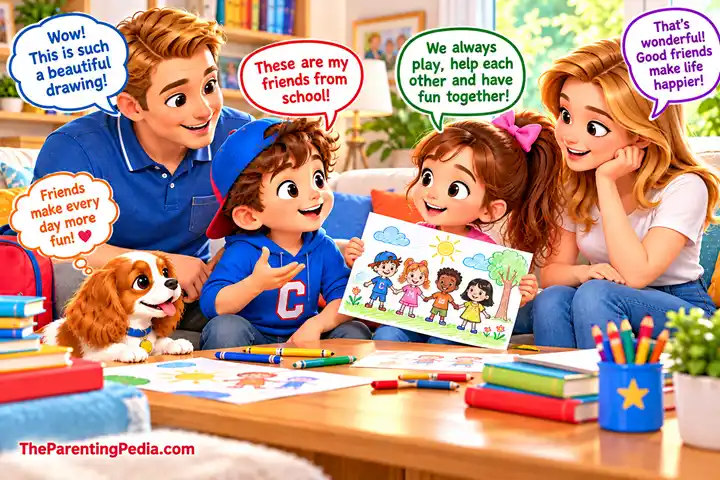
Occasional friendship problems are normal, but persistent changes deserve closer attention.
Watch for signs such as:
- Frequently avoiding school or social activities
- Suddenly withdrawing from friends or family
- Becoming unusually upset after social interactions
- Saying that nobody likes them
- Losing interest in activities they previously enjoyed
- Experiencing repeated conflicts with friends
- Showing signs of bullying or deliberate exclusion
One sign alone does not necessarily mean there is a serious problem. However, persistent changes should be discussed calmly with your child and, when appropriate, with a teacher, school counselor, pediatrician, or qualified professional.
When Should Parents Step In?
Parents should give children some space to develop their own friendships, but they should step in when a situation involves bullying, threats, unsafe behavior, serious emotional distress, or repeated exclusion.
The goal is not to control every friendship. Instead, parents can listen, provide guidance, and help children develop the skills they need to handle relationships safely.
If a child is experiencing ongoing social difficulties, teachers and school staff may also provide useful information because they can observe peer interactions in settings parents may not see. The CDC highlights the role of adults in supporting positive classroom social dynamics and identifying students who may be isolated or experiencing peer difficulties. (CDC)
Frequently Asked Questions
How do peers influence child development?
Peers give children opportunities to communicate, cooperate, solve problems, understand different perspectives, and experience friendship and belonging.
What are the positive effects of peer relationships?
Positive peer relationships can help children develop communication skills, empathy, cooperation, confidence, emotional support, and a sense of belonging.
How can parents help children build healthy friendships?
Parents can provide social opportunities, teach respect and empathy, discuss peer pressure, encourage healthy communication, and help children work through conflicts.
Author’s Note
Peer relationships are an important part of growing up, but every child develops social skills at a different pace. Parents do not need to expect their child to have a large group of friends. What matters is helping children develop respectful, safe, and supportive relationships while giving them guidance when difficulties arise.
This article is intended for general educational purposes and is based on guidance from established child-development and public-health sources. For persistent concerns about a child’s social, emotional, or behavioral development, parents should seek advice from an appropriately qualified professional.
References & Further Reading
- Centers for Disease Control and Prevention (CDC) — Peer Connection and Support — Information on peer relationships, school connectedness, and supportive interactions. CDC — Peer Connection and Support
- Centers for Disease Control and Prevention (CDC) — Improving Social Connectedness — Guidance on encouraging healthy social relationships and recognizing signs of disconnection. CDC — Improving Social Connectedness
- American Academy of Pediatrics — What Parents Can Do to Support Friendships — Practical guidance for parents supporting friendships from early childhood through adolescence. HealthyChildren.org — What Parents Can Do to Support Friendships
- American Academy of Pediatrics — Getting to Know Your Child’s Friends — Guidance on communication, supervision, boundaries, and staying connected with children’s friendships. HealthyChildren.org — Getting to Know Your Child’s Friends
Conclusion
Peer relationships can influence how children communicate, cooperate, handle disagreements, and understand themselves and others. Healthy friendships can provide companionship, emotional support, confidence, and valuable opportunities to practice social skills.
At the same time, children may experience peer pressure, exclusion, bullying, or negative social influence. Parents can support them by staying connected, encouraging respectful friendships, teaching healthy boundaries, and providing guidance when social problems become difficult.
The goal is not to prevent every friendship problem. It is to help children develop the confidence and skills they need to build healthy relationships and make positive choices.

TheParentingPedia editorial team creates practical, research-informed parenting content to help parents navigate everyday challenges, child development, behavior, and family life. Our articles draw on reputable parenting and child-development sources and are reviewed for clarity, accuracy, and practical usefulness.