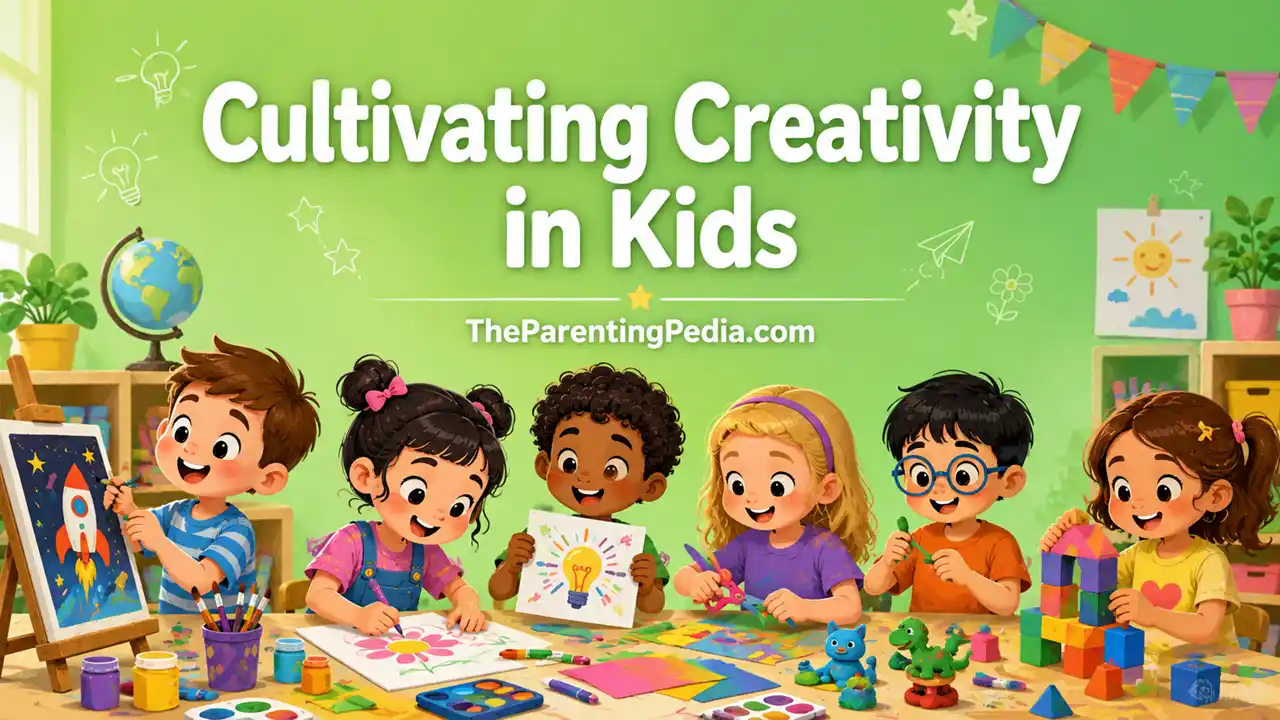
Children are naturally curious, imaginative, and eager to explore the world around them. Cultivating creativity in kids helps them express ideas, solve problems, think independently, and approach everyday challenges with confidence. Creativity isn’t limited to drawing or painting—it can develop through pretend play, storytelling, building, music, outdoor exploration, and simple everyday activities.
Parents don’t need expensive toys or complicated projects to encourage creativity. With the right opportunities and a little freedom to explore, children can turn ordinary materials and everyday moments into meaningful creative experiences. In this guide, you’ll discover 10 practical ways to nurture your child’s imagination and creativity at home.
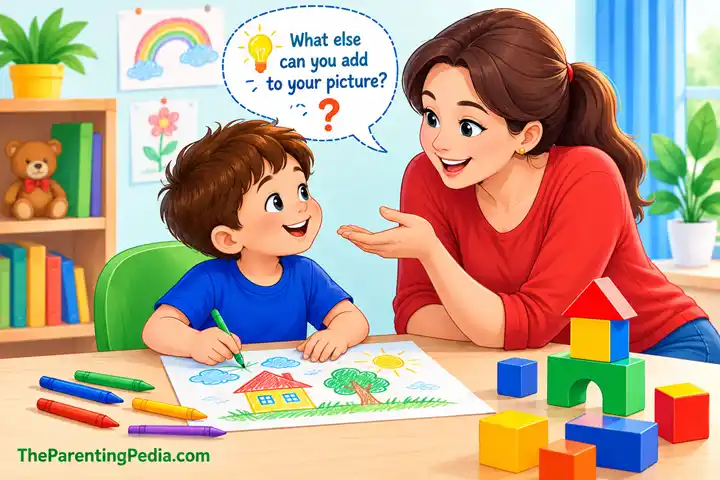
Table of Contents
10 Simple Ways to Encourage Creativity
1. Offer Open-Ended Materials
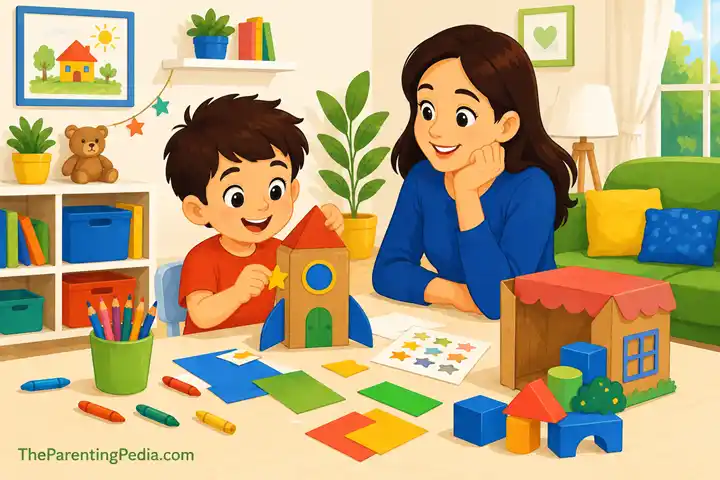
Give children materials that can be used in many ways. Blocks, cardboard boxes, paper, crayons, play dough, and safe recycled containers are simple choices.
A cardboard box might become a rocket, house, or grocery store. Let your child decide.
Parents can also choose educational toys for toddlers that encourage open-ended play, imagination, and hands-on exploration.
2. Make Time for Free Play
Children need some time when they can choose what to play and how to play it.
Set up a safe space with a few interesting materials and allow your child to lead. UNICEF recommends regular opportunities for free play because children can use these moments to explore interests, imagination, and problem-solving. (UNICEF)
3. Ask Open-Ended Questions
Instead of asking, “What color should the tree be?” try, “What colors could your tree have?”
Try: “What else could you try?” “What could this become?” or “What do you think will happen next?”
There does not need to be one correct answer.
4. Let Children Make Choices
Give children reasonable choices. Ask, “Would you like to build with blocks or make a picture?”
Small choices give children ownership while you provide safe boundaries.
5. Focus on the Process, Not Perfection
If your child’s painting looks completely different from what you expected, resist the urge to correct it.
Instead of saying, “That’s not how a house looks,” try, “Tell me about your picture.”
NAEYC recommends process-focused art experiences that allow children to explore materials without a required sample or single correct result. (NAEYC)
6. Encourage Pretend Play and Storytelling
A blanket can become a tent, a spoon can become a microphone, and stuffed animals can become characters in a story.
Start with: “One morning, a little bear found a mysterious door.” Then let your child decide what happens next.
Pretend play gives children freedom to invent characters, settings, problems, and solutions.
7. Let Mistakes Become New Ideas
Creative activities rarely go exactly as planned. A tower falls or a paper airplane refuses to fly.
Rather than fixing everything immediately, ask, “What could we try now?”
An unexpected result does not have to mean failure. It can become another idea.
8. Use Everyday Experiences
You do not need a special craft room. Cooking, gardening, nature walks, music, and building with household objects can all provide creative opportunities.
Ask your child to invent a sandwich, design a pretend garden, create a new rhythm, or build a bridge for a toy animal.
9. Give Children Time to Tinker
Tinkering means trying things without knowing exactly how they will turn out.
Your child might combine blocks, test different ways to balance objects, or experiment with paper shapes. Stay nearby for safety, but resist taking control. If your child asks for help, offer a small hint before doing the task for them.
10. Celebrate Different Kinds of Creativity
Not every child enjoys drawing. One child may love building, another may create stories, while another enjoys music or pretend games.
Notice what naturally interests your child. Say, “You found another way to solve that,” or “I like how you thought about this.”
This helps children see creativity as something they can use in many parts of life.
Cultivating Creativity in Kids at Home
Try these simple ideas using materials you probably already have. They make creative activities easy to fit into an ordinary day.
- Mystery box: Give your child three safe objects and ask them to invent something.
- Build a solution: Use blocks or cardboard to make a bridge for a toy.
- Story chain: Take turns adding one sentence to an imaginary story.
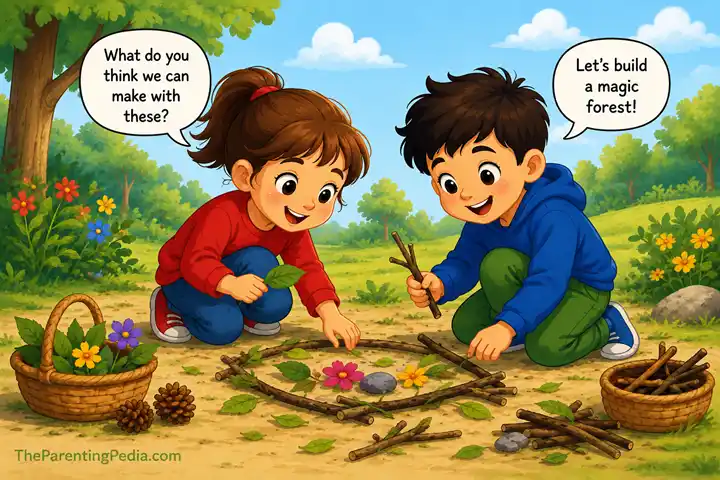
- Nature picture: Arrange leaves, stones, or sticks into a temporary design.
- Invent a game: Let your child create the rules and teach them to you.
The aim is to give children opportunities to imagine, choose, test, and explain.
| CREATIVE ACTIVITY | EASY WAY TO TRY IT AT HOME |
|---|---|
| Drawing or painting | Let your child choose what to draw without giving them a model to copy. |
| Building with blocks | Ask them to build something and explain how it works. |
| Pretend play | Let your child choose the characters and make up the story. |
| Making crafts | Give them simple materials and let them decide what to create. |
| Inventing stories | Start with one sentence and take turns adding to the story. |
Common Mistakes Parents Should Avoid
One common mistake is giving children a model and expecting them to copy it exactly. Children need opportunities to make their own choices.
Cultivating Creativity in Kids means giving children opportunities to think and create in different ways. If your child draws a purple tree, you do not need to explain that trees are normally green. Ask about the picture instead.
Avoid comparing siblings. Creativity does not have one correct pace or style.
When Should Parents Step In?
Step in when an activity becomes unsafe, especially when young children are using scissors, small objects, heat, or tools.
For ordinary struggles, give your child time to think. A question such as, “What could you try next?” can be more helpful than immediately solving the problem.
If frustration continues, break the task into a smaller step.
The way parents respond to their children every day can have a lasting impact on their growth, learning, and emotional well-being. Learn more about how effective parenting supports child development.
Frequently Asked Questions
How can I encourage creativity without buying expensive supplies?
Use paper, boxes, blocks, crayons, play dough, recycled containers, and safe natural objects. Open-ended materials often provide more possibilities than toys designed for only one purpose.
Is free play important for creativity?
Yes. Free play gives children room to choose, imagine, experiment, and solve problems. UNICEF recommends regular free-play opportunities for young children. (UNICEF)
What if my child says, “I can’t do it”?
Try saying, “Let’s think of another way.” Ask what they have tried and what they might change. Give support without immediately taking over.
Does creativity only mean art?
No. Creativity can appear in building, storytelling, music, pretend play, science, movement, cooking, design, and problem-solving. Cultivating Creativity in Kids means giving children opportunities to think and create in different ways.
Conclusion
Cultivating Creativity in Kids does not require expensive toys or complicated projects. Children need time to explore, materials they can use in different ways, supportive adults, and permission to make mistakes.
Let your child ask unusual questions, invent games, build strange-looking structures, and turn ordinary objects into something new. When parents focus on curiosity and the creative process instead of perfection, children have more room to develop confidence, flexible thinking, and problem-solving skills.
Author’s Note
TheParentingPedia.com creates evidence-informed parenting content researched using trusted sources. This article is intended for general educational purposes and should not replace personalized professional advice when individual support is needed.
This article is based on practical parenting guidance and child-development research, written to help parents support creativity through everyday activities and positive interactions.
Sources & Further Reading
- UNICEF — What Is Free Play?
- NAEYC — How Process-Focused Art Experiences Support Preschoolers
- Australian Government — Play-Based Learning in Early Childhood

TheParentingPedia editorial team creates practical, research-informed parenting content to help parents navigate everyday challenges, child development, behavior, and family life. Our articles draw on reputable parenting and child-development sources and are reviewed for clarity, accuracy, and practical usefulness.