Most Indian parents believe that beating their children is the best way to teach discipline. However, disciplining a child does not mean using physical punishment. Instead of teaching good behavior, it often creates fear and anxiety. In many Indian families, shouting at children or hitting them is still considered a normal way to correct mistakes. Unfortunately, this approach can damage a child’s confidence and weaken the parent-child relationship.
Healthy parenting is about teaching children right from wrong with patience, understanding, and consistency—not through fear or threats. Positive discipline helps children learn responsibility while feeling safe, respected, and loved. In this article, we will explore practical and effective ways to discipline a child without beating, helping you raise a confident and well-behaved child.

Table of Contents
Why Is Positive Discipline Important?
- Positive discipline is important because:
- It enhances the behavior of your child.
- It develops self-control in the child.
- It boosts your child’s confidence.
- It strengthens the bonding between the parent & child.
Building a positive relationship with your child is one of the strongest foundations of effective parenting. Learn more in our article The Power of Positive Parenting.
- It helps in improving mental & emotional growth.
- It teaches responsibility to the child.
Why Beating Is Not a Good Solution
Many parents believe physical punishment improves discipline, but research and parenting experts suggest otherwise. Beating may stop unwanted behavior temporarily, but it often creates long-term emotional and behavioral problems.
Reasons why beating is not a good solution:
- It creates fear in the minds of children from their parents.
- It decreases the confidence level of the child.
- It increases aggression in a child’s behaviour.
- It develops emotional distance between the child & parents.
- It causes anxiety & stress in the children.
- It creates poor communication between child & parent.
The American Academy of Pediatrics recommends using positive discipline instead of physical punishment because it supports healthier emotional and behavioral development.
Signs That Your Discipline Method May Not Be Working
Here are some of the signs to understand that your discipline method is not working:
- Your child lies regularly.
- Around people, your child becomes fearful.
- Your child frequently hides their mistakes.
- Your child shows aggression in their behavior.
- Your child does not want to communicate with you.
- Your child has a low confidence level.
- Your child gets irritated & angry easily.

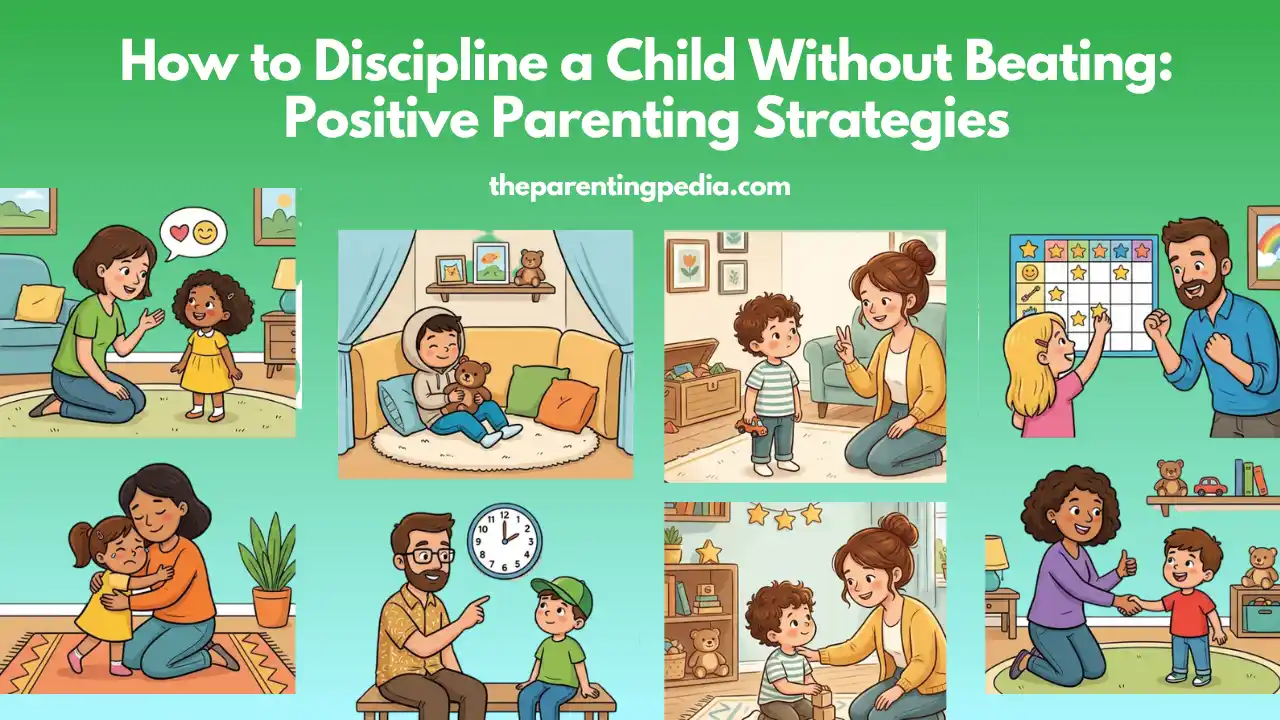
7 Ways to Discipline a Child Without Beating
1. Make yourself calm before reacting to any situation
Take a deep breath. Think about the situation for 2 minutes and then react calmly. Most parents react the wrong way in a hurry. So make yourself calm before reacting to any situation.
2. Create Clear Rules and Expectations
Keep your rules & expectations clear with your partner.
Teach them rules in easy language such as:
- Tell them to speak respectfully with everyone.
- Tell them to complete homework on time.
3. Tell the Consequences of Their Actions
Instead of beating or scolding, tell your child what the consequences of their actions are. For example, if they do not do their homework on time, their play time will be reduced.
4. Appreciate Good Behavior
Many parents only notice the mistakes of their children. Appreciate your child if he follows your rules and fulfills responsibilities. It brings encouragement within them.
Positive encouragement works best when it is balanced with consistent discipline. Read our guide on Discipline and Encouragement in Parenting to learn how both work together.
5. Use Time-Outs Calmly
Time-outs are not punishments. Time-outs give kids the opportunity to cool off and reflect on their behavior. Put your child in a quiet area to sit down for a short period. Have an open discussion about the incident later on.
6. Be Consistent
When rules change again and again, children get confused. Whatever rules you make, keep them consistent. Consistency helps in creating discipline in children.
7. Spend Quality Time With Your Child
Sometimes children misbehave to get attention from their parents. Spend quality time with your child. It helps you build an emotional connection with your child.

Common Discipline Mistakes Parents Make
Common discipline mistakes made by parents are:
- They shout at their children regularly.
- They always compare their children with others.
Comparing children can seriously affect their confidence and emotional well-being. Read our article on The Silent Impact of Comparing Kids to understand its long-term effects.
- They keep threatening their children.
- They are always inconsistent with their created rules
- They give physical punishment to their child.
- Instead of guiding their child, they criticise them.
Age-Based Discipline Tips
Toddlers (2–5 Years)
- Give simple commands
- Redirect undesirable behavior
- Show patience
School-Age Kids (6–12 Years)
- Establish rules
- Encourage responsibilities
- Impose logical consequences
Teenagers (13–18 Years)
- Respect their opinions
- Encourage discussions
- Focus on guidance rather than control.
Benefits of Discipline Without Beating
Emotional Benefits
- It increases the self confidence in the child.
- A child’s emotional security gets stronger.
- It decreases fear & anxiety in the child’s mind.
Behavioral Benefits
- It enhances the self-control of your child.
- It helps your child make better decisions
- Increased responsibility
Relationship Benefits
- It strengthens the bond between the parent & child.
- It helps in proper communication between parent & child.
- It boosts trust
These emotional, behavioral, and relationship benefits help children grow into confident, responsible, and emotionally secure adults.
UNICEF encourages parents to use non-violent discipline methods that protect children’s emotional well-being while teaching responsibility.
When Should Parents Seek Professional Help?
Parents should go for professional guidance if:
- Your child’s behaviour issue becomes serious.
- Their aggression grows frequently.
- Your child shows excessive anger
- Your child’s daily life is affected due to disciplinary activities.
- Communication completely breaks down.

FAQs
Q.1 At what age should parents start disciplining a child?
Ans: Parents can start teaching simple rules and boundaries from around 2 years of age. Keep instructions simple, consistent, and age-appropriate.
Q.2 Is yelling better than beating a child?
Ans: No. Frequent yelling can also affect a child’s emotional well-being. Calm communication and positive discipline are more effective in encouraging good behavior.
Q.3 How do I discipline a stubborn child without hitting?
Ans: Stay calm, set clear expectations, use logical consequences, and praise positive behavior. Consistency helps children learn self-discipline over time.
Q.4 Can positive discipline improve a child’s behavior?
Ans: Yes. Positive discipline teaches responsibility, builds self-control, strengthens parent-child relationships, and encourages long-term positive behavior.
Conclusion
Disciplining a child does not mean that you have to beat them. It does not instill discipline in children but instead makes them afraid. Beating is not the right solution as it creates fear in the minds of children from their parents. It also decreases the confidence level of the child. Instead of beating, parents can correct the child’s behavior by staying calm & by communicating clearly. It decreases the fear & anxiety from children & also strengthens the bond between the parent & child.
Every child responds differently to discipline. The ideas shared here are intended to support positive parenting and should be adapted to your child’s age, personality, and individual needs.

TheParentingPedia editorial team creates practical, research-informed parenting content to help parents navigate everyday challenges, child development, behavior, and family life. Our articles draw on reputable parenting and child-development sources and are reviewed for clarity, accuracy, and practical usefulness.