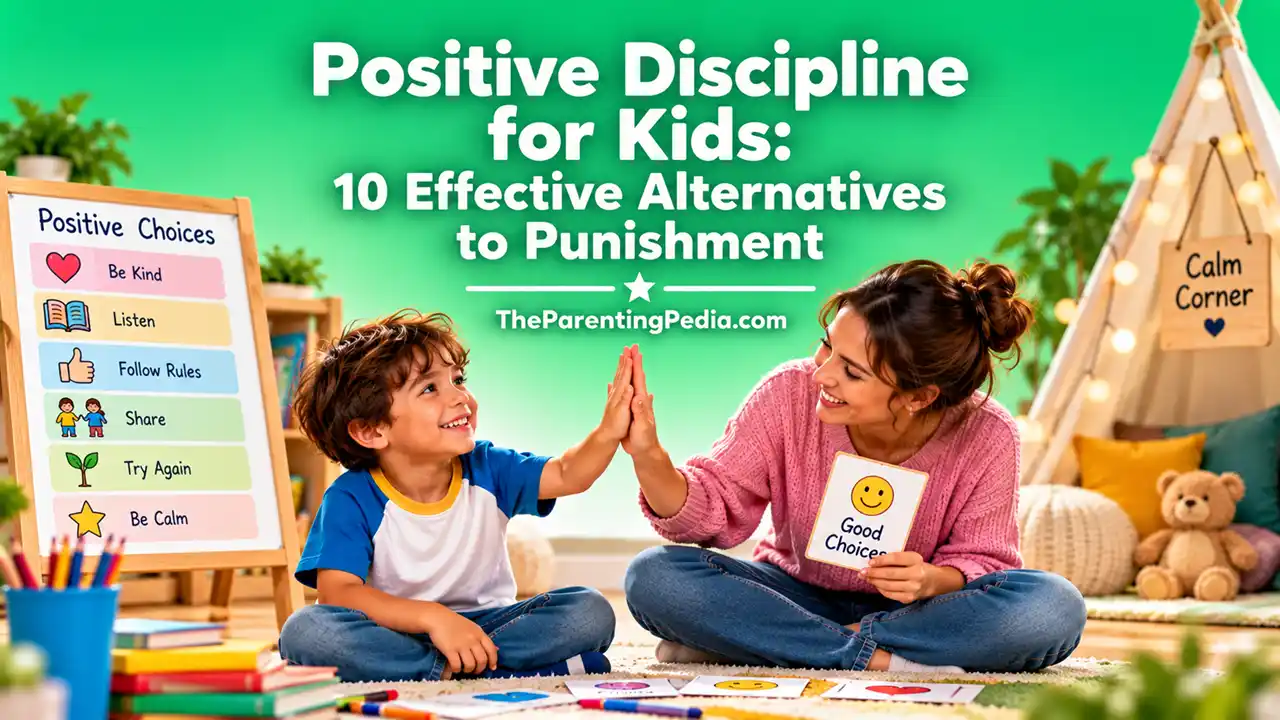
Every parent faces moments when a child refuses to listen, throws a tantrum, breaks a rule, or speaks rudely. In those moments, it can be tempting to shout or impose a punishment to stop the behaviour quickly. However, children also need guidance to understand their feelings, learn responsibility, and make better choices.
Positive Discipline for Kids focuses on teaching rather than frightening children into obedience. Parents can set firm boundaries while remaining calm, caring, and consistent. With the right approach, everyday conflicts can become opportunities to teach important life skills. Here are 10 practical alternatives to punishment that parents can use at home.
Parents can build a stronger connection with their children by following these practical principles of positive parenting.
Table of Contents
Why Positive Discipline Works Better Than Harsh Punishment
Children are still learning how to manage frustration, control impulses, communicate their needs, and understand consequences. A young child who snatches a toy may need help learning to share, while an older child who breaks a rule may need guidance in taking responsibility.
Harsh punishment can stop behaviour temporarily without teaching a child what to do differently next time. Positive discipline combines clear boundaries with encouragement, appropriate consequences, and opportunities to learn. Guidance from the Raising Children Network also emphasises setting limits, maintaining warm relationships, and encouraging positive behaviour.
The aim is not to let children do whatever they want. It is to help them understand expectations and gradually develop self-control.
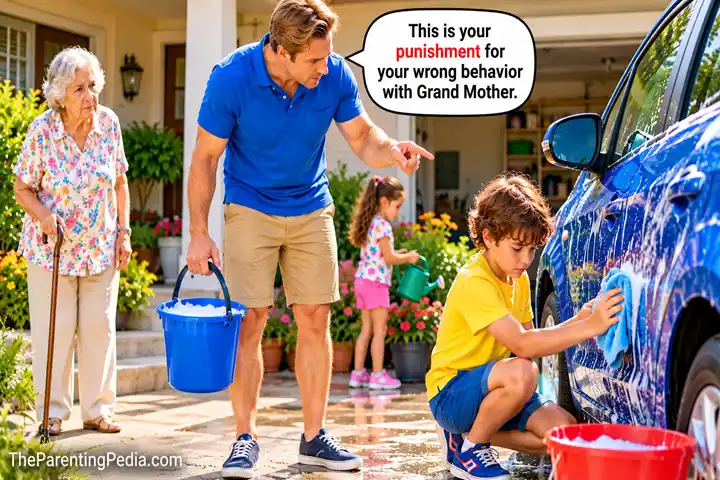
10 Effective Alternatives to Punishment
1. Set Clear Rules and Expectations
Children are more likely to follow rules when they understand exactly what is expected of them. Vague instructions such as “Behave yourself” do not explain what a child should actually do.
Instead, use simple, specific directions. For example, say, “Please put your toys in the basket before dinner” rather than “Stop making a mess.”
Choose a few important family rules and explain why they matter. For younger children, keep instructions short and repeat them patiently. Older children can help develop family rules, which gives them a sense of responsibility.
Try this: “We speak respectfully at home. You can tell me that you are angry, but you cannot hit or insult anyone.”
For more guidance on setting fair rules at home, read our article about healthy family boundaries.
2. Stay Calm Before Responding
When a child misbehaves, a parent’s immediate reaction can either calm the situation or make it worse. Shouting in anger may frighten a child and distract everyone from the behaviour that needs correcting.
If you feel overwhelmed, pause before responding. Take a few slow breaths, lower your voice, and give yourself a moment to think. If your child is in danger or hurting someone, intervene immediately to keep everyone safe.
You do not need to resolve every disagreement instantly. Once emotions settle, explain what went wrong and what needs to change.
Try this: “I’m upset about what happened. Let’s calm down first, and then we’ll talk about how to fix it.”
3. Praise the Behaviour You Want to Encourage
Parents often notice mistakes more quickly than good behaviour. Yet children also need to know when they are doing something right.
Offer specific praise when your child shares, follows instructions, tells the truth, or manages frustration appropriately. Instead of saying only “Good job,” explain what you appreciated.
For example, say, “You waited for your sister to finish speaking. That was thoughtful.” This helps your child understand which action was positive.
Praise should be sincere and suitable for the child’s age. You do not need to reward every small action with a gift. Attention, appreciation, and encouragement can be meaningful on their own.
UNICEF Asia-Pacific also explains how positive parenting encourages children through understanding and guidance.
4. Use Natural and Logical Consequences
Children learn from understanding how their actions affect themselves and others. When appropriate, a reasonable consequence can teach responsibility more effectively than an unrelated punishment.
A natural consequence happens without a parent arranging it. For example, a child who forgets a favourite toy at home may have to manage without it during an outing, provided this is safe and reasonable.
A logical consequence is directly connected to the behaviour. If a child throws a toy, you might put the toy away temporarily to prevent further throwing. Explain the reason calmly and allow the child another opportunity to use it safely.
Consequences should never threaten a child’s safety, basic needs, or dignity. They should teach, not humiliate.
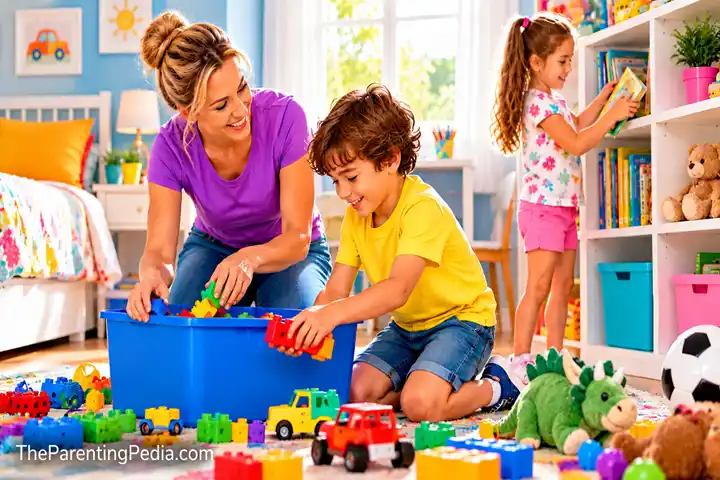
5. Offer Choices Instead of Starting a Power Struggle
Children often resist instructions because they want more independence. Offering two acceptable choices gives them some control while allowing parents to maintain necessary boundaries.
For example, if your child refuses to tidy up, you could ask, “Would you like to put away the blocks first or the books first?” Both options lead towards the same responsibility.
Make sure the choices are genuine. Avoid offering something you cannot accept or turning every instruction into a negotiation.
This approach works best when the expectation is reasonable and clearly explained. If a child must wear a seat belt, for instance, the rule remains firm even if the child dislikes it.
If homework often leads to arguments at home, try these tips to help your child with homework without daily stress.
6. Teach Children How to Calm Their Emotions
Anger, disappointment, jealousy, and frustration are normal emotions. Children may need time and adult support to learn how to handle them safely.
When your child becomes upset, acknowledge the feeling while maintaining the boundary. You might say, “I can see that you’re angry because playtime is over. It’s okay to feel angry, but it’s not okay to hit.”
Help younger children take slow breaths, sit with a trusted adult, or move to a quiet space. Older children might benefit from talking, drawing, or taking a short break.
A calm-down break should help a child regain control, not make them feel rejected or ashamed. Discuss the problem once everyone is ready to listen.
7. Teach Children to Repair Their Mistakes
An apology is useful, but children also need to learn how their actions affect other people. Encourage them to make things right whenever possible.
If your child spills paint, help them clean it up. If they hurt a sibling’s feelings, discuss what happened and explore ways to repair the relationship. If they damage something, involve them in an age-appropriate plan to fix or replace it.
Do not demand an immediate apology while a child is overwhelmed. First help them understand the situation. Then guide them towards a meaningful response.
Try this: “Your words hurt your brother. What could you do now to help him feel better?”
8. Spend Regular Quality Time Together
Sometimes difficult behaviour occurs when children are tired, overwhelmed, frustrated, or seeking connection. It is worth considering what happened before the behaviour rather than assuming a child is deliberately being difficult.
Set aside a little time each day to read, play, talk, or enjoy an activity together. Give your child your attention without constantly correcting or instructing them.
Quality time does not need to involve expensive outings or elaborate activities. Even a short conversation before bedtime can help children feel heard and supported.
A strong relationship does not eliminate every behaviour problem, but it can make communication and cooperation easier.
9. Model Respectful Behavior
Children learn by watching the adults around them. If parents shout during disagreements, children may learn that shouting is an acceptable way to express anger.
Show your child how to disagree respectfully, apologise after making a mistake, and take responsibility for your actions. When you lose your temper, acknowledge it rather than pretending it did not happen.
For example, you might say, “I raised my voice earlier, and that wasn’t helpful. I’m sorry. I’ll try to speak more calmly next time.”
This teaches children that making mistakes is part of being human and that people can work to correct them.
10. Redirect Unwanted Behavior and Teach an Alternative
Young children often need help understanding what they should do instead of a behaviour that is unsafe or inappropriate. Simply saying “No” may stop an action briefly, but it does not always teach a useful replacement.
If your child throws blocks, explain that blocks are for building and offer a soft ball to throw outside. If your child grabs another child’s toy, guide them to ask for a turn.
Be clear about the boundary, demonstrate the desired behaviour, and praise your child when they practise it. Repeat the lesson patiently because new skills take time to develop.
Positive discipline is a process of teaching and practising, not a one-time conversation.
Common Mistakes Parents Should Avoid
Even caring parents can struggle to remain consistent. Watch out for these common mistakes:
- Threatening without following through: Make reasonable promises about consequences and follow through calmly.
- Expecting too much too soon: Match expectations to your child’s age, development, and abilities.
- Correcting every small mistake: Focus on important boundaries and notice positive behaviour too.
- Using consequences that do not fit: Choose responses that are fair, proportionate, and connected to the behaviour.
- Expecting instant change: Children need reminders, practice, and patience to develop new skills.
If behaviour is persistent, severe, or affecting family life, consider speaking with a qualified child-development professional or healthcare provider.
For additional guidance, Childline South Africa explains the importance of positive discipline and alternatives to corporal punishment.
Frequently Asked Questions
1. What is Positive Discipline for Kids?
It is an approach that teaches children appropriate behaviour through clear boundaries, respectful communication, encouragement, and reasonable consequences. It aims to build responsibility and self-control rather than relying on fear.
2. Does positive discipline mean parents should never punish children?
Parents still need to respond when rules are broken. The emphasis is on teaching rather than harsh or humiliating punishment. Calm, proportionate consequences can help children understand the results of their actions.
3. What should I do when my child refuses to listen?
Get your child’s attention, give one clear instruction, and check that they understand it. Offer limited choices when appropriate and follow through consistently. If the child is overwhelmed, help them calm down before discussing the problem.
4. At what age can parents start using positive discipline?
Parents can begin teaching simple boundaries from early childhood, adapting their approach to the child’s development. Babies need comfort, supervision, and gentle redirection rather than discipline based on rules or consequences they cannot understand.
5. How long does positive discipline take to work?
There is no fixed timeline. Some behaviors improve quickly, while others require repeated teaching and consistent responses. Progress also depends on a child’s age, temperament, needs, and circumstances.
Conclusion
Children need boundaries, but they also need patience, encouragement, and opportunities to learn from mistakes. Positive Discipline for Kids helps parents respond to challenging behaviour without relying on fear or humiliation. Clear rules, calm conversations, meaningful consequences, and consistent encouragement can teach children to make better choices over time.
You do not have to handle every difficult moment perfectly. Start with one strategy, practise it consistently, and adjust it to your child’s needs. The goal is not simply to stop unwanted behaviour today, but to help your child develop the skills to manage behaviour more independently as they grow.
Author’s Note
TheParentingPedia.com provides evidence-informed parenting information based on research and trusted child-development resources. This article is intended for general educational purposes and should not replace personalised advice from a qualified healthcare or child-development professional when additional support is needed.
Sources & Further Reading
- Australia: Raising Children Network
Consequences and Positive Child Behaviour - United Kingdom: NHS
Dealing with Child Behaviour Problems - Canada: Public Health Agency of Canada
What’s Wrong with Spanking?

TheParentingPedia editorial team creates practical, research-informed parenting content to help parents navigate everyday challenges, child development, behavior, and family life. Our articles draw on reputable parenting and child-development sources and are reviewed for clarity, accuracy, and practical usefulness.