
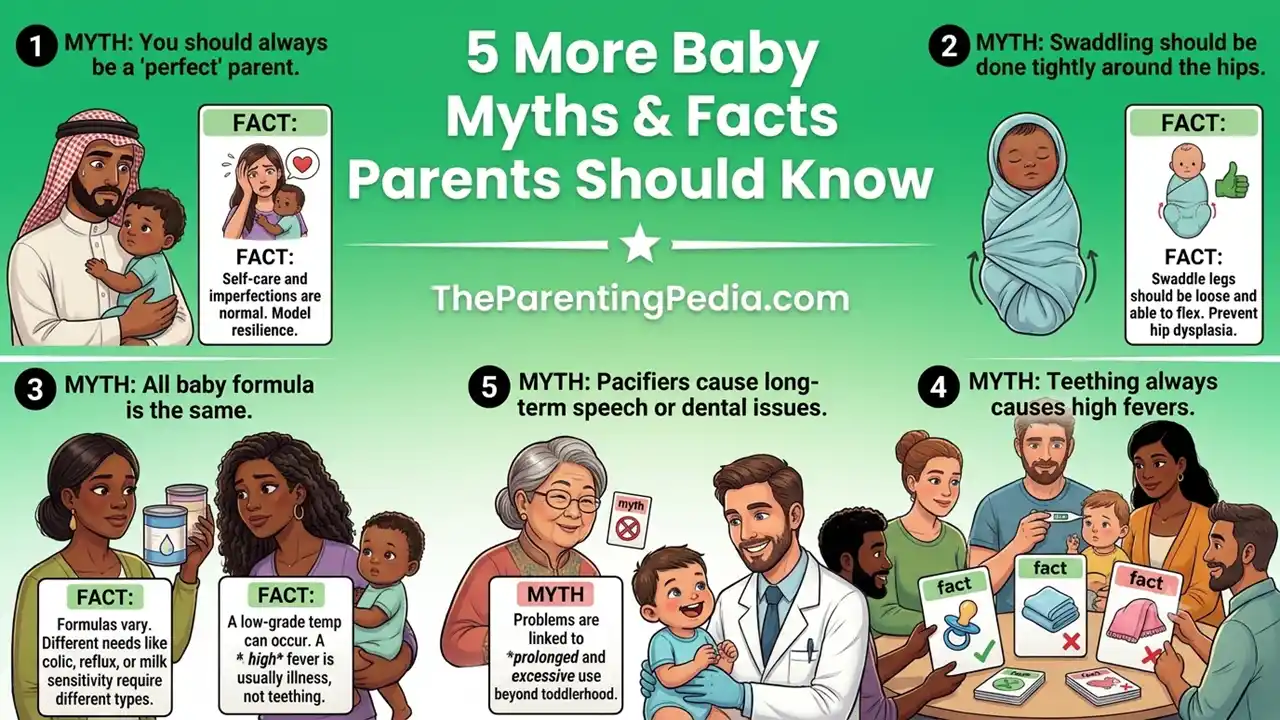
Parents want the best for their babies, but advice about infant care can be confusing. Relatives, friends, and social media often share tips passed down through generations. For more guidance on caring for your little one, explore our guide to Essential Newborn Care Tips for First-Time Parents. Although many suggestions come from good intentions, not all are supported by current medical guidance.
Some baby myths concern feeding, sleep, teething, and development. Knowing what health experts recommend can help parents make informed choices. Here are five more baby myths parents should understand.
Some traditional beliefs are harmless, but health-related advice should be checked before it is followed. Here are five common misconceptions.
Table of Contents
1. Babies Need Extra Water During Hot Weather
Myth: Giving water to a young baby prevents dehydration when the weather is hot.
Fact: Babies under six months who are breastfed or correctly formula-fed generally do not need extra water. Breast milk and properly prepared formula provide the fluids they need, even in hot weather. Breastfed babies may simply need to feed more often.
Offering water can reduce the amount of milk a young infant drinks. Too much water can also disturb the body’s sodium balance. The World Health Organization recommends exclusive breastfeeding for the first six months, including in hot climates.
What parents should do:
- Breastfeed more frequently in hot weather.
- Prepare formula exactly as directed; never dilute it.
After around six months, when complementary foods begin, small amounts of safe water can be offered in an age-appropriate cup.
South Africa’s Department of Health also recommends exclusive breastfeeding during the first six months without additional water or other drinks unless medically indicated, as explained in its exclusive breastfeeding guidance.
2. Adding Rice Cereal to a Baby’s Bottle Helps Them Sleep Longer
Myth: A bottle thickened with rice cereal keeps a baby full and helps them sleep through the night.
Fact: Adding cereal or other solid food to a baby’s bottle is not a reliable way to improve sleep and may increase choking risk. It can also make it harder for a baby to regulate how much they drink.
Infant sleep changes with age and development. Waking at night is common and does not mean a baby needs solid food. The CDC advises against putting cereal or other foods in a bottle unless a healthcare professional recommends it for a specific medical reason.
Parents looking for practical guidance on establishing healthy sleep routines can also read our article on Baby Sleep Training Tips for New Parents.
What parents should do:
- Follow age-appropriate feeding guidance and your baby’s hunger and fullness cues.
- Introduce complementary foods at around six months, when your baby is developmentally ready.
- Do not add cereal to a bottle to encourage longer sleep.
Never change formula preparation instructions. Discuss feeding, reflux, or sleep concerns with your pediatrician.

3. Teething Always Causes Fever and Diarrhea
Myth: Fever, diarrhea, and illness are normal parts of teething.
Fact: Teething can cause sore gums, drooling, chewing, and mild irritability. It does not cause a true fever or explain diarrhea. These symptoms may have another cause and should not automatically be blamed on emerging teeth.
Parents can also learn about age-related physical, cognitive and social changes in our guide to Child Development Milestones: What to Expect and When.
What parents should do:
- Gently massage the gums with a clean finger.
- Offer a firm teething ring chilled in the refrigerator, not frozen.
- Avoid amber teething necklaces and unapproved numbing products.
If your baby has fever, diarrhea, persistent crying, or unusual tiredness, contact your pediatrician rather than assuming it is teething.
The UK’s NHS also explains that babies begin teething at different ages and that there is no evidence linking teething to diarrhoea; read its baby teething symptoms guidance.
4. Babies Should Sleep on Their Stomachs to Prevent Choking
Myth: A baby should sleep on their stomach because they might choke if they spit up while lying on their back.
Fact: Healthy babies should be placed on their backs for every sleep, including naps. Back sleeping reduces the risk of sudden infant death syndrome (SIDS) and other sleep-related deaths. Normal spit-up is not a reason to place a healthy baby on their stomach.
Healthy babies have protective airway reflexes that help them manage normal spit-up. Safe-sleep guidance from the NICHD recommends placing babies on their backs rather than their stomachs or sides.
What parents should do:
- Place your baby on their back at the start of every sleep.
- Use a firm, flat, safety-approved sleep surface.
- Keep pillows, loose blankets, and soft toys out of the sleep space.
If your baby rolls independently in both directions, continue placing them on their back at the start of sleep and keep the sleep space clear.

5. Every Baby Must Have Their First Tooth by Six Months
Myth: A baby who has no tooth by six months has a developmental problem.
Fact: The timing of the first tooth varies. Many babies get their first tooth around six months, but some develop teeth earlier or later. No tooth at six months does not automatically indicate a developmental problem.
Comparing babies can create unnecessary worry. Teeth do not appear on an identical timetable, so consider your child’s overall growth and development rather than one milestone alone.
What parents should do:
- Clean your baby’s gums gently even before the first tooth appears.
- Begin brushing when the first tooth emerges, using age-appropriate fluoride toothpaste as advised by a dental professional.
- Ask a pediatrician or pediatric dentist if you are concerned about delayed tooth development.
A little variation in teething timelines is usually not a reason to panic, but discuss individual concerns with a qualified professional.
How Parents Can Separate Baby Myths from Reliable Advice
Family members often share advice because they want to help, but health recommendations can change as research improves. Before trying unfamiliar advice, parents can:
- Check trusted sources, including recognised medical organisations and public health agencies.
- Ask a pediatrician about feeding, sleep, teething, and development.
- Avoid comparisons; babies develop at different rates.
- Be cautious with home remedies because natural products are not automatically safe for infants.
- Share updated recommendations kindly with relatives and caregivers.

Frequently Asked Questions (FAQs)
1. Why do parents continue believing common baby myths?
Many myths are passed down through family traditions or social media. Checking current medical guidance helps parents decide whether advice is safe and appropriate.
2. Should babies younger than six months drink water?
Generally, no. Breast milk and correctly prepared formula usually provide the fluids babies need during the first six months. Follow a healthcare professional’s advice for individual medical needs.
3. Does teething cause fever in babies?
No. Teething may cause gum discomfort, drooling, and chewing, but not a true fever. Contact a healthcare professional if your baby develops a fever or other concerning symptoms.
Conclusion
Understanding baby myths helps parents make safer decisions during their child’s early years. Advice about water, bottle-feeding, teething, sleep position, and the first tooth is not always supported by medical evidence. Parents should use reliable information, pay attention to their baby’s needs, and speak with a pediatrician when concerned. Every baby develops at their own pace; informed, responsive care matters more than following old assumptions.
Author’s Note
TheParentingPedia.com shares practical, research-informed parenting guidance. This article is for general education and is not a substitute for professional medical advice. Consult a qualified pediatrician about your baby’s individual needs.
Sources & Further Reading
Centers for Disease Control and Prevention (CDC) – Infant and Toddler Nutrition: Frequently Asked Questions
https://www.cdc.gov/infant-toddler-nutrition/faqs/index.html
American Academy of Pediatrics – Teething Pain Relief: How to Soothe Your Baby’s Discomfort
https://www.healthychildren.org/English/ages-stages/baby/teething-tooth-care/Pages/Teething-Pain.aspx
National Institute of Child Health and Human Development – Infant Care
https://www.nichd.nih.gov/health/topics/factsheets/infantcare

TheParentingPedia editorial team creates practical, research-informed parenting content to help parents navigate everyday challenges, child development, behavior, and family life. Our articles draw on reputable parenting and child-development sources and are reviewed for clarity, accuracy, and practical usefulness.