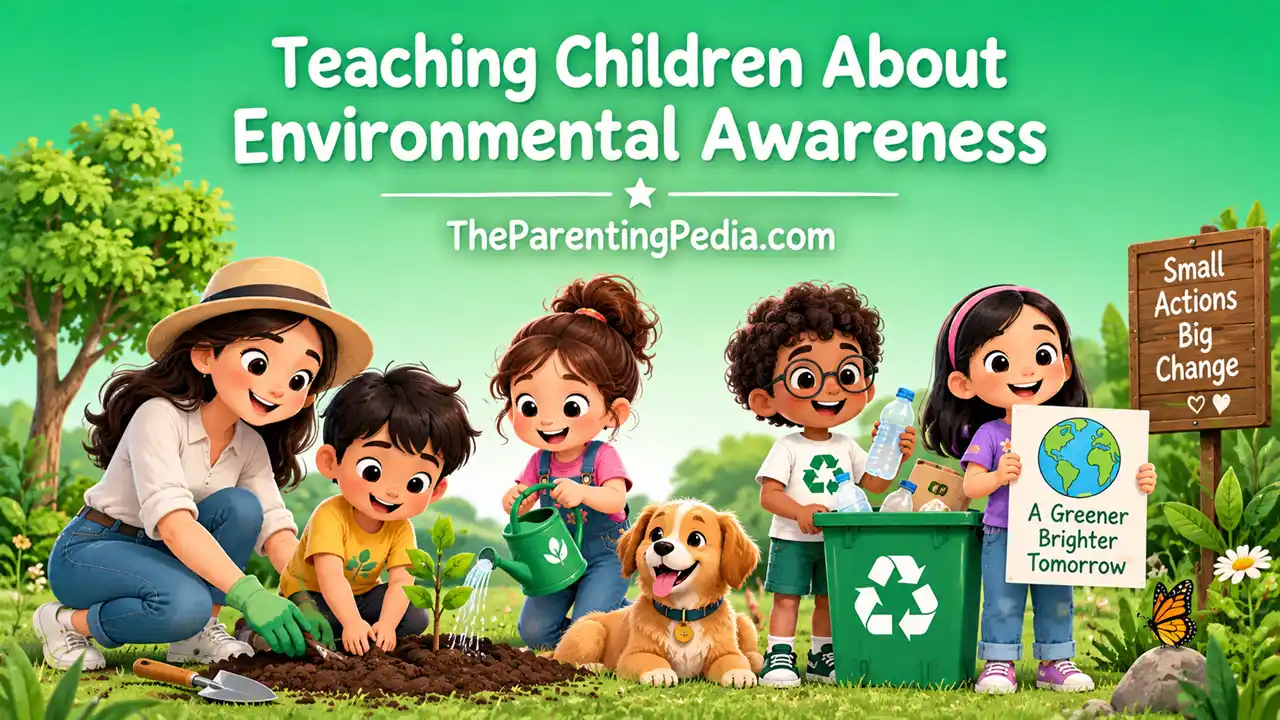
Environmental awareness starts with simple moments: noticing a bird, caring for a plant, saving water, or asking why rubbish should not be left on the ground. Environmental Awareness becomes meaningful when children connect what they learn with everyday life.
Table of Contents
Why Environmental Awareness Matters for Children
Children learn through what they see and do. When adults help them notice how people depend on clean air, water, plants and healthy surroundings, environmental topics become easier to understand.
The U.S. Environmental Protection Agency describes environmental education as a process that helps people explore issues, solve problems and make informed decisions. For children, learning can begin at home, school and outdoors. (US EPA)
It Builds Respect for Nature
Regularly noticing trees, insects, birds and flowers can help children develop respect for living things. A park visit or caring for a plant can lead to conversations about nature.
It Encourages Responsible Habits
Turning off unused lights, using water thoughtfully, reducing waste and caring for shared spaces are simple habits children can understand.
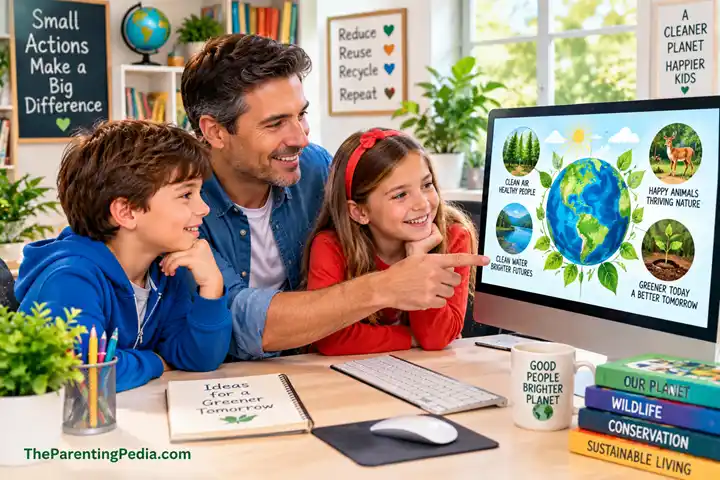
How Parents Can Build Environmental Awareness at Home
Parents do not need formal lessons. Everyday routines are an easy starting point.
Talk About What Children Can See
While washing hands, discuss water use. While preparing food, talk about avoiding waste. During a walk, ask what plants, animals or sounds your child notices.
If you do not know an answer, find out together.
Let Children See Your Actions
Children notice adult behaviour. Make environmental habits a family effort: sort waste locally, reuse suitable items, care for plants and use resources thoughtfully. The goal is consistency, not perfection.
Make Nature Part of Family Life
A balcony plant, neighbourhood tree or local park can become a place for observation. See our guide on connecting children with nature for more ideas.
Simple Environmental Activities for Children
Hands-on activities turn big ideas into experiences.
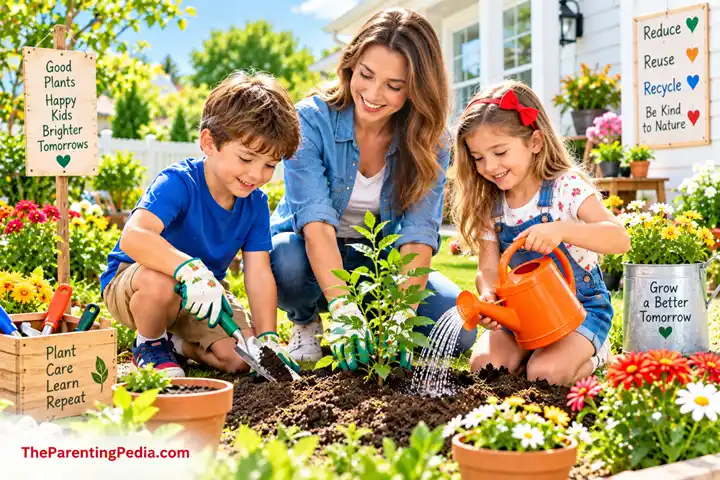
Grow a Plant
Let your child help plant a seed or care for a suitable plant. They can water it, observe new leaves and keep a simple drawing journal.
For younger children, gardening and planting activities can also make learning hands-on.
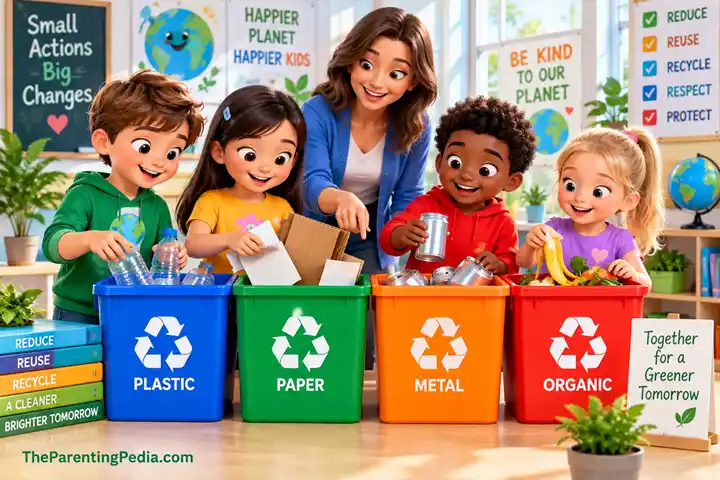
Try a Waste-Sorting Game
Use clean household items and ask your child to sort them according to your local waste system. Rules differ between communities.
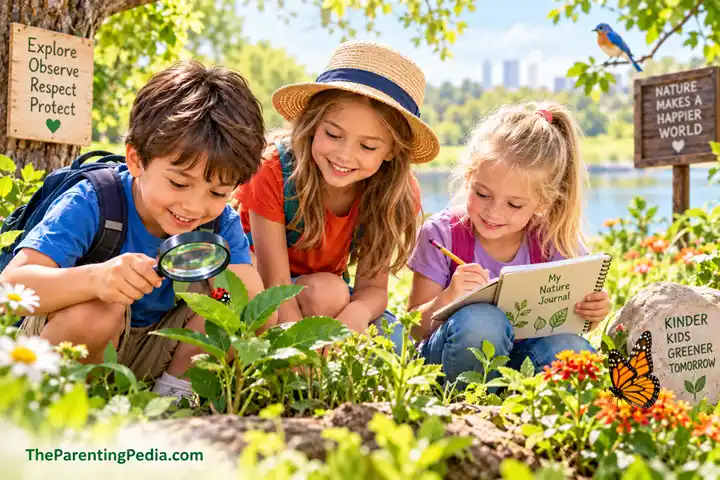
Go on a Nature Hunt
Take a short walk and ask your child to notice five different things, such as a leaf, bird, insect, flower or interesting sound.
Raising Children Network recommends simple nature walks as opportunities for observation, play, science and conversation. (Raising Children Network)
Create a Reuse Challenge
Before throwing something away, ask whether it could have another safe use. A cardboard box can become part of pretend play, while clean containers can become storage or craft materials.
Our guide to cultivating creativity in kids offers more ideas for open-ended activities.
Environmental Awareness at School and in the Community
Schools can reinforce what children learn at home by connecting environmental topics with real experiences.
Connect Lessons With Everyday Learning
Science can explore plants, habitats and water. Geography can examine local environments. Mathematics can involve simple measurements. Art can use nature as inspiration.
The U.S. EPA notes that environmental education can build knowledge and critical-thinking skills while helping students make informed decisions. (US EPA)
Encourage Practical Projects
A school garden, nature journal, litter-awareness project or biodiversity activity can help children apply what they learn. Projects should be age-appropriate.
Help Children Understand Their Role
Children can contribute without believing the future depends on them personally. UNICEF emphasizes climate education, knowledge and skills that support children’s meaningful participation. (UNICEF)
Environmental Awareness and Age-Appropriate Conversations
The language should change as children grow.
Younger Children
Focus on what they can experience: plants need water, animals need habitats, litter can harm shared spaces, and people need clean air and water.
School-Age Children
Introduce waste, pollution, conservation and climate change using clear examples. Encourage questions rather than complicated memorisation.
Teenagers
Older children can explore evidence, possible solutions and the trade-offs involved in environmental choices. Encourage them to check reliable sources online.
Raising Children Network recommends adapting climate conversations to a child’s age, interests and emotional responses while listening to concerns and focusing on constructive action. (Raising Children Network)
Keep Environmental Learning Hopeful
Environmental problems can sound frightening when children see news about fires, floods, heatwaves or pollution.
Parents do not need to hide difficult facts, but children also need context and reassurance. Ask what they already know, listen to their feelings and explain what people are doing to address problems.
Raising Children Network recommends talking, learning and taking constructive action together when children are worried about climate change. (Raising Children Network)
A simple family message can be: “We cannot fix everything ourselves, but we can learn, care for our surroundings and make thoughtful choices.”
Everyday Habits That Reinforce Environmental Awareness
Small habits are easier to remember when they become part of family life.
Try:
- Turn off lights and electronics when they are not needed.
- Use water thoughtfully.
- Avoid wasting food where practical.
- Reuse suitable items before replacing them.
- Follow local recycling and waste-sorting rules.
- Care for plants and shared outdoor spaces.
- Spend regular time noticing nature.
For more learning-through-play ideas, explore our article on educational games for kids at home.
Make Learning Fun, Not a Chore
Children are more likely to stay interested when they have choices. Try nature drawing, a plant diary, a reuse challenge or a short wildlife hunt. See the importance of free time for kids for more ideas.
Frequently Asked Questions
Why should parents teach children about the environment?
Parents can help children understand their surroundings and develop practical habits such as reducing waste and caring for nature.
What is the easiest way to start teaching environmental awareness?
Start with something your child can see or do, such as watering a plant, taking a nature walk or talking about waste.
What environmental activities can children do at home?
Children can grow plants, keep a nature journal, sort waste locally and reuse safe materials for crafts.
How can parents talk about climate change without frightening children?
Use honest, age-appropriate language, listen to feelings and include constructive actions.
Can schools help children become environmentally responsible?
Yes. Schools can connect environmental topics with science, geography, art and practical projects.
Conclusion
Environmental Awareness grows through everyday experiences. A child does not need to understand every environmental problem to begin caring about the world around them.
Start small: grow a plant, notice a bird, save water, reuse something or take a walk together. Talk about what your child sees and encourage questions.
When parents and teachers combine reliable information with practical activities, children can develop curiosity, responsibility and confidence. The goal is helping children understand that their choices matter and that caring for the environment is part of family life.
Author’s Note
TheParentingPedia creates practical, evidence-informed parenting content for parents, caregivers, teachers and families. This article draws on guidance from Raising Children Network, UNICEF and the U.S. Environmental Protection Agency.
Sources & Further Reading
- Raising Children Network — How to talk to children about climate change (Raising Children Network)
- Raising Children Network — Nature walk: play ideas for children (Raising Children Network)
- UNICEF — Climate action for families (UNICEF)
- UNICEF — Children’s Climate Risk Report 2026 (UNICEF)
- U.S. EPA — What Is Environmental Education? (US EPA)

TheParentingPedia editorial team creates practical, research-informed parenting content to help parents navigate everyday challenges, child development, behavior, and family life. Our articles draw on reputable parenting and child-development sources and are reviewed for clarity, accuracy, and practical usefulness.