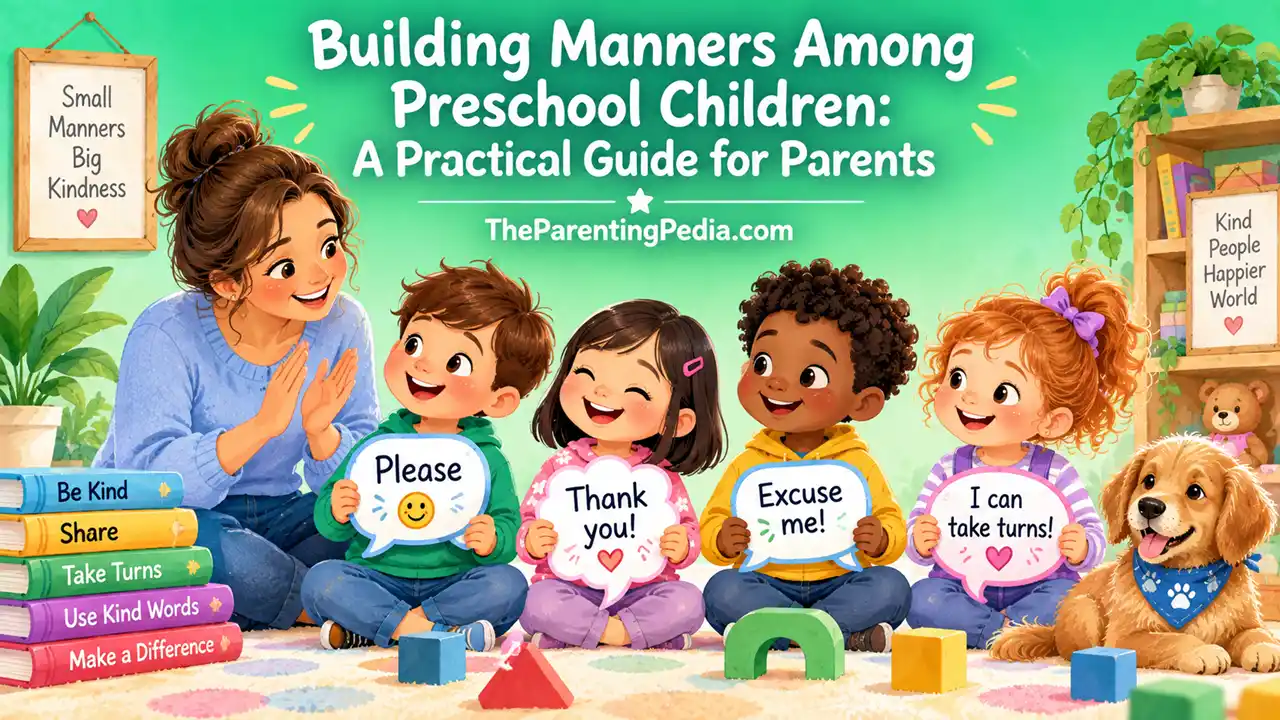
Preschool years are a busy time for learning how to talk, play, cooperate and handle strong feelings. Your child may know that saying “please” is polite one day and forget it the next. That inconsistency can be frustrating, but it is part of learning. Building manners among preschool children is less about demanding perfect politeness and more about helping children practice respectful behaviour in everyday situations. With modelling, simple reminders, playful practice and realistic expectations, parents can help good manners become habits without turning every interaction into a correction.
Table of Contents
Why Manners Can Be Hard for Preschoolers
Preschoolers are still developing self-control, language, empathy and social awareness. They may understand a rule but struggle to follow it when they are excited, tired, hungry or upset. Children are also learning to join play, take turns, respond to feelings and adjust their behaviour in different settings.
That is why manners among preschool children can seem inconsistent. A child might greet a grandparent politely at home but hide behind a parent at a party. Another might ask nicely for a toy one afternoon and grab it the next. These moments do not automatically mean a child is deliberately rude. They are opportunities to teach and practise.
Start With a Few Everyday Manners
You do not need to teach every etiquette rule at once. Begin with useful habits your child can hear and practise regularly:
- Saying “please” when asking for something
- Saying “thank you” after receiving something
- Greeting familiar people
- Taking turns during games and conversations
- Using gentle hands
- Asking before taking someone else’s belongings
- Saying “excuse me” when interrupting or passing
When teaching manners among preschool children, focus on the behaviour behind the words. Saying “thank you” matters, but so does recognizing that another person helped you. Saying “please” matters, but so does learning to make a respectful request.
Model the Behaviour You Want to See
Children learn a great deal by watching adults. Raising Children Network recommends modelling, simple instructions and practice when helping children develop new skills, including social skills. The CDC also encourages parents to explain and show the behaviour they expect from preschoolers.
Make polite language part of ordinary family life. Say, “Please pass me the spoon,” “Thank you for helping,” or “Excuse me, can I get through?” Use the same respectful tone with your child that you want your child to use with others.
You can also model how to repair a mistake. If you interrupt your child, say, “I interrupted you. I’m sorry. Please finish what you were saying.” This shows that manners are about treating people with respect, not being perfect.
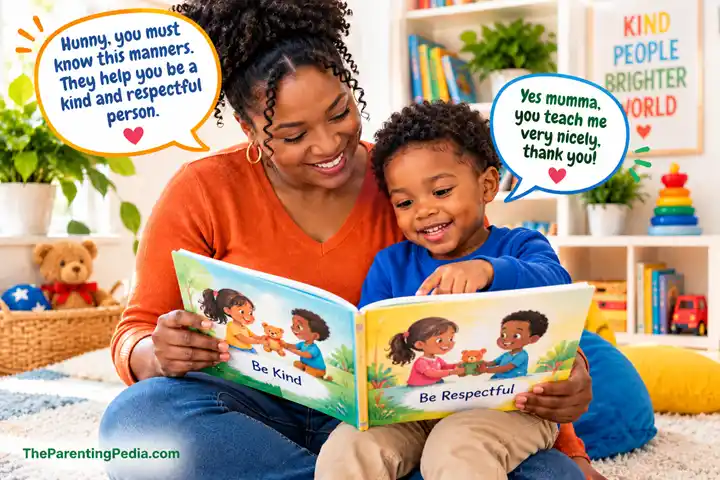
Children learn a great deal by watching adults, so modelling respectful behaviour at home can help reinforce the social skills you want your child to develop.
Practice Through Play
Role-play lets children practise before a real situation occurs. Before a birthday party, pretend that a toy is a guest arriving at the door.
Ask, “What could you say when someone gives you a gift?” Let your child practise “Thank you.” Then switch roles and let your child be the grown-up.
Toys can also help. A teddy can ask for a block, interrupt a conversation or forget to say thank you. Ask, “What could Teddy say instead?”
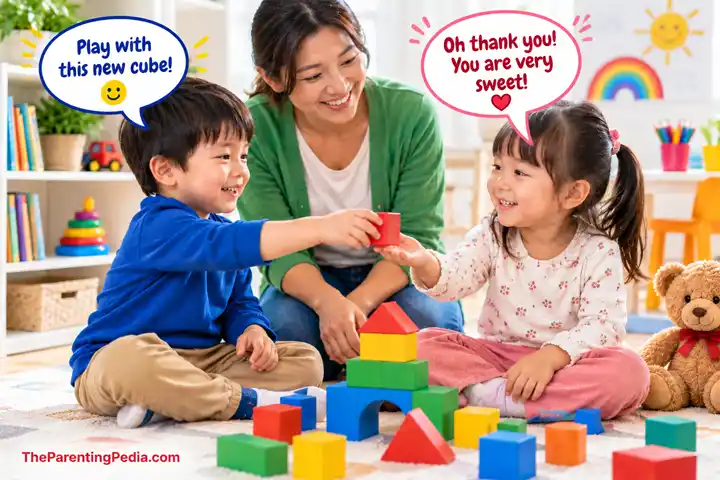
Practicing turn-taking during play can also help preschoolers build cooperation and social skills.
Give Quiet Prompts Instead of Public Corrections
When your child forgets a manner, a short prompt is often enough. If they say, “Juice!” calmly respond, “Try asking me with please.” Then give them time to repeat the request.
If your child does not greet someone, avoid forcing a performance in front of others. Model the greeting yourself and offer a low-pressure alternative, such as waving. Children may be shy, tired or slow to warm up.
Instead of saying, “Be polite,” give a clear direction: “Wait until Grandma finishes talking, then you can tell her your story.”
Notice Effort and Progress
Children benefit from knowing exactly what they did well. Instead of a general “Good job,” try, “You waited for your sister to finish. That was thoughtful,” or “You remembered to ask before taking the toy.”
This approach is especially useful when building manners among preschool children because it connects praise to a specific behaviour.
Praise does not need to become a reward for every polite word. The goal is for respectful behaviour to become part of everyday family life.
Set Realistic Expectations
A preschooler who is tired after a long day may have less patience than usual. Hunger, overstimulation and frustration can also make it harder to use skills they already know. Raising Children Network notes that understanding why behaviour happens can help parents choose a more appropriate response.
Avoid Labels and Forced Apologies
Calling a child “rude,” “selfish” or “bad-mannered” focuses on the child rather than the behaviour. Instead, describe what happened and what you want them to do differently: “That was not a kind way to ask. Try again.”
Rather than demanding “Say sorry right now,” guide your child toward repair. If they knocked down another child’s tower, say, “Let’s see if they are okay. We can help rebuild it.” This helps the child understand the impact of their actions.
Use Family Rules to Reinforce Manners
Simple family rules can make expectations easier to understand. Raising Children Network recommends positive, specific rules that tell children what to do, such as speaking nicely and using “please” when asking for something.
Choose a few rules that matter most to your family: “We use gentle hands,” “We listen when someone is speaking,” and “We ask before taking.”
When building manners among preschool children, repeat the same expectations across everyday situations rather than giving long explanations each time. Consistency makes the rules easier to remember.
If your child often struggles with boundaries or following directions, our guide on how to guide your child’s behavior offers additional practical strategies.
When Should Parents Seek Extra Support?
Most preschoolers need repetition before social skills become consistent. Consider discussing your concerns with your child’s pediatrician, doctor or early-years professional if your child has persistent or significant difficulty communicating, connecting with peers, following everyday social expectations or managing behaviour that disrupts family or preschool life.
Frequently Asked Questions
At what age should children use “please” and “thank you”?
Children can begin practising polite words during the preschool years, but consistency develops gradually. Model the words, prompt gently and give repeated opportunities to practise rather than expecting perfect manners.
Should I force my preschooler to apologise?
It is usually more helpful to guide repair than demand a rushed apology. Help your child check on the other person, return an item, help fix a problem or use appropriate words when ready.
What if my child refuses to greet people?
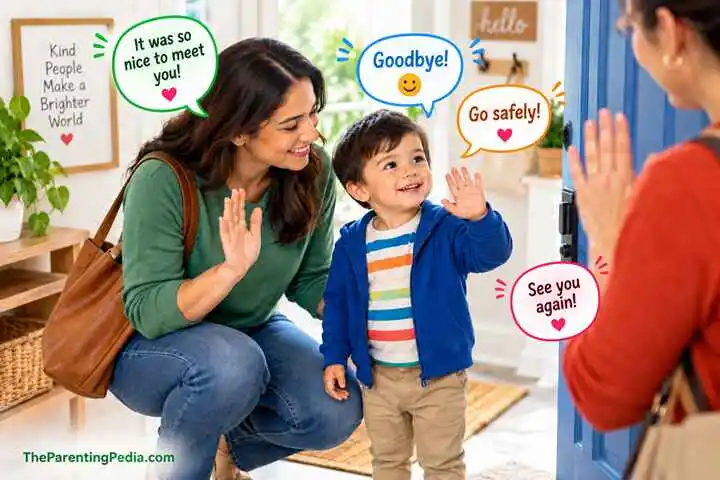
Do not force eye contact, hugs or a verbal greeting. Model the behaviour and offer alternatives such as waving or smiling. Give your child time to warm up.
How can I teach manners without constantly nagging?
Focus on one or two skills at a time. Use short reminders and practise during calm moments. Over time, repeated practice is more useful than frequent lectures. This is a practical approach to building manners among preschool children without creating constant pressure.
Conclusion
Building manners among preschool children takes patience, repetition and modelling. Your child will forget, resist and need reminders, especially when tired or overwhelmed. Keep expectations realistic, show the behaviour you want to see and give your child simple chances to practise. A calm “Let’s try that again kindly” can be more useful than a lecture or label. The goal is not perfect manners on command. It is a child who gradually learns to communicate respectfully, consider other people and repair mistakes.
Author’s Note
TheParentingPedia.com creates evidence-informed parenting content using trusted child-development and parenting sources. Our articles are intended for general educational purposes and should not replace personalised advice from a qualified professional. If you have concerns about your child’s development, communication or behaviour, consider seeking appropriate professional guidance.
Recommended “Sources & Further Reading” format
- Raising Children Network — preschool behaviour tips & strategies
- Raising Children Network — family rules for children
- Raising Children Network — preschoolers’ social and emotional development
- CDC — positive parenting tips for preschoolers

TheParentingPedia editorial team creates practical, research-informed parenting content to help parents navigate everyday challenges, child development, behavior, and family life. Our articles draw on reputable parenting and child-development sources and are reviewed for clarity, accuracy, and practical usefulness.