
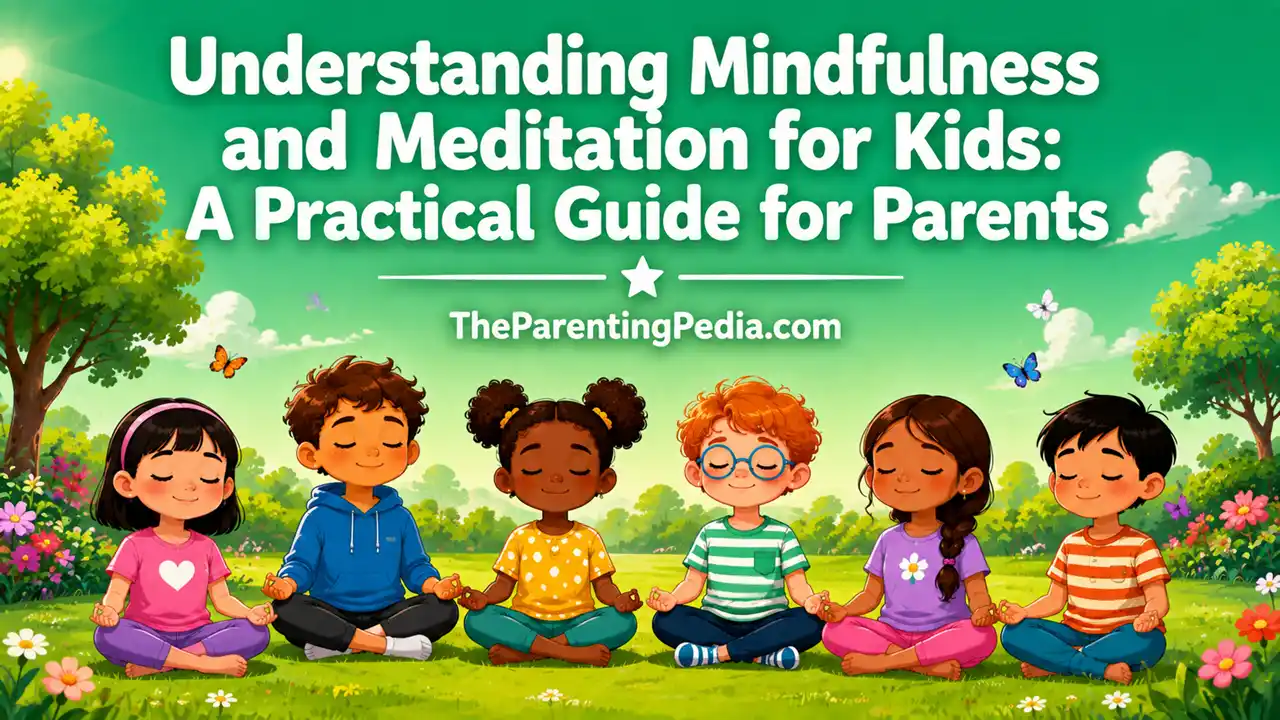
Mindfulness and meditation for kids can give children simple ways to slow down, notice their feelings, and practice attention. They do not need long sessions or perfect stillness; short, playful moments can fit naturally into family life.
Mindfulness means paying attention to what is happening right now without judgment. Children can notice their breathing, sounds, body sensations, or feelings. Meditation is a more focused practice that may use breathing, attention, visualization, or quiet reflection.
Mindfulness can also happen while eating, walking, coloring, or listening to music. For parents, the goal of mindfulness and meditation for kids is not perfect calm, but helping children notice what is happening and gently bring their attention back when it wanders.
Table of Contents
Why Mindfulness and Meditation Can Help Kids
Research in children is still developing, but mindfulness practices may support emotional awareness, attention, and coping with stress. The American Academy of Pediatrics also describes meditation breaks as a way for children to pause, focus, and relax.
Attention and self-regulation develop through practice and supportive experiences. Parents may notice small changes, such as a child taking a breath when frustrated or returning to a task after getting distracted.
How to Introduce Mindfulness and Meditation to Kids
Start small. One or two minutes can be enough for a young child; older children can gradually practice longer.
Choose a calm moment, such as bedtime or after school. Practice together and use simple prompts like, “Let’s take three slow breaths.”
Keep it playful. Some children prefer movement, sounds, drawing, or sensory games. If an activity makes your child uncomfortable or more upset, stop and try another approach.
Parents can make this process easier by using calm, consistent approaches that support their child’s emotional and social development, as discussed in our guide to effective parenting.
Simple Mindfulness Activities for Kids
1. Five-Senses Check-In
Ask your child to notice one thing they can see, hear, feel, smell, and taste.
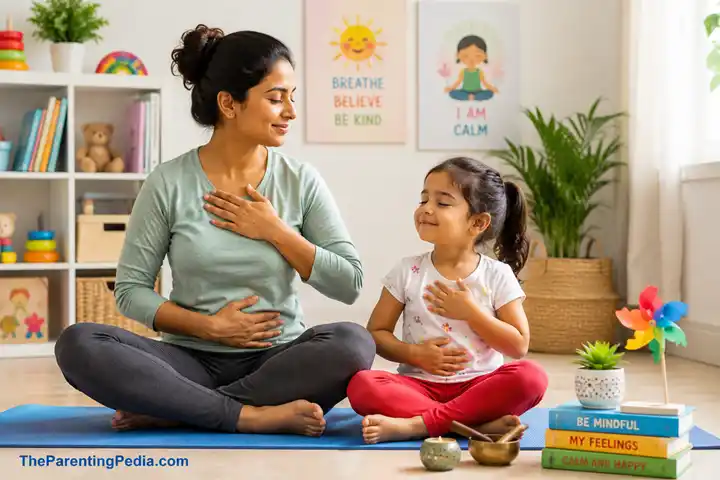
2. Balloon Breathing
Imagine the belly is a balloon. Breathe in slowly, then breathe out as it empties. Start with three or four comfortable breaths.
3. Mindful Listening
Sit together and listen for three sounds. Ask which sound was closest or farthest away.
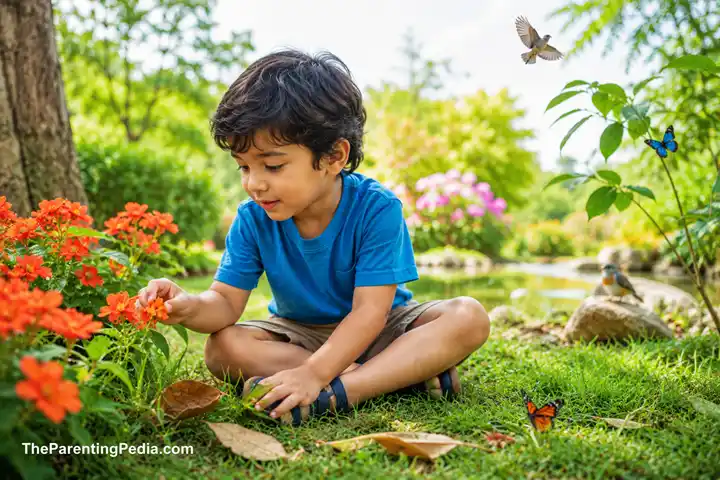
4. Mindful Walking
During a short walk, notice footsteps, colors, sounds, or the air. Keep it natural and fun.
5. Stuffed-Animal Breathing
Place a stuffed animal on your child’s belly and watch it gently rise and fall with each breath.
Outdoor activities can make mindfulness especially engaging, and connecting children with nature gives them more opportunities to notice sights, sounds, textures and other details around them.
A Quick Guide for Parents
| Activity | Easy Way to Start | Best Fit |
| Five-senses check-in | Notice one thing with each sense | Most ages |
| Balloon breathing | Take three slow breaths | Younger kids |
| Mindful listening | Find three different sounds | Most ages |
| Mindful walking | Notice steps and surroundings | Active kids |
| Stuffed-animal breathing | Watch the toy rise and fall | Younger kids |
Make Mindfulness Part of Everyday Life
The easiest way to make mindfulness and meditation for kids stick is to connect practice with routines your child already knows. Try three breaths before school, a short listening game during a walk, or slow breathing at bedtime.
Coloring, eating, and outdoor play can also become opportunities to notice sounds and feelings. Pick one activity your child enjoys and repeat it regularly; consistency matters more than long sessions.
For related parenting ideas, explore Educational Games for Kids at Home, Family Traditions and Rituals, and How Parental Stress Affects Children.
Mindfulness and Movement for Active Kids
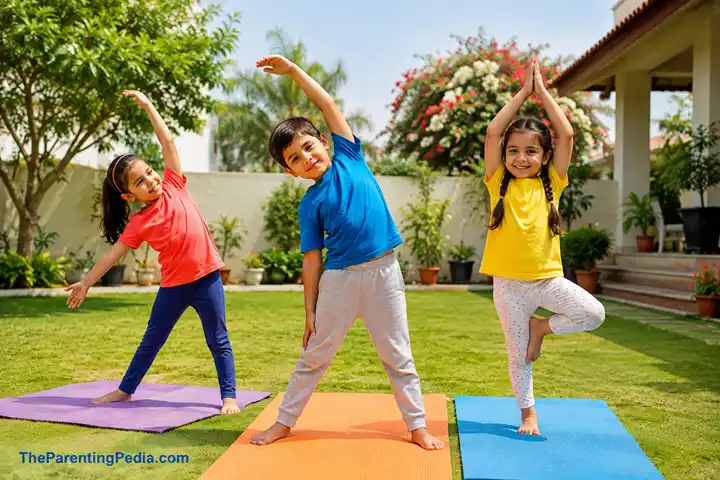
Not every child enjoys sitting quietly. Try slow stretching, mindful walking, simple yoga poses, or slow animal movements.
Ask what your child notices in their body while moving. Mindfulness and meditation for kids should be flexible enough to fit the child, not the other way around.
Along with mindfulness, parents can support emotional wellbeing by helping children build confidence and develop healthier ways of responding to everyday challenges; see our guide to low confidence in kids.
Common Mistakes Parents Should Avoid
Do not expect immediate calm. Getting distracted is normal, and gently returning attention is part of learning.
Do not use mindfulness as punishment or demand long sessions and perfect silence. Expectations should match your child’s age and temperament.
Mindfulness can be supportive, but it should not be presented as a way to eliminate emotional or mental health problems or replace professional care.
When Should Parents Seek Extra Support?
Mindfulness and meditation for kids can support everyday well-being, but seek additional guidance when emotional, behavioral, sleep, school, or social concerns persist or interfere with daily life.
If a child becomes distressed during practice or has ongoing upsetting thoughts, stop the activity and talk with a pediatrician or qualified mental health professional.
”Mindfulness may be a helpful supportive practice, but it should not replace professional assessment or treatment when a child is experiencing persistent or significant difficulties.”
Frequently Asked Questions
What age can kids start mindfulness?
There is no single starting age. Simple breathing, sensory, movement, and noticing activities can be adapted for young children.
How long should kids meditate?
Start with a few minutes or less for younger children and adjust for age, interest, and attention span.
What if my child cannot sit still?
Try mindful walking, stretching, listening games, or stuffed-animal breathing. Mindfulness does not require complete stillness.
Can mindfulness help children with stress?
It may help children notice emotions and practice calming strategies, but it is not a guaranteed treatment or substitute for professional care.
Should parents practice with their children?
Yes. Practicing together makes the activity feel natural and gives children a simple model to follow.
Conclusion
The goal of mindfulness and meditation for kids is not to create a child who is always calm. It is to help children notice their bodies, feelings, thoughts, and surroundings.
Start small, keep activities playful, and practice together. Over time, these small moments can support attention and emotional awareness.
Author’s Note
TheParentingPedia creates practical, research-informed parenting content designed to help parents and caregivers make confident everyday decisions. Our articles use trusted child-development and family resources and are written in clear American English.
Sources & Further Reading
- Raising Children Network — Mindfulness for parents, kids and teens
- American Academy of Pediatrics / HealthyChildren.org — Just Breathe: The Importance of Meditation Breaks for Kids
- Center on the Developing Child at Harvard University — Executive Function

TheParentingPedia editorial team creates practical, research-informed parenting content to help parents navigate everyday challenges, child development, behavior, and family life. Our articles draw on reputable parenting and child-development sources and are reviewed for clarity, accuracy, and practical usefulness.