Raising a child today comes with a whole new set of challenges. It is easy to see that kids are more stressed today, dealing with pressure from school, friendships, and spending too much time on phones and screens.
Seeing your child worry all the time can be difficult, but small changes at home can make a big difference. According to the World Health Organization (WHO), mental health challenges can affect adolescents’ emotional well-being, relationships, and everyday lives.
Parents can help by creating a supportive home environment where children feel safe expressing their worries without fear of judgment. Let’s look at why kids are feeling so stressed and discover simple ways to bring more calm and balance back into your home.
Table of Contents
Why Kids Are More Stressed Today
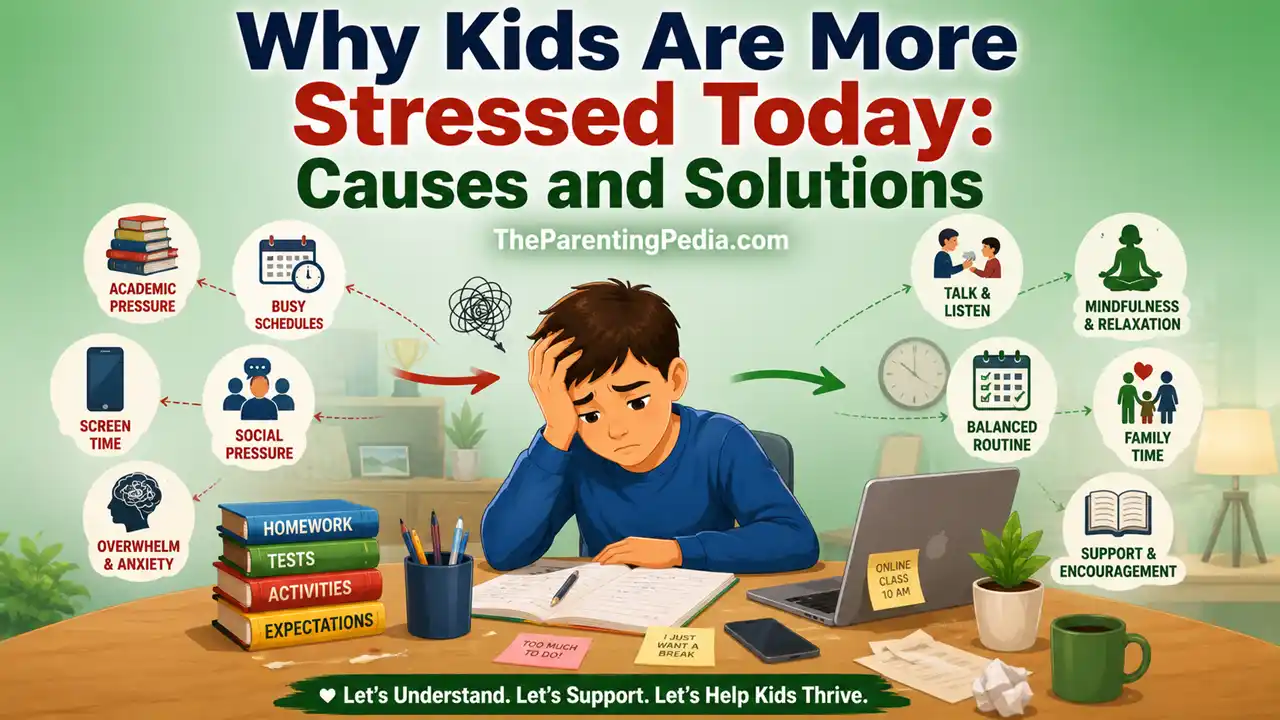
Children may feel overwhelmed when several pressures build up at once. School, friendships, busy schedules, family expectations, and digital life can all contribute to why kids are more stressed today.
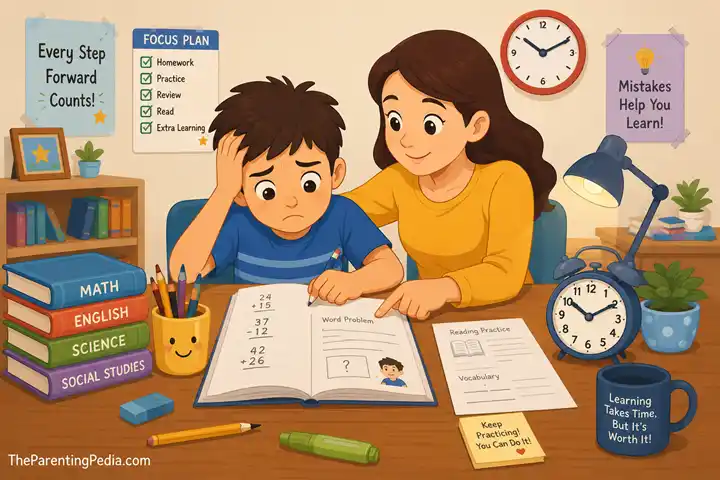
If homework has become a daily source of tension, these practical strategies can help make study time calmer and more manageable.
School and Academic Pressure
Homework, tests, grades, competition, and difficult subjects can leave children feeling under pressure. Some may worry about disappointing parents or teachers or making mistakes.
Parents can help by praising effort and progress rather than treating every grade as a measure of ability.
Friendship Problems and Peer Pressure
Arguments, exclusion, teasing, bullying, or worries about fitting in can make an ordinary school day stressful.
Instead of saying, “Don’t worry about it,” give your child time to explain what happened and how they feel.
Busy Schedules and Too Little Downtime
School, homework, tuition, sports, music, and clubs can fill a child’s day. Activities can be valuable, but children also need time to play, relax, and recharge.
Free play and quiet time are important parts of childhood, especially when a busy routine may be one reason kids are more stressed today.
Phones, Screens, and Social Media
Older children and teenagers may face social comparison, cyberbullying, online pressure, and the feeling that they always need to stay connected. Younger children may also encounter upsetting content.
Parents do not need to eliminate technology completely. Sensible screen boundaries and conversations about online content can help.
The American Psychological Association also recommends watching for emotional, behavioral, and physical changes that may signal significant stress in children.
Signs Your Child May Be Stressed
Children do not always say they are stressed. Instead, you may notice changes in mood, behaviour, sleep, or everyday habits.
Common signs include:
- Frequent irritability or anger
- More crying or emotional outbursts
- Trouble sleeping
- Changes in appetite
- Difficulty concentrating
- Avoiding school or activities
- Becoming unusually quiet or withdrawn
- Frequent headaches or stomachaches
- Losing interest in favourite activities
- Becoming very worried about making mistakes
One sign alone does not necessarily mean there is a serious problem. Look for noticeable or persistent changes from your child’s usual behaviour. This can help parents recognise why kids are more stressed today before problems become harder to manage.
Parents can also explore stress and wellbeing resources from Kids Helpline, which provide practical guidance for children, teens, parents, and caregivers.
When disagreements with your child become heated, remember that winning the argument is not always the most important goal; sometimes, protecting your relationship matters more.
How Parents Can Help Reduce Childhood Stress
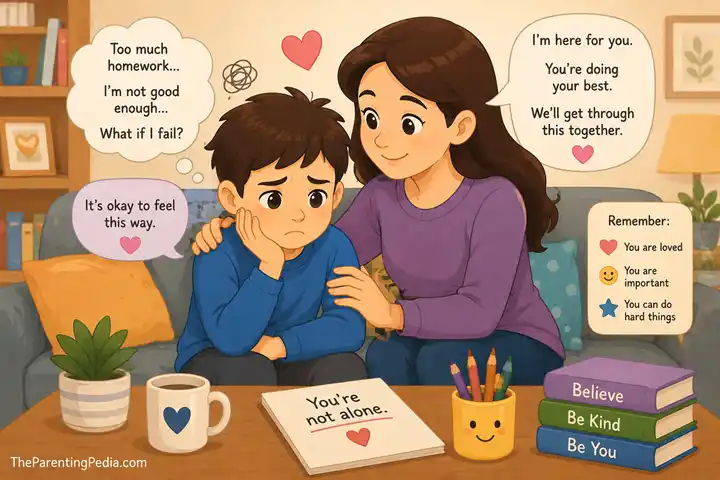
Parents cannot remove every difficult situation, but they can make home a place where children feel safe, understood, and supported.
A supportive home environment can help children feel safer and better equipped to manage difficult emotions, including conflicts with siblings.
1. Listen Before Giving Advice
When your child is upset, listen before explaining what they should do. Try saying:
“That sounds really difficult. Do you want to tell me what happened?”
Feeling heard can make a child more comfortable discussing the problem.
2. Reduce Unnecessary Pressure
Ask whether your child has enough time to relax, whether their schedule is too full, and whether you focus more on grades than effort.
Children need reasonable expectations, but constant pressure can make everyday challenges feel harder.
3. Create a Predictable Routine
Regular times for waking, meals, homework, play, relaxation, and bedtime can give children a greater sense of security.
The routine does not have to be perfect. Even simple structure can make a busy family day feel calmer.
4. Protect Sleep and Downtime
A tired child may struggle more with frustration. Keep bedtime reasonably consistent and create a calmer environment before sleep.
Also protect time when children are not expected to study, perform, or achieve.
5. Teach Simple Coping Skills
Depending on their age, teach children to:
- Take slow, deep breaths
- Talk to a trusted adult
- Take a short break
- Break large tasks into smaller steps
- Draw or write about feelings
- Spend time outdoors
- Do something enjoyable
The goal is not to remove every stressful feeling but to help children learn that difficult emotions can be managed.
Today’s children are often more comfortable talking about their feelings, reflecting a growing trend toward emotional openness in Gen Z and Gen Alpha.
6. Make Mistakes Feel Safe
If every mistake brings criticism, some children may become afraid to try.
Instead of asking, “How could you get this wrong?” try, “What can we learn from what happened?”
Showing that mistakes are part of learning can build confidence.
7. Talk About Feelings Regularly
Small conversations at dinner, bedtime, or during a walk can make it easier for children to open up.
Try asking, “What was the hardest part of your day?” or “Did anything make you worried?”
What Parents Should Avoid
When children are stressed, avoid dismissing their feelings with phrases such as “Stop worrying,” “It’s not a big deal,” or “Other children have bigger problems.”
Comparing a child with siblings or classmates can also increase pressure and may add to why kids are more stressed today.
Instead, acknowledge the feeling and help your child think about what might make the situation easier. Sometimes simply being there is more helpful than immediately solving the problem.
When Should Parents Seek Professional Help?
Occasional stress is normal. However, pay closer attention when stress becomes persistent, severe, or interferes with everyday life.
Consider speaking with a pediatrician, child psychologist, counselor, or another qualified professional if stress is affecting your child’s sleep, eating, school attendance, concentration, friendships, family relationships, daily activities, or emotional wellbeing.
Getting professional guidance does not mean you have failed as a parent. Sometimes children simply need additional support.
Parents can also explore Germany’s child health information portal for evidence-based guidance on children’s emotional and psychological wellbeing.
Frequently Asked Questions
Why are kids more stressed today?
Children may face several pressures at once, including academic expectations, friendship problems, busy schedules, bullying, family changes, and digital or social media pressure.
How can I tell if my child is stressed?
Look for persistent changes in mood, behaviour, sleep, appetite, concentration, school participation, or relationships.
What should I do when my child feels stressed?
Start by listening calmly. Let your child explain what is happening before immediately giving advice or trying to solve the problem.
When should I seek professional help?
If stress continues, becomes severe, or interferes with sleep, eating, school, relationships, or everyday activities, consider speaking with a qualified professional.
Conclusion
Childhood stress is common, but parents can make a meaningful difference by listening patiently, offering emotional support, and creating a calm, supportive home. Recognizing the signs early and seeking professional help when needed can help children build resilience, confidence, and healthier ways to manage their emotions.
Author’s Note:
At TheParentingPedia, we create evidence-informed parenting content designed to help parents and caregivers make confident decisions. Our articles are carefully researched using guidance from trusted pediatric, child-health, and parenting resources and presented in simple, practical language.
Sources and Further Reading
- American Academy of Pediatrics. Stress and Health: What Parents Need to Know. Read the article
- Centers for Disease Control and Prevention. Treating Children’s Mental Health with Therapy. Read the article
- National Health Service. Anxiety in Children. Read the article
These resources provide additional information about childhood stress, emotional well-being, and seeking appropriate professional support.
Remember, the greatest reward of parenting lies in watching
your children soar with love and confidence.
Until then, keep smiling and be happy! ❤️

TheParentingPedia editorial team creates practical, research-informed parenting content to help parents navigate everyday challenges, child development, behavior, and family life. Our articles draw on reputable parenting and child-development sources and are reviewed for clarity, accuracy, and practical usefulness.