
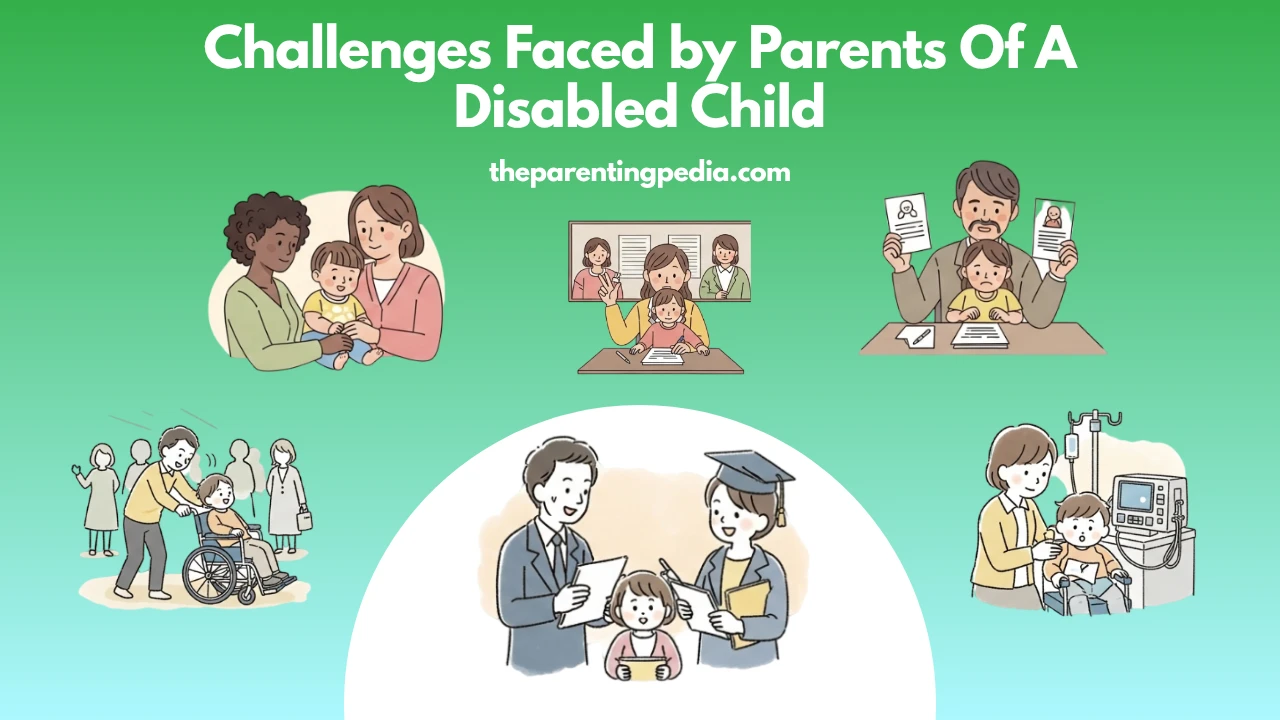
Raising a child is a rewarding journey, but parenting a child with a disability can bring unique emotional, practical, and everyday challenges. Disabilities may affect how a child moves, learns, communicates, or interacts with others, making each family’s experience different.
Parents may also need practical strategies to help their child manage emotions and sensory challenges. Self-regulation activities for autistic children can offer useful ideas for everyday support.
In this article, we’ll explore these challenges and share practical ways parents can find support, manage stress, and build strength.

Table of Contents
What Makes Parenting a Child With a Disability Challenging?
Parenting any child requires patience, flexibility, and emotional strength. When a child has additional support needs, parents may have to handle appointments, therapies, educational decisions, accessibility concerns, communication difficulties, and changes to everyday routines.
At the same time, parents may experience emotions such as worry, frustration, sadness, guilt, or exhaustion. These feelings do not mean that a parent loves their child any less. They are often a response to having many responsibilities at once.
Every disability and every child is different, so parents should avoid comparing their family’s journey with another family’s experience.
8 Challenges Faced by Parents of a Disabled Child
1. Emotional Stress and Anxiety
One of the biggest challenges is dealing with ongoing emotional pressure.
Parents may worry about their child’s health, development, education, relationships, independence, and future. They may also feel overwhelmed when they do not know what the next stage of their child’s journey will look like.
What Can Help?
Talk openly with someone you trust rather than keeping every worry to yourself. A supportive friend, family member, counselor, parent support group, or qualified professional can provide emotional support.
Remember that asking for help is not a sign of weakness.
2. Managing Daily Care and Routines
Some children may need additional help with dressing, eating, mobility, communication, personal care, schoolwork, or daily transitions.
When these responsibilities happen every day, parents can become physically and emotionally exhausted.
Make Daily Tasks Easier
Try breaking larger tasks into smaller steps. Visual schedules, predictable routines, simple instructions, and consistent expectations may make everyday activities easier for some children.
Parents can also introduce age-appropriate independence wherever practical instead of automatically doing everything for the child.
3. Healthcare and Therapy Challenges
Appointments, assessments, therapies, medications, specialist consultations, and paperwork can become a major part of family life.
Parents may also need to communicate with several professionals and keep track of different recommendations.
The CDC recommends connecting children who need additional support with appropriate services and early intervention when needed. (CDC)
Keep Information Organized
Maintain one folder—digital or physical—for medical reports, school records, therapy notes, appointment dates, and important questions.
A simple record can help you feel more prepared when speaking with healthcare or education professionals.
4. Education and School-Related Challenges
Finding the right educational environment can be difficult for some families. Parents may have questions about accessibility, classroom support, learning accommodations, communication with teachers, and participation in school activities.
Work With the School
Keep communication open with teachers and relevant school staff. Discuss your child’s strengths, needs, successful strategies, and areas where additional support may be useful.
A strong parent-school relationship can make it easier to identify problems early and work toward practical solutions.
5. Financial Pressure
Disability-related expenses can sometimes include therapy, transportation, medical care, assistive equipment, educational support, or other services.
Not every family will face the same costs, but financial pressure can add another layer of stress.
UNICEF provides a caregiver guide focused on navigating education systems and supporting children with disabilities in inclusive school settings. (UNICEF)
Plan What You Can
Keep a monthly record of disability-related expenses and identify which costs are essential, occasional, or optional. Ask healthcare providers, schools, community organizations, or government agencies about assistance programs that may be available in your area.
Do not feel embarrassed about asking about financial support.
6. Social Isolation and Lack of Support
Some parents may feel isolated when relatives, friends, or community members do not understand their child’s needs.
Others may avoid social events because they worry about accessibility, difficult situations, or unwanted comments.
WHO notes that caregivers of children with developmental disabilities can experience stigma, isolation, and financial hardship, while caregiver-skills programs can support caregiver confidence and well-being. (World Health Organization)
Find People Who Understand
Connecting with another parent who has similar experiences can make a significant emotional difference.
You do not need a huge support network. Even one or two people who listen without judgment can be valuable.
7. Balancing Work and Family Responsibilities
Parents may find it difficult to manage employment, household responsibilities, appointments, school communication, and caregiving at the same time.
This can leave parents feeling that there are never enough hours in the day.
Reduce Unnecessary Pressure
Create a realistic weekly routine and prioritize the responsibilities that matter most. Share tasks with your partner or trusted family members when possible.
You do not have to manage every responsibility perfectly.
8. Worry About the Child’s Future
Parents naturally think about what will happen as their child grows older.
Questions about education, friendships, employment, independent living, relationships, safety, and long-term support can create significant uncertainty.
Instead of trying to solve the entire future today, focus on building useful skills gradually.
Small steps toward communication, self-care, decision-making, and independence can become meaningful over time.

Practical Ways to Cope With Parenting Challenges
Understanding the problem is important, but parents also need practical ways to manage everyday life.
1. Build a Strong Support Network
Ask for help from family members, friends, teachers, healthcare professionals, therapists, counselors, or parent-support organizations.
A shared caregiving arrangement can give parents time to rest and manage other responsibilities.
2. Focus on Your Child’s Strengths
It is easy to concentrate on what a child finds difficult.
However, parents should also notice what their child enjoys and does well.
Celebrate Abilities
Your child may have strengths in art, music, memory, humor, sports, technology, problem-solving, kindness, or another area.
Encouraging these strengths can help build confidence and create positive family experiences.
3. Create Flexible Daily Routines
A predictable routine can make daily activities easier to understand.
Try keeping regular times for:
- Waking up
- Meals
- School or therapy
- Play
- Rest
- Family time
- Bedtime
However, routines should remain flexible. Unexpected changes are part of family life.
4. Learn to Advocate for Your Child
Parents often become an important part of their child’s support team.
Learn about your child’s needs, ask questions, keep important records, and communicate clearly with professionals.
You do not need to know everything. You simply need to be willing to ask, learn, and speak up when something does not seem right.
5. Protect Your Own Emotional Well-Being
Parents sometimes put their own needs last.
But caring for yourself is not selfish. It helps you remain emotionally available for your child.
Make Time for Yourself
Even a short break can help. Read, listen to music, speak with a friend, practice relaxation, or simply sit quietly for a few minutes.
For broader positive-parenting ideas, you can also read The Power of Positive Parenting in Child Development.
6. Celebrate Small Progress
Progress does not always happen quickly.
A child learning a new word, completing a task with less help, trying a new activity, expressing a feeling, or becoming more comfortable in a new environment can all be meaningful achievements.
Do not measure your child only against age-based expectations or other children.
Look at progress over time.
When Should Parents Seek Additional Support?
Parents should consider professional guidance when they are struggling to cope emotionally, feeling overwhelmed by caregiving responsibilities, or are unsure how to support their child’s needs.
Additional support may come from a pediatrician, therapist, counselor, special educator, psychologist, social worker, or another qualified professional, depending on the situation.
Seeking professional support does not mean that you have failed as a parent. It means you are taking your family’s needs seriously.

FAQs
What are the common challenges faced by parents of a disabled child?
Common challenges may include emotional stress, daily caregiving demands, healthcare and therapy appointments, educational concerns, financial pressure, social isolation, work-family balance, and worries about the future.
How can parents manage stress while caring for a child with a disability?
Parents can reduce stress by building a support network, sharing responsibilities, creating realistic routines, taking regular breaks, and seeking professional or emotional support when needed.
How can parents help a child with a disability become more independent?
Start with small, age-appropriate tasks that match the child’s abilities. Give simple choices, allow extra time, and provide assistance when needed without automatically doing everything for them.
Should parents compare their child’s progress with other children?
It is usually more helpful to focus on your child’s individual progress, strengths, needs, and goals rather than comparing them with other children.
Where can parents find reliable information and support?
Parents can begin with qualified healthcare and education professionals and reputable organizations such as the CDC, WHO, and UNICEF. These organizations provide resources related to child development, disability support, caregiver skills, and inclusive education.
Author’s Note
Parenting a child with a disability can be demanding, but parents do not have to face every challenge alone. The goal is not to become a perfect parent. It is to understand your child, recognize their strengths, ask for help when needed, and take one step at a time.
At The Parenting Pedia, we believe that informed, patient, and supportive parenting can help families navigate difficult moments while creating a loving environment where every child can grow.
This article is intended for general educational purposes and should not replace personalized advice from qualified healthcare, education, or mental-health professionals.
Sources & Further Reading
World Health Organization (WHO) — Caregiver Skills Training for Families of Children With Developmental Delays or Disabilities. WHO caregiver skills training
UNICEF — Caregivers’ Guide to Inclusive Education. UNICEF caregiver guide to inclusive education
Centers for Disease Control and Prevention (CDC) — Providing Support for Children With Disabilities. CDC support for children with disabilities
Conclusion
The Challenges Faced by Parents of a Disabled Child can affect almost every part of family life, from emotional well-being and daily routines to education, finances, and future planning. Yet parents do not need to have every answer immediately.
Building a support network, working with professionals, focusing on a child’s strengths, creating practical routines, and taking care of your own well-being can make the journey more manageable.
Most importantly, remember that progress does not have to be big to be meaningful. Every new skill, every small step toward independence, and every moment of connection matters.

TheParentingPedia editorial team creates practical, research-informed parenting content to help parents navigate everyday challenges, child development, behavior, and family life. Our articles draw on reputable parenting and child-development sources and are reviewed for clarity, accuracy, and practical usefulness.