

A daily routine for toddlers can make each day feel calmer, more predictable, and easier for both toddlers and parents. When children know what to expect, everyday activities like eating, playing, resting, and getting ready for bed can feel less stressful.
A simple routine does not have to follow strict times or be perfect every day. It should give toddlers familiar steps while leaving enough room for play, learning, family connection, and the unexpected changes that naturally happen in busy family life.
Table of Contents
Why Toddlers Benefit From a Daily Rhythm
Toddlers are constantly learning while developing language, movement, independence, and emotional skills. A familiar sequence helps them understand what comes next and can make transitions easier.
The American Academy of Pediatrics says children do best when routines are regular, predictable, and consistent, while also allowing flexibility. The goal is not to run the day by the clock. Create a dependable rhythm for meals, play, rest, and sleep. (HealthyChildren.org)
Building a Daily Routine for Toddlers
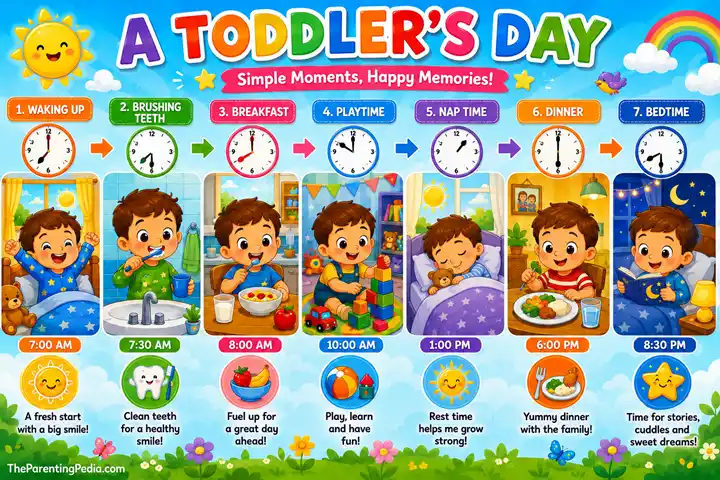
A daily routine for toddlers starts with the parts of the day that naturally repeat: wake-up, meals, active play, rest, family time, and bedtime.
Keeping meals, naps, and playtime reasonably consistent can reduce stress and may help with understanding toddler tantrums.
Morning: Wake Up, Connect, and Get Ready
Start the daily routine for toddlers calmly with a wake-up, diaper change or bathroom trip, getting dressed, and breakfast.
A simple order can be:
- Wake up and cuddle or talk.
- Use the bathroom or change the diaper.
- Get dressed and wash hands and face.
- Eat breakfast.
- Brush teeth.
- Begin play, childcare, or an outing.
If mornings are rushed, prepare clothes, bags, and breakfast items the night before.
Breakfast: Keep Mealtimes Relaxed
Toddlers can be unpredictable eaters. The CDC recommends offering healthy foods and allowing young children to decide how much they eat.
Serve breakfast at roughly the same time and avoid turning meals into battles. Your toddler’s appetite may change from day to day.
Play and Learning: Let Toddlers Explore
Play deserves a real place in a daily routine for toddlers. Children learn through movement, pretend play, conversation, books, and everyday activities.
Try:
- Outdoor walks or playground time.
- Blocks, puzzles, and pretend play.
- Drawing or age-appropriate art.
- Picture books and songs.
- Simple jobs such as putting toys in a basket.
The AAP notes that play supports learning and development, and family activities help toddlers feel involved. (HealthyChildren.org)
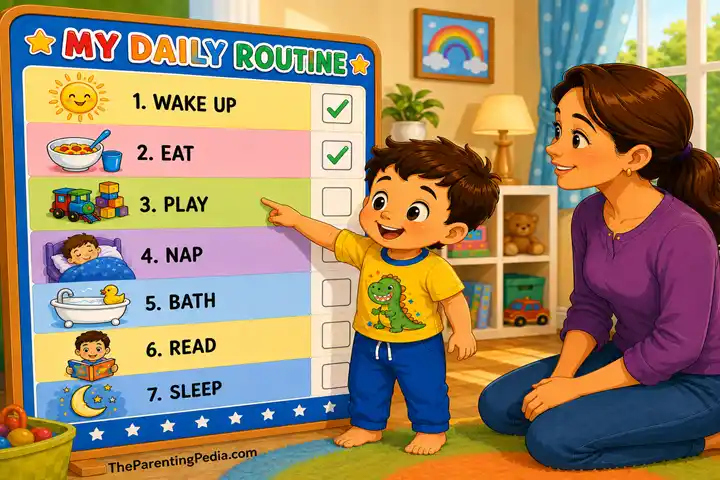
A picture schedule can help. Show breakfast, play, lunch, rest, bath, and bedtime in order.
Lunch and Rest: Slow the Pace
Around midday, move from active play toward lunch and rest. Timing depends on when your child wakes and whether they still nap.
A helpful sequence is:
Lunch → diaper or bathroom break → quiet activity → nap or quiet time
Children ages 1–2 generally need 11–14 hours of sleep in 24 hours, including naps, according to the CDC. If your toddler has stopped napping, quiet reading, puzzles, or calm play can still provide a useful break.
Afternoon: Movement and Independence
After rest, offer a snack and return to active play. Outdoor time, errands, or household activities can fit here.
Toddlers want to do things themselves. Let them practice safe, age-appropriate jobs, such as putting clothes in a basket or helping put toys away.
Give a short warning before changing activities: “Five more minutes, then cleanup.” This helps your toddler prepare.
Dinner: Create a Predictable Family Anchor
Dinner can be another familiar point in a daily routine for toddlers. Whenever possible, sit together and keep the atmosphere relaxed.
Offer foods your family normally eats and let your toddler practice using cups and utensils. Family meals also create opportunities for conversation and connection.
Evening: Start Slowing Down
After dinner, move toward quieter activities. A simple evening may include:
- Family play or a calm activity.
- Bath or wash-up.
- Pajamas.
- Toothbrushing.
- One or two books.
- Cuddles and a goodnight phrase.
- Lights out.
A predictable daily schedule also supports healthy sleep, so understanding the importance of sleep can help parents build a routine that gives toddlers enough rest.
Bedtime: Keep the Pattern Familiar
Consistency matters more than perfection. Try to keep bedtime and wake-up times reasonably similar.
Avoid turning bedtime into a long negotiation. Keep the steps short and repeat them in the same order. If your toddler asks for another story or drink, calmly return to the familiar sequence.
If bedtime is regularly difficult, look at the whole day. An inconsistent schedule or stimulating activity close to bedtime may make winding down harder. (HealthyChildren.org)
Sample Daily Routine for Toddlers
Here is a flexible example:
- 7:00 a.m. — Wake up and get dressed
- 7:30 a.m. — Breakfast
- 8:30 a.m. — Play and learning
- 10:00 a.m. — Snack and outdoor activity
- 12:00 p.m. — Lunch
- 1:00 p.m. — Nap or quiet time
- 3:00 p.m. — Snack and active play
- 5:30 p.m. — Dinner
- 6:15 p.m. — Family time
- 6:45 p.m. — Bath and pajamas
- 7:15 p.m. — Books and cuddles
- 7:30 p.m. — Bedtime
These times are examples, not rules. Adjust them to your toddler’s sleep and family schedule.
Common Routine Mistakes to Avoid
A routine can become unhelpful when it is too rigid. Real family life includes appointments, travel, illness, and difficult days.
Avoid changing the routine every time your child protests. Some resistance is normal. Stay calm and keep the basic sequence familiar.
Avoid comparing your toddler’s schedule with another child’s. Sleep, temperament, childcare, and family routines differ.
Do not fill every hour with structured activities. Toddlers need time for free play, exploration, and connection.
Keeping meals, naps, and playtime predictable can help reduce some of the stress that may contribute to toddler tantrums.
Simple Ways to Make the Routine Easier
Start with wake-up, meals, rest, and bedtime. Once those feel manageable, add smaller routines.
Use the same words for recurring transitions, such as “First pajamas, then books.” Offer limited choices when possible: “Red pajamas or blue pajamas?” This gives your child independence without changing the plan.
Give the routine time. Repetition helps toddlers learn what to expect.

FAQs
What is a good daily routine for toddlers?
A good routine includes regular meals, active play, learning opportunities, rest or a nap, family time, and a predictable bedtime. Timing should fit your child and family.
How strict should a toddler routine be?
It should be predictable but flexible. Keep the general order of activities consistent while allowing the timing to change when needed.
How much sleep does a toddler need?
Children ages 1–2 generally need 11–14 hours of sleep in 24 hours, including naps. Talk with your pediatrician if you have concerns about your child’s sleep.
What if my toddler refuses the routine?
Stay calm, keep instructions short, and offer small choices. Transition warnings can help.
Should toddlers have quiet time after dropping naps?
Yes. Quiet reading, puzzles, calm music, or independent play can provide a useful break even when your toddler no longer sleeps during the day.
Conclusion
The best daily routine for toddlers is one your family can actually maintain. Keep meals, play, rest, and bedtime reasonably predictable while leaving room for real life.
Over time, a familiar routine can give children a reassuring rhythm and give parents a calmer framework for the day.
Recommended Authority Sources
For the article’s references, the strongest sources used here are the American Academy of Pediatrics and CDC, particularly their guidance on family routines, toddler sleep, feeding, play, and bedtime routines. (HealthyChildren.org)
Hong Kong Department of Health – Good Habits: Daily Routine
American Academy of Pediatrics — Brush, Book, Bed
Raising Children Network – Toddler Development at 2–3 Years
Author’s Note
Parenting does not need to follow a perfect timetable. A routine should make family life easier, not add pressure. Start small, stay consistent with the important parts of the day, and adjust as your toddler grows.

TheParentingPedia editorial team creates practical, research-informed parenting content to help parents navigate everyday challenges, child development, behavior, and family life. Our articles draw on reputable parenting and child-development sources and are reviewed for clarity, accuracy, and practical usefulness.