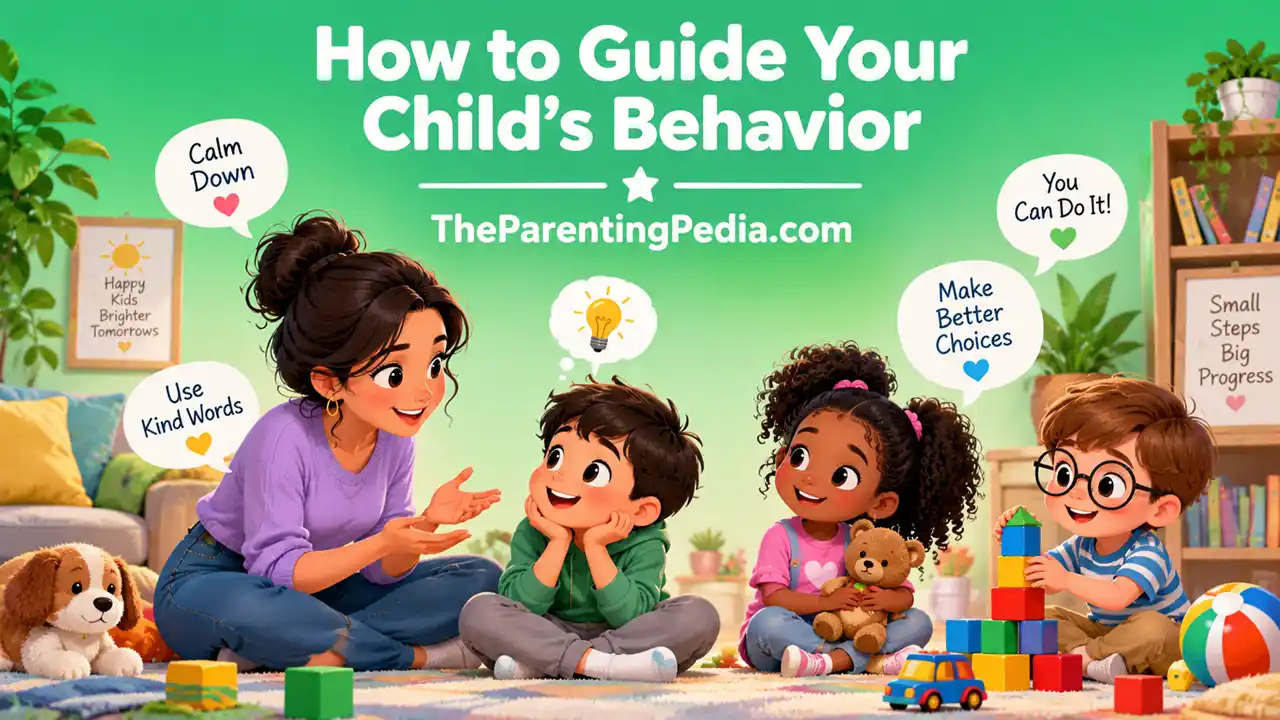
Children don’t always know how to handle big feelings, follow directions, or make good choices. Learning how to guide your child’s behavior can help you respond to difficult moments without turning every small problem into a battle.
The goal isn’t to have a perfectly behaved child. It’s to help your child understand boundaries, manage emotions, and gradually learn better ways to respond.
Table of Contents
What Does Guiding Your Child’s Behavior Mean?
Guiding behavior is about teaching, not simply correcting. Children are still learning how to share, wait, communicate, handle disappointment, and control impulses.
Sometimes difficult behavior has a simple reason behind it. Your child may be tired, hungry, frustrated, bored, or overwhelmed. Before reacting, take a moment to think about what might be happening.
That doesn’t mean allowing inappropriate behavior. It means responding to the behavior while also helping your child learn a better way to handle the situation.
For more guidance on positive parenting, UNICEF India’s positive parenting guide offers practical advice on listening, affection, constructive discipline, and supporting children’s development.
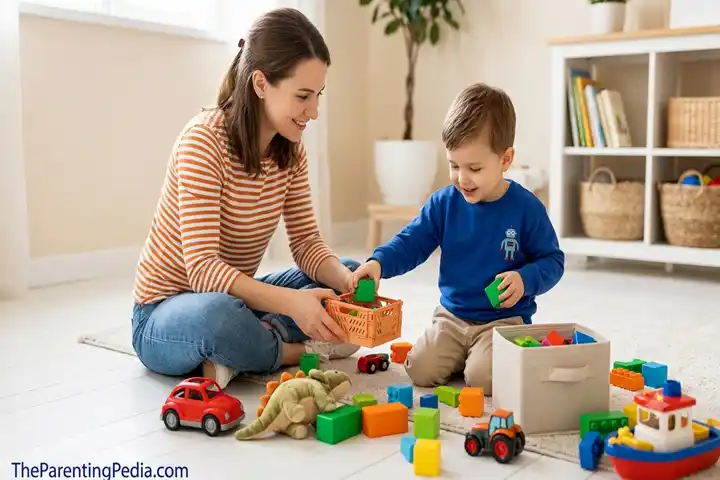
7 Practical Ways to Learn How to Guide Your Child’s Behavior
1. Connect Before You Correct
When your child is upset, a long lecture usually won’t help.
Get close, acknowledge the feeling, and then set the boundary.
For example:
“I know you want to keep playing. It’s time to put the toys away now.”
Your child can feel understood while still knowing what needs to happen next.
2. Keep Instructions Simple
Children can become overwhelmed when they hear several instructions at once.
Instead of saying:
“Stop running, don’t touch that, and come here right now!”
try:
“Please walk beside me.”
Keep your words short and clear. Give your child a moment to respond before repeating the instruction.
Clear expectations are easier for children to understand when they’re appropriate for their age and ability.
If your child often ignores instructions, you may also find these practical tips on how to handle a child who doesn’t listen helpful.
3. Look for the Trigger
When you’re figuring out how to guide your child’s behavior, it helps to notice what happens before the behavior.
Ask yourself:
- Is my child tired or hungry?
- What happened just before this?
- Has something changed today?
- Is the environment too noisy or overwhelming?
- Is my child struggling with a skill?
For example, if your child regularly gets upset when it’s time to leave the playground, give a five-minute warning before leaving.
Understanding a trigger doesn’t excuse the behavior. It can help you prevent the same struggle next time.
4. Teach What to Do Instead
Telling a child “Don’t hit” doesn’t teach them what to do when they’re angry.
Instead, show them another option.
If your child grabs a toy, teach them to ask for a turn. If they’re angry, teach them to use words, move away, or ask for help.
Children need practice before a new response becomes natural. Teaching and practising new skills is an important part of positive behavior guidance. Raising Children Network provides practical guidance on helping children develop these skills.
For practical examples of teaching children new skills, Raising Children Network’s guide to teaching new skills is a useful resource for parents.
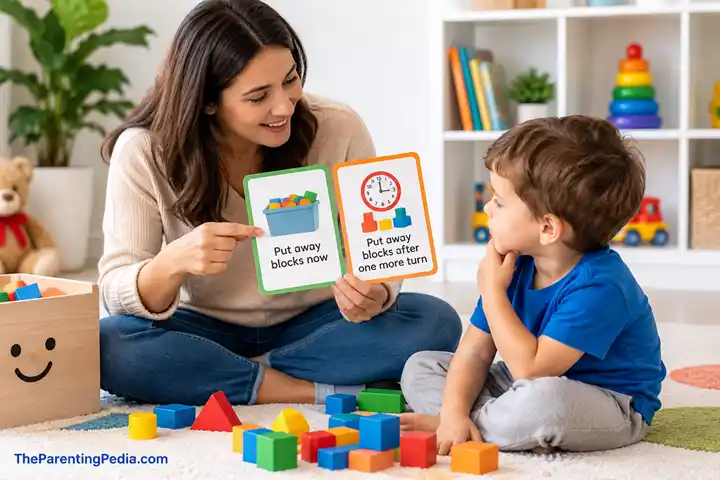
5. Notice the Good Moments
Parents naturally notice when something goes wrong. Try to notice when your child gets something right, too.
Instead of simply saying “Good job,” be specific:
“You waited for your sister to finish. That was patient.”
Or:
“You were angry, but you used your words.”
Specific praise helps children understand which behavior you want to see again. It also gives them positive attention when they’re cooperating rather than only when they’re misbehaving.
Regular encouragement can also help children feel more capable and confident; see our guide to building confidence in kids for more ideas.
6. Set Calm and Consistent Limits
Positive parenting doesn’t mean letting children do whatever they want. Children still need rules and boundaries.
Choose a few important family rules and try to respond consistently.
If your child throws a toy, you might say:
“Toys aren’t for throwing. We’ll put this one away for now.”
You don’t need to shout to make a boundary meaningful. A calm response can be firm and respectful at the same time.
7. Model the Behavior You Want to See
Children learn a lot by watching their parents.
If you want your child to speak respectfully, try to use respectful words yourself. If you lose your patience, show your child how to repair the situation.
You might say:
“I was frustrated and spoke too loudly. I’m sorry. I’ll try again calmly.”
You don’t have to be perfect. Showing your child how to admit a mistake and try again is itself an important lesson.
What to Do During a Difficult Behavior Moment
When your child is very upset, keep your response simple.
First, make sure everyone is safe. Then acknowledge the feeling and state the limit.
For example:
“You’re very angry. I won’t let you hit.”
You don’t have to solve everything while your child is overwhelmed. Give them time to calm down. Once they’re settled, talk briefly about what happened and what they could try next time.
For younger children, simple choices, comfort, distraction, or moving away from an overwhelming situation may also help.
If tantrums are a regular struggle in your home, you can also learn more about different types of toddler tantrums and ways to respond calmly.
Common Mistakes Parents Should Avoid
Expecting Perfect Self-Control
A child may know a rule and still struggle to follow it when they’re tired, angry, or overwhelmed. Self-control develops gradually.
Using Labels
Avoid calling your child “bad,” “lazy,” or “difficult.”
Focus on the behavior instead:
“Hitting hurts. We use gentle hands.”
This corrects the action without making your child feel that the problem is who they are.
Repeating the Same Warning
If you give the same instruction again and again without following through, your child may learn that the first few warnings don’t really matter.
Give a clear direction, allow reasonable time to respond, and follow through calmly when necessary.
A Simple 5-Step Approach for Parents
When you’re unsure how to guide your child’s behavior, remember these five steps:
- Pause before reacting.
- Connect by acknowledging the feeling.
- Set the limit clearly.
- Show what to do instead.
- Notice the effort when your child tries.
You won’t handle every situation perfectly. Parenting involves plenty of moments when you have to take a breath, reset, and try again.
When Should Parents Seek Extra Support?
Challenging behavior is a normal part of childhood, but some situations deserve extra attention.
Consider speaking with your child’s pediatrician, doctor, or another qualified professional if the behavior is persistent, severe, creates safety concerns, or significantly affects everyday family life.
You can also ask for advice if you’re concerned about your child’s development, communication, learning, or emotional well-being.
Asking for help doesn’t mean you’ve failed as a parent. Sometimes another perspective can help you understand what your child needs.

Frequently Asked Questions
How can I guide my child without yelling?
Stay as calm as you can, keep instructions short, acknowledge your child’s feelings, and state the boundary clearly. If you’re becoming overwhelmed, take a brief pause when everyone is safe.
Should I punish my child for every unwanted behavior?
No. Focus on teaching the behavior you want to see. When a consequence is appropriate, keep it reasonable, related to the behavior, and consistent.
What if my child keeps ignoring me?
Make sure your child has heard and understood you. Get their attention, give one simple instruction, and check that the expectation is realistic for their age.
Does positive parenting mean having no rules?
No. Positive parenting still includes rules and boundaries. The focus is on teaching children with respect rather than relying on fear, shame, or harsh punishment.
Conclusion
Learning how to guide your child’s behavior takes patience and repetition. Some days your child may cooperate easily, while other days even a simple request can become a struggle.
Focus on the basics: connect with your child, set clear limits, teach better ways to respond, and notice their efforts. You don’t need to be a perfect parent. Consistent, caring guidance can help your child gradually build the skills they need to manage feelings and make better choices.
Author’s Note
TheParentingPedia editorial team creates practical, research-informed parenting content to help parents navigate everyday challenges, child development, behavior, and family life. Our articles draw on reputable parenting and child-development sources and are reviewed for clarity, accuracy, and practical usefulness.
Sources & Further Reading
- Australia — Raising Children Network
- Canada — Canadian Paediatric Society
- India — UNICEF India
- United Kingdom — NHS
- International — UNICEF Asia-Pacific

TheParentingPedia editorial team creates practical, research-informed parenting content to help parents navigate everyday challenges, child development, behavior, and family life. Our articles draw on reputable parenting and child-development sources and are reviewed for clarity, accuracy, and practical usefulness.