
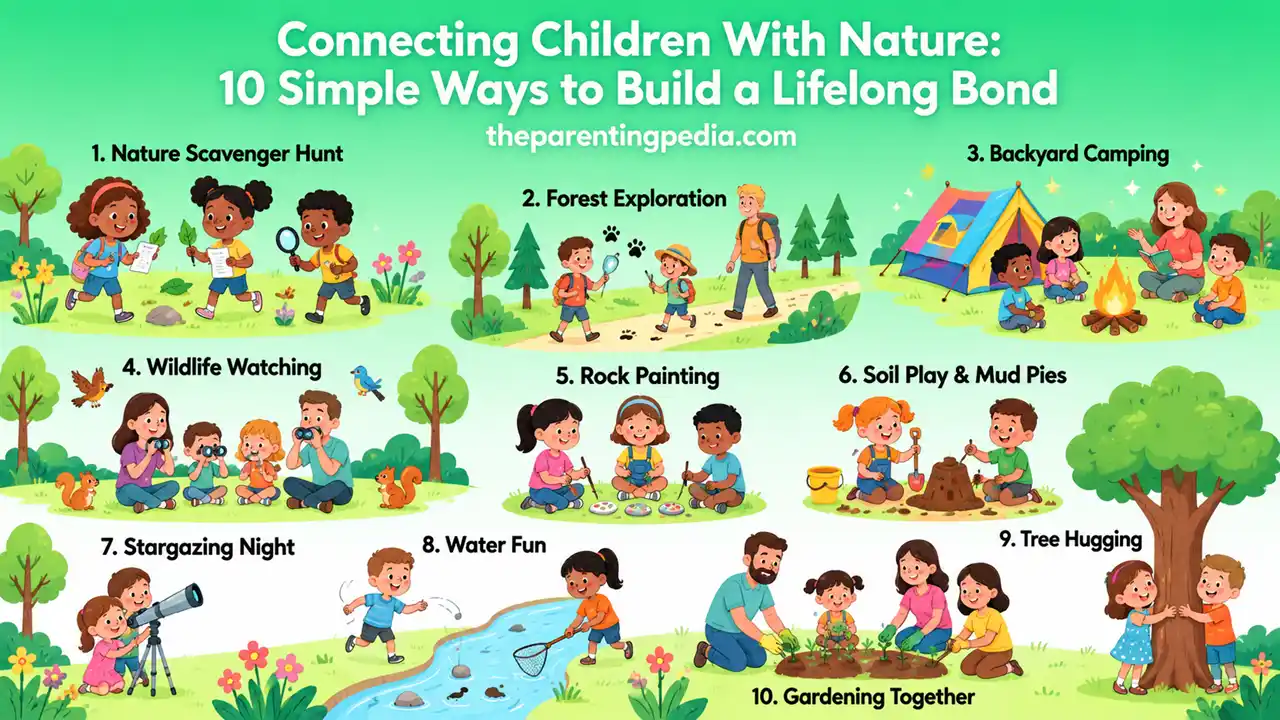
A clever child is not always the one who reads early. Sometimes, it is the one who notices everything. The signs of a clever child may appear through curiosity, memory, creative problem-solving, language, imagination, or a strong awareness of other people.
The early years are an important time for learning and development. Through play, conversation and everyday experiences, children begin building skills that support thinking, communication and emotional growth.
Rather than focusing only on academic ability, parents can notice these everyday strengths and create a safe, supportive environment where children feel free to ask questions, explore, make mistakes and learn.
A clever child does not need pressure. A clever child needs protection.
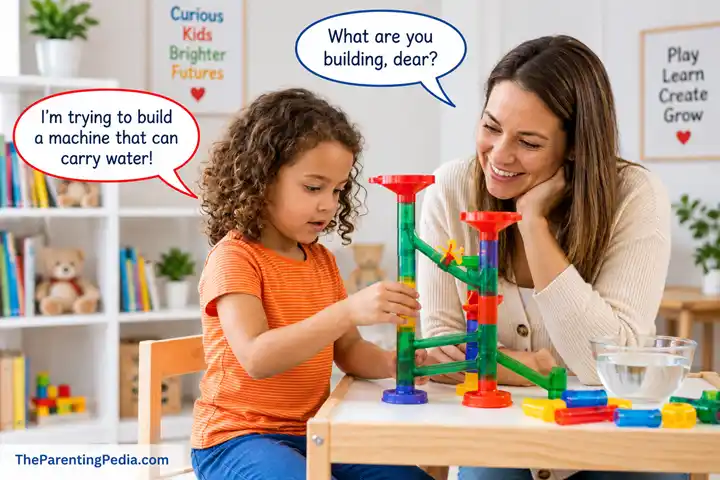
Table of Contents
What Can the Signs of a Clever Child Look Like?
There is no single checklist that proves a child is gifted or unusually able. Development is rarely even across every area.
You might notice unusual curiosity, strong memory, creative problem-solving, advanced language, intense interests or sensitivity to other people’s feelings.
The best response is not to label the child, but to stay curious. Notice what excites them, listen to their questions and watch how they approach new problems.
You can also learn more about how everyday parenting approaches can support your child’s development.
10 Ways to Nurture These Strengths
Once you notice the signs of a clever child, the goal is not to create a mini-achiever. It is to build an environment where curiosity, confidence and healthy learning can grow.
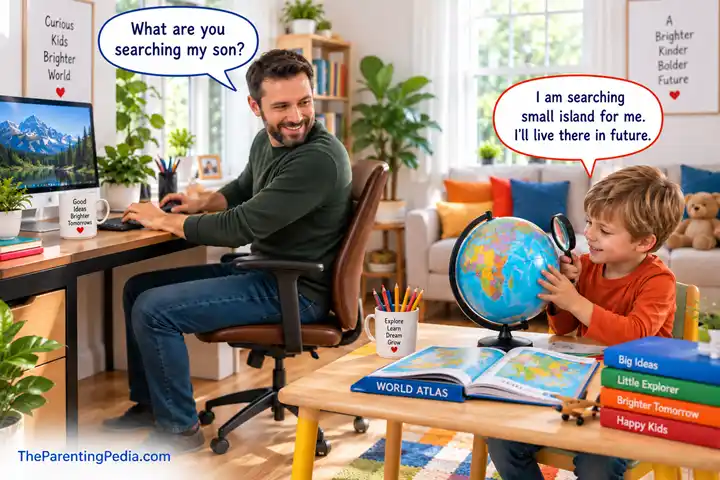
1. Follow their interests
If your child loves dinosaurs, insects, drawing, maps or figuring out how things work, follow that interest.
Read about it together, explore safely and ask, “What else would you like to know?”
2. Answer questions with questions
You do not need to answer every “Why?” immediately.
Try, “What do you think?” or “How could we find out?”
This gives children opportunities to reason, predict and explore ideas for themselves.
These responsive back-and-forth conversations can also support a child’s developing language and social skills.
3. Praise effort, not just being smart
Instead of always saying, “You’re so smart,” notice the process.
“You kept trying.”
“You found another way.”
“You spotted something I missed.”
This helps children value persistence rather than feeling they must always prove they are clever.
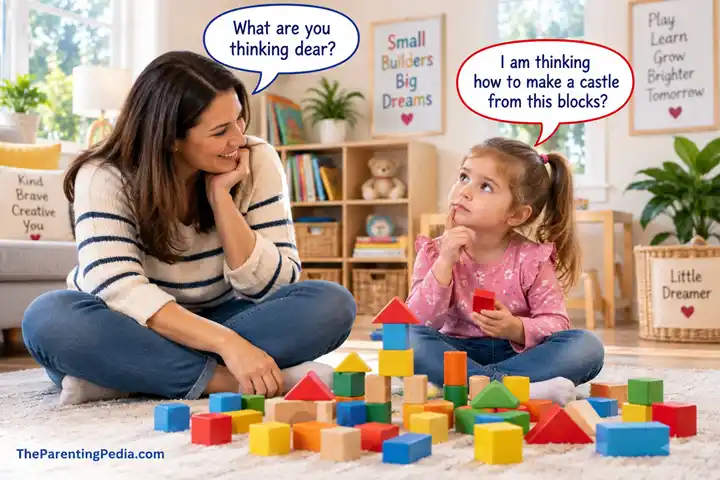
4. Offer open-ended materials
Blocks, cardboard, art supplies, puzzles and simple household materials can encourage creativity and experimentation.
A box can become a spaceship. Blocks can become a bridge. There does not always need to be one correct answer.
For more ideas, see cultivating creativity in kids and educational games for kids at home.
5. Protect unstructured time
Children do not need every hour filled with lessons and activities.
Let them experience boredom sometimes. Unstructured time gives children room to invent games, explore ideas and practise independence.
6. Read together and talk about the story
Reading together can become a conversation, not just a lesson.
Ask:
“Why do you think she did that?”
“What might happen next?”
“Would you have made the same choice?”
These questions encourage children to explain, imagine and think about different perspectives.
Play and everyday activities can also support children’s cognitive development by giving them opportunities to think, create, experiment and solve problems.
7. Make mistakes feel safe
Children who often find things easy may become frustrated when something finally feels difficult.
Show them that mistakes are normal.
“That didn’t work. Let’s try another way.”
Simple experiences such as caring for a plant can also give children opportunities to explore nature and learn through discovery.

8. Nurture emotional intelligence
Some signs of a clever child may appear in how they understand people, not just in how they solve problems.
A child may notice sadness, care strongly about fairness or react deeply to other people’s emotions.
Help them name feelings, practise empathy and learn healthy ways to handle strong emotions.
9. Encourage independence without expecting too much maturity
A child can show the signs of a clever child in one area and still behave very much their age in another.
Let them make simple choices, solve everyday problems and take part in planning while continuing to provide age-appropriate support and boundaries.
Giving children some unstructured time can also help them explore their interests, use their imagination and solve small problems independently.
10. Work with teachers when needed
Parents see one side of a child; teachers see another.
Share specific observations about unusual interests, advanced learning or areas where your child may need more challenge or support.
Formal testing is not necessary simply to prove that a child is clever. It may be useful when assessment could help guide education or support.
For related schoolwork guidance, see how to help your child with homework.
What Parents Should Avoid
The biggest mistake is turning early ability into pressure.
Avoid constant testing, over-scheduling, comparisons and treating early achievements as predictions of future success.
One child may read early but struggle emotionally. Another may develop language later but show remarkable observation or problem-solving ability.
When you notice the signs of a clever child, focus on the child in front of you rather than the child you imagine they might become.
Ask:
“What helps this child stay curious, secure and willing to learn?”
Frequently Asked Questions
Is early reading one of the signs of a clever child?
It can be one sign of advanced ability, but it is not a stand-alone measure of intelligence. Children can show strengths in many different areas.
At what age can parents know whether a child is gifted?
There is no single age that gives a definite answer. Parents can observe patterns early, while formal assessment may help when it serves a practical purpose.
Should I keep challenging my child all the time?
No. Children need challenge, but they also need rest, play, relationships and ordinary childhood experiences.
Can a clever child still struggle emotionally?
Yes. Advanced ability does not remove the need for emotional support or help with regulation.
What is the best way to support a bright child?
Follow their interests, encourage questions, make mistakes safe, protect play and never make affection dependent on achievement.
Conclusion
The signs of a clever child can be exciting to notice, but they are not a reason to rush childhood.
Listen to your child. Answer their questions. Protect their play. Encourage effort. Give them room to fail, explore and try again.
What children need most is not constant pressure to achieve, but the security to remain curious and keep learning.
A clever child is not a project to manage. A clever child is a person to understand, guide and protect.
Author’s Note
TheParentingPedia.com creates evidence-informed parenting content using trusted child-development and parenting sources. This article is for general educational purposes and is not a substitute for personalised professional advice.
Sources & Further Reading
- Raising Children Network — About gifted children and talented children
- UNICEF — Early childhood development
- Raising Children Network — Gifted children and talented children: learning

TheParentingPedia editorial team creates practical, research-informed parenting content to help parents navigate everyday challenges, child development, behavior, and family life. Our articles draw on reputable parenting and child-development sources and are reviewed for clarity, accuracy, and practical usefulness.