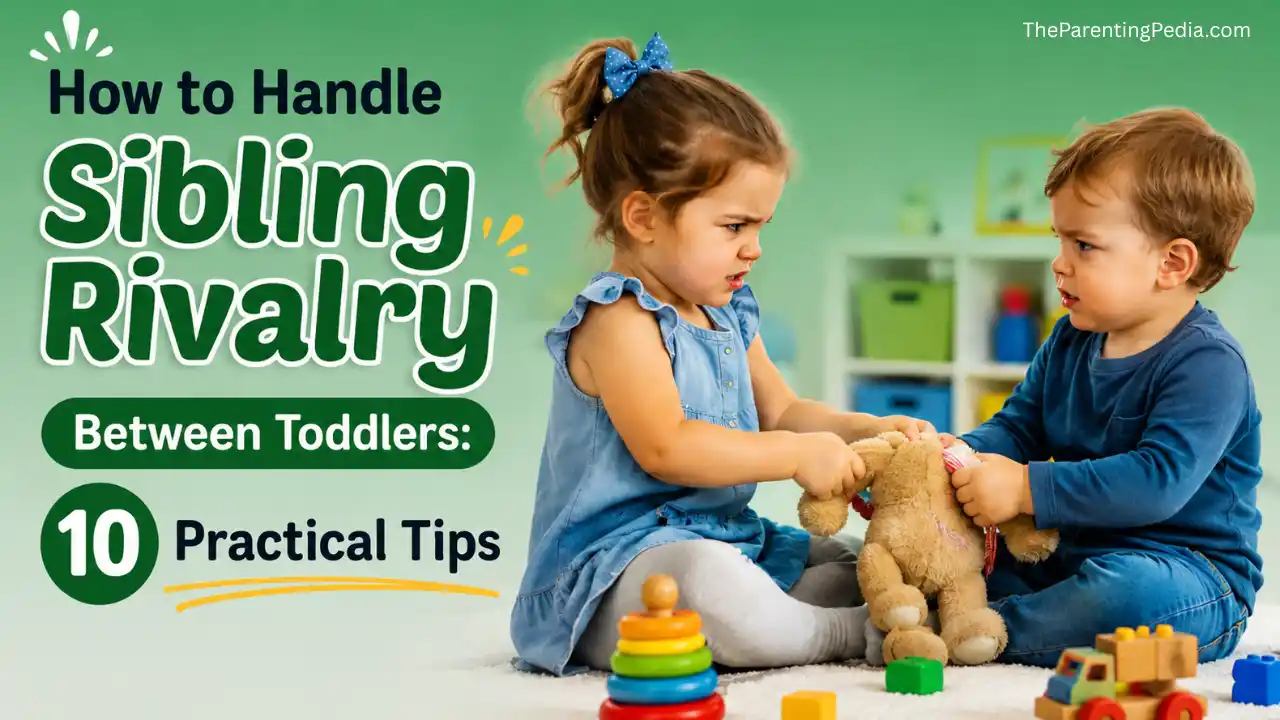
Having two toddlers can be full of laughter, cuddles, and sweet moments—but it can also mean frequent fights over toys, attention, and whose turn it is. Sibling rivalry between toddlers is common because young children are still learning how to share, manage big emotions, and understand each other’s feelings.
One moment they may be happily playing together, and the next they are grabbing the same toy or shouting “Mine!” With calm guidance and simple strategies, parents can help toddlers handle these everyday conflicts and gradually build a stronger sibling bond.
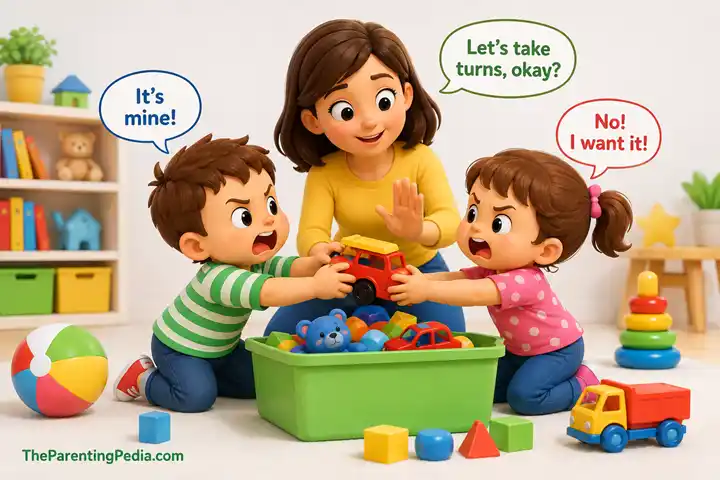
Table of Contents
Understanding Sibling Rivalry Between Toddlers
Toddlers are still developing self-control, language, patience, and social skills. They want independence but do not yet have all the tools to manage disappointment.
A sibling may feel like a competitor for a favorite toy or a parent’s attention. This does not mean the child is bad or does not love the sibling.
The CDC notes that children ages 2 to 3 are still developing social and emotional skills, including expressing emotions, following simple instructions, and playing with others.
Treat sibling conflict as a teaching opportunity.
When toddlers argue over toys, teaching them how to share can help reduce everyday conflicts and make playtime more peaceful.
10 Practical Tips for Sibling Rivalry Between Toddlers
1. Stay Calm and Get Close
Your first job is safety.
Move close and use a calm, firm voice. If a child is hitting, biting, pushing, or pulling, block the behavior and separate the children if needed.
Try: “I won’t let you hit. You are both upset. Let’s calm down.”
A calm response helps children settle.
2. Avoid Taking Sides
It is tempting to decide who started the fight, but labels can make rivalry worse.
Instead, describe what you see: “You both want the red truck.”
Then set the boundary: “The truck is not for grabbing. We are going to take turns.”
The American Academy of Pediatrics recommends staying calm and neutral during sibling conflicts and giving younger children clear rules.
For younger siblings, parents may need to step in more often and calmly repeat simple rules about sharing and not hitting, as recommended by the American Academy of Pediatrics.
3. Give Each Child One-on-One Time
Toddlers do not need hours of individual attention. Even a few focused minutes can help.
Read one book with one child, build blocks together, or let one toddler help you prepare a snack.
The AAP recommends one-on-one time for focused connection.
4. Teach Turn-Taking With Simple Words
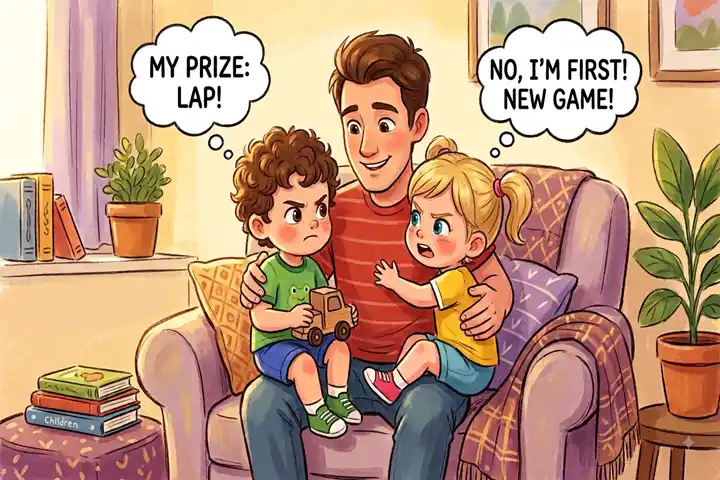
“Share!” can be too vague. Show toddlers exactly what taking turns means.
Try:
- “First your turn, then her turn.”
- “You can have it when he is done.”
- “Two more minutes, then we switch.”
A short visual timer can make waiting easier. Toddlers need repeated practice.
Simple routines can make transitions easier, especially when children know what to expect. A consistent bedtime routine for kids can also reduce arguments caused by tiredness.
5. Protect Special Toys
Not every toy has to be shared immediately.
If a child has a special stuffed animal or favorite toy, create a simple rule that the sibling cannot take it without permission. Keep other toys available for shared play.
Protecting a few prized items can reduce possessiveness in young children.
6. Give Choices Instead of Commands
“Stop fighting!” does not tell toddlers what to do next.
Offer two acceptable choices:
“You can play with the blocks or the blue car while your sister finishes.”
“Do you want to wait here or play at the table?”
This gives toddlers control while keeping your boundary clear.
7. Praise Cooperation Right Away
Fighting is loud, so peaceful behavior can be easy to miss.
Notice it when you see it:
“You waited for your turn. That was patient.”
“You gave the car back gently.”
“You two worked together.”
The CDC recommends specific praise because it tells children exactly which behaviors you want to see more often.
Positive discipline works best when parents notice and encourage the behaviors they want children to repeat, rather than focusing only on mistakes.
8. Create Team Activities
Replace some competitive activities with teamwork.
Build one block tower together. Let siblings put stuffed animals to bed. Ask them to carry napkins to the table together. Choose activities where the goal is shared rather than one child winning.
This gives siblings positive experiences.
9. Set a Firm Boundary Around Hitting
Big feelings are acceptable. Hurting someone is not.
If a toddler hits or bites, stop it immediately:
“I won’t let you hit your brother.”
Then name the feeling: “You were angry because he took the car.”
Teach a replacement phrase such as “My turn,” “Stop,” or “I want that.” The AAP recommends intervening when physical fighting continues and teaching children acceptable alternatives.
If necessary, separate the children until calm.
10. Do Not Force a Winner
Sibling arguments do not always need a winner and a loser.
If both toddlers want the same toy, remove it and say:
“The truck is causing a problem, so I am putting it away. We can try again later.”
You are teaching children that conflicts can be handled safely.
How to Reduce Sibling Conflicts Before They Start
Prevention can be easier than stepping into repeated fights.
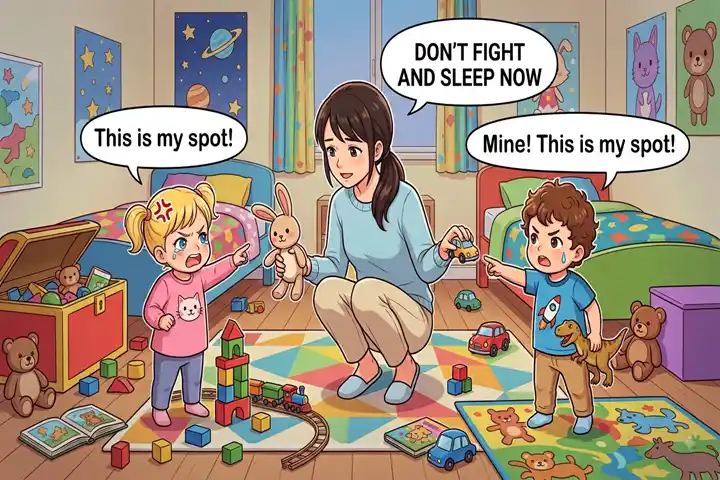
Notice when conflicts happen most often. Are your toddlers hungry before lunch, overtired before bedtime, or more argumentative during transitions?
Basic needs matter. The AAP notes that young children are more likely to struggle with aggressive behavior when they are hungry, tired, uncomfortable, or overwhelmed.
Keep routines predictable, offer snacks before hunger builds, give transition warnings, and keep a few duplicate high-interest toys available.
Keep expectations realistic for their age.
What Parents Should Avoid
Some common reactions can make conflicts worse.
Avoid:
- Comparing siblings or using negative labels.
- Demanding an apology while a child is still upset.
- Shouting over every small disagreement.
- Expecting toddlers to manage physical fights alone.
Use short, predictable responses. Calm repetition beats a long lecture.
When Should You Seek Extra Help?
Most sibling disagreements are part of growing up. Talk with your pediatrician or a qualified child-development professional if fighting is severe, causes injuries, involves serious aggression, or leaves one child frightened.
Also seek guidance if you are concerned about your child’s communication, emotional development, or ability to interact with others.
Getting professional advice is not a parenting failure; sometimes families simply need extra support.
When parents work together calmly, toddlers feel more secure and learn healthier ways to handle disagreements. See these co-parenting tips for peaceful parenting for more ideas.
FAQs
Is sibling rivalry normal for toddlers?
Yes. Toddlers are still learning emotional regulation, communication, patience, and social skills. Disagreements over toys, attention, and space can happen while these skills develop.
How do I stop my toddlers from fighting over the same toy?
Use simple turn-taking language, a short timer, and clear boundaries. If the children cannot use the toy safely, put it away for a while. Do not feel pressured to make them share immediately.
Should I always make toddlers apologize?
Not necessarily. First help them calm down. Then guide them toward repair, such as returning a toy, checking on the other child, or using a simple apology when ready. The lesson is repairing the relationship, not simply repeating a word.
What if one toddler always seems to start the fights?
Look for patterns involving tiredness, hunger, attention, transitions, or certain toys. Focus on behavior, not labels.
Conclusion
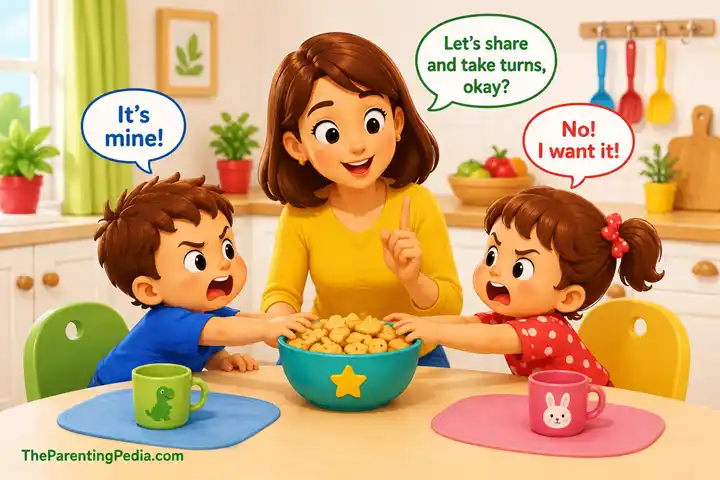
Sibling rivalry between toddlers can be frustrating, but it is also an opportunity to teach valuable life skills. Toddlers need repeated practice with waiting, sharing, communicating, calming down, and repairing small hurts.
Stay calm, keep safety boundaries firm, give each child individual attention, and notice cooperation. You are not trying to create a home where siblings never disagree; you are helping them learn to disagree safely.
Author’s Note
At TheParentingPedia, we create evidence-informed parenting content designed to help families make confident decisions. This article has been carefully researched using guidance from trusted child-health and development resources and is written in simple, practical language for parents and caregivers.

TheParentingPedia editorial team creates practical, research-informed parenting content to help parents navigate everyday challenges, child development, behavior, and family life. Our articles draw on reputable parenting and child-development sources and are reviewed for clarity, accuracy, and practical usefulness.