Every parent wants to raise a happy, confident, and emotionally strong child. Yet children often struggle to understand and express their feelings, leading to tantrums, tears, or angry outbursts. These moments aren’t just behavioural challenges—they’re opportunities to teach lifelong emotional skills.
Emotional Literacy for Children helps children recognise, understand, and manage their emotions while developing empathy for others. By guiding children with patience and consistency, parents can build emotional resilience that supports healthy relationships, better decision-making, and greater confidence throughout life.
Parents who focus on Emotional Literacy for Children help their children develop healthy emotional habits that benefit them throughout life.
In this guide, you’ll learn what emotional literacy is, why it matters, and practical ways to help your child develop this essential life skill.

Table of Contents
What Is Emotional Literacy for Children?
Emotional Literacy for Children is the ability to recognise, understand, express, and manage emotions in healthy and appropriate ways. It also includes recognising other people’s feelings and responding with empathy and kindness.
Like reading or writing, emotional literacy isn’t something children are born with. It’s a skill they develop gradually through everyday experiences, supportive relationships, and positive guidance from parents and caregivers.
Children with strong emotional literacy are more likely to:
- Recognise their emotions.
- Express feelings using words instead of aggression.
- Solve problems calmly.
- Build healthy friendships.
- Show empathy towards others.
- Develop confidence and resilience.
Teaching emotional literacy doesn’t stop children from feeling angry, sad, or frustrated. Instead, it helps them understand that while every emotion is natural, every behaviour isn’t acceptable. This understanding encourages children to make healthier choices when dealing with difficult emotions.
Why Emotional Literacy Matters
Children experience a wide range of emotions every day. A toddler may cry when playtime ends, a preschooler may become frustrated after failing to complete a puzzle, and an older child may feel embarrassed after making a mistake at school.
Although these situations may seem minor to adults, they can feel overwhelming to children. Without the right guidance, children often react by crying, shouting, refusing to cooperate, or becoming aggressive because they don’t yet know how to express their emotions appropriately.
When parents consistently teach Emotional Literacy for Children, children gradually learn to identify their feelings, think before reacting, and respond in healthier ways. These skills not only improve behaviour at home but also help children succeed at school and build stronger relationships throughout life.
Developing Emotional Literacy for Children also improves communication, problem-solving, and confidence in everyday situations.
Strong emotional skills also improve family conversations. Read our guide on effective communication between parents and children for more practical tips.
Why Children Struggle to Manage Their Emotions
Many parents wonder why their child keeps repeating the same behaviour even after being corrected. In most cases, the answer isn’t stubbornness—it’s brain development.
The areas of a young child’s brain responsible for emotional regulation, impulse control, and decision-making are still developing. Because of this, children often react before they have time to think about the consequences of their actions.
For example:
- A child whose toy breaks may immediately burst into tears.
- A child who loses a game may shout in frustration.
- A child feeling ignored may push a sibling to get attention.
These reactions don’t always mean a child is being disobedient. More often, they show that the child needs support in learning how to manage strong emotions.
Behaviour Is a Form of Communication
Children don’t always have the vocabulary to explain what they’re feeling. Instead, they communicate through their behaviour.
A child who seems difficult may actually be:
- Hungry
- Tired
- Overstimulated
- Feeling anxious
- Looking for attention
- Struggling with disappointment
Instead of asking, “How do I stop this behaviour?”, try asking, “What is my child trying to communicate?”
This small change in perspective helps parents respond with patience instead of frustration and creates opportunities to teach emotional awareness.
Understanding behaviour in this way is an important part of Emotional Literacy for Children because it encourages empathy instead of punishment.
Real-Life Parenting Example
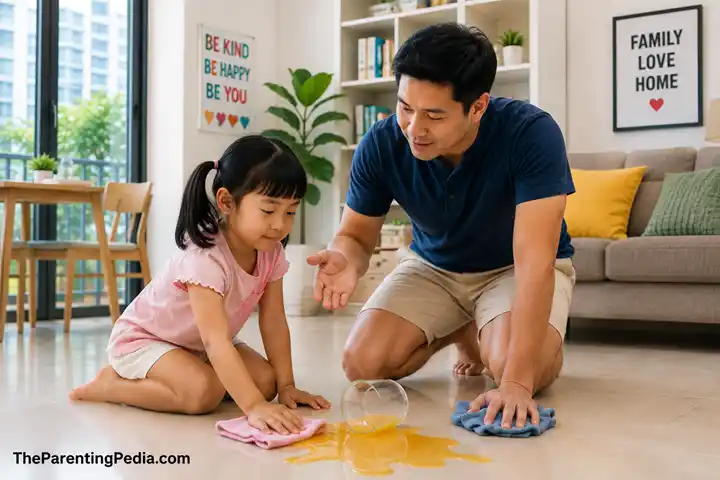
Imagine your seven-year-old accidentally spills a drink while carrying it to the table.
Instead of saying,
“You’re always so careless!”
try saying,
“Accidents happen. Let’s clean it up together, and next time we’ll carry the glass more carefully.”
This response corrects the behaviour without criticising the child. It teaches responsibility, protects self-esteem, and encourages better choices in the future.
Using calm responses instead of punishment is also an important part of how to handle a stubborn child calmly.
Parents can learn more about children’s emotional development through UNESCO’s education and child development resources.
Practical Ways to Build Emotional Literacy
Parents don’t need special training to help children become emotionally strong. Small, consistent actions at home can make a lifelong difference. Here are some simple ways to build Emotional Literacy for Children every day.
Teach That Every Emotion Is Normal
Children need to know that all emotions are natural. Feeling angry, sad, scared, excited, jealous, or disappointed is part of being human.
At the same time, explain that while every feeling is acceptable, some behaviours are not.
For example:
- It’s okay to feel angry, but it’s not okay to hit someone.
- It’s okay to feel disappointed, but it’s not okay to throw toys.
This helps children separate their emotions from their actions and encourages healthier choices.
If your child often struggles with big emotions, these positive discipline techniques can help you respond calmly and effectively.
Help Children Name Their Feelings
Young children often express emotions through behaviour because they don’t have the words to explain how they feel.
Instead of correcting them immediately, help them identify their emotions.
For example:
Parent: “You look disappointed because your game ended.”
Child: “Yes.”
Parent: “It’s okay to feel disappointed. Let’s think about what we can do next.”
When children learn emotional vocabulary, they become more confident in expressing themselves calmly.
Regular conversations about emotions make Emotional Literacy for Children a natural part of daily family life.
Correct the Behaviour, Not the Child
Children should never feel that one mistake defines who they are.
Avoid labels such as:
- ❌ “You’re naughty.”
- ❌ “You’re careless.”
Instead, focus on the behaviour.
Say:
- ✅ “Throwing toys can hurt someone.”
- ✅ “Running made the juice spill.”
- ✅ “Let’s find a better way to show you’re upset.”
This approach teaches responsibility while protecting your child’s self-esteem.
Be a Calm Role Model
Children learn by watching the adults around them. If parents react with patience and self-control, children are more likely to copy those behaviours.
Before responding during a difficult moment, pause and ask yourself:
- Am I reacting or responding?
- What lesson do I want my child to learn?
Remaining calm doesn’t mean ignoring poor behaviour. It means teaching children how to handle emotions respectfully.
Families can also find practical parenting advice through MSF Singapore’s parenting resources.

Simple Daily Activities That Strengthen Emotional Skills
Developing emotional literacy doesn’t require complicated activities. A few minutes of daily practice can make a big difference.
| Activity | How It Helps |
| Read books about feelings | Builds emotional vocabulary |
| Play emotion charades | Improves emotion recognition |
| Talk about the day before bedtime | Encourages open communication |
| Praise calm behaviour | Reinforces positive choices |
| Role-play everyday situations | Develops empathy and problem-solving |
Simple routines like these strengthen Emotional Literacy for Children and help children become more emotionally aware over time.
You can also strengthen emotional skills through fun educational games for kids at home that encourage teamwork, communication, and problem-solving.
Signs Your Child Is Developing Emotional Literacy
As children strengthen their emotional skills, you may notice positive changes such as:
- Expressing feelings with words instead of anger.
- Calming down more quickly after becoming upset.
- Showing empathy towards others.
- Accepting responsibility for mistakes.
- Solving conflicts more peacefully.
- Building healthier friendships.
As Emotional Literacy for Children improves, many parents notice fewer emotional outbursts and better communication at home.
Remember that every child develops at their own pace. Celebrate progress, no matter how small.
When Should Parents Seek Professional Help?
Some emotional ups and downs are a normal part of childhood. However, consider seeking professional guidance if your child:
- Has frequent aggressive outbursts.
- Shows ongoing anxiety or sadness.
- Struggles to cope at school or home.
- Finds it difficult to build relationships.
- Experiences emotional challenges that don’t improve over time.
Early support can help children develop healthier coping skills and improve their overall well-being.
Parents looking for practical mental health resources can also explore the Canadian Paediatric Society’s mental health resources.
Frequently Asked Questions (FAQs)
At what age should parents start teaching emotional literacy?
Parents can begin teaching emotional literacy as early as 2 to 3 years of age. Using simple emotion words like “happy,” “sad,” or “angry” during everyday conversations helps children recognize and express their feelings naturally.
Can Emotional Literacy Reduce Tantrums?
Yes. Emotional literacy helps children understand and communicate their emotions instead of acting them out. Over time, this can reduce tantrums and improve self-control, especially when parents respond calmly and consistently.
How Can Parents Encourage Children to Talk About Their Feelings?
Create a safe and judgment-free environment where children feel heard. Ask open-ended questions, listen patiently, and model healthy emotional expression by sharing your own feelings in age-appropriate ways.
Is Emotional Literacy the Same as Emotional Intelligence?
No. Emotional literacy is the ability to recognize, understand, and express emotions, while emotional intelligence is the broader ability to manage emotions, build relationships, and make thoughtful decisions. Emotional literacy is the foundation of emotional intelligence.
Why Is Emotional Literacy Important for Children?
Emotional literacy helps children build confidence, empathy, resilience, and healthy relationships. It also improves communication skills and prepares them to handle challenges both at school and in everyday life.
What Are Simple Ways to Teach Emotional Literacy at Home?
Parents can use storybooks, role-playing, emotion charts, and daily conversations to teach feelings. Praising children for expressing emotions respectfully also encourages healthy emotional development.
The goal of Emotional Literacy for Children is not to prevent emotions but to teach children how to understand and express them in healthy ways.
Conclusion
Helping your child develop Emotional Literacy for Children is one of the greatest gifts you can give. By encouraging open conversations, validating emotions, and modelling healthy emotional responses every day, you help your child build confidence, empathy, resilience, and strong relationships. Remember, emotional skills develop over time, and your patience, support, and consistency will help your child grow into a happy, emotionally strong, and compassionate individual.

Kaushik Sampat (KayEss) is the founder of TheParentingPedia and a parenting writer with years of hands-on parenting experience. He creates practical, research-informed guidance on parenting, child development, education, and family well-being using trusted pediatric and child psychology sources. His experience helps him turn complex advice into clear, useful information parents can apply in everyday family life.