
Children see adults shopping and buying things, but they may not understand how money works or why saving matters.
A child might spend birthday money on a toy and regret it later. Such moments offer a simple way to Teach Kids About Money through everyday experiences.
Try three jars labelled SAVE, DONATE, and SPEND to help children learn saving, generosity, and responsible spending.
Table of Contents
1. SAVE: Think about tomorrow
The SAVE jar is for a goal your child wants to reach later. It could be a book, puzzle, football, or special outing. Help your child choose something realistic, write down its cost, and keep the goal card beside the jar.
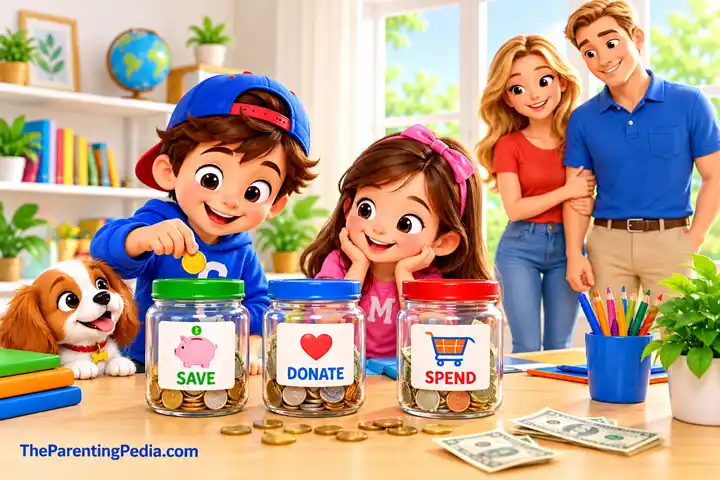
When your child adds coins, show how much closer they are. Saving towards a book first may feel more achievable than saving for an expensive game straight away.
This gives you a practical way to Teach Kids About Money through patience and planning. Praise the decision to save, not just the amount. You might say, “You remembered your goal instead of spending it today.” If your child changes their mind, discuss the choice calmly. Adjusting a goal is part of learning, not a failure.
2. DONATE: Think about other people
The DONATE jar helps children understand that money can support people, animals, or causes they care about. They might save towards a local food drive, a trusted animal shelter, a community project, or a charity chosen with their family.
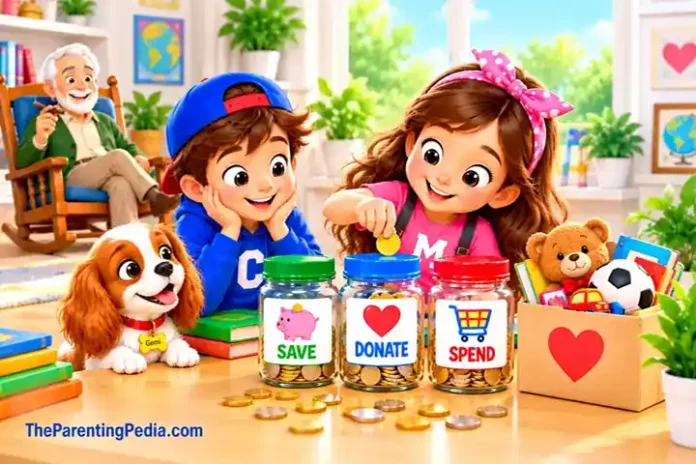
Make the decision meaningful. Explain the cause in simple, honest language and let your child help choose where the money goes. Even a small amount can become a thoughtful family action. Letting children help choose a cause is another way to Teach Kids About Money while respecting their choices.
Donating should never be forced or used to prove whether a child is kind. Children should not feel guilty if they want to keep their money or if the family cannot afford to donate. You can also talk about other forms of generosity, such as sharing suitable belongings, helping a neighbour, or giving time. The jar is for practising thoughtful giving—not measuring a child’s goodness.
You can make practice playful with a pretend shop or other educational games for kids at home.
3. SPEND: Make choices today
The SPEND jar is for money your child can use now. It gives them room to make decisions while showing that money is limited. If they have enough for a small toy or treat, ask, “Is this what you want most, or would you rather save for something else?” This is a simple opportunity to Teach Kids About Money through everyday choices.
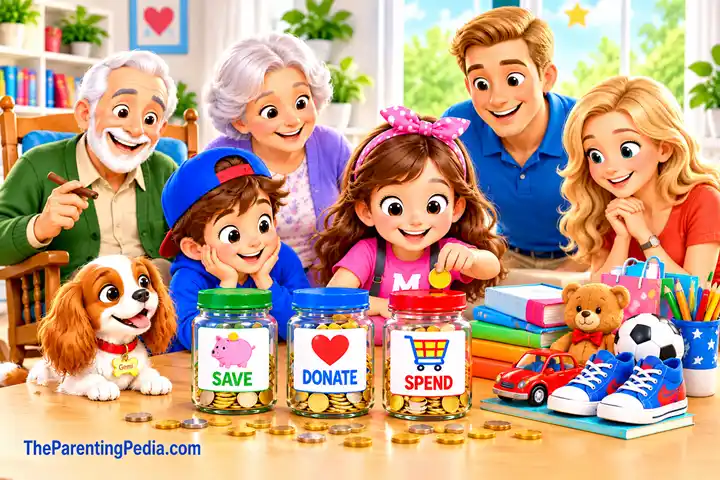
Let children make small, safe mistakes. If your child spends all their money on stickers, they may need to wait until the next allowance for another treat. Avoid automatically adding extra money. Calmly remind them of the agreement.
Use shopping trips to explain needs and wants. Food, suitable clothing, and school supplies are usually needs; another toy or game is usually a want. Context can vary, so ask your child to explain their reasoning instead of turning it into a test. Compare prices together and discuss whether an item is worth the cost.
How to set up the jars at home
Use three clear jars, boxes, or containers labelled SAVE, DONATE, and SPEND. Start with an amount that suits your family budget; there is no single correct pocket-money amount or percentage.
You might try putting 50% into SAVE, 10% into DONATE, and 40% into SPEND. Treat this as a starting example, not a rule. Change the split depending on your child’s age, savings goal, and family circumstances. You and your child can agree on a different arrangement and revisit it as they grow. The Raising Children Network also describes separate money jars or accounts for spending, saving, and donations in its pocket-money guidance.
Decide when money will be added and what it is meant to cover. Some families provide regular pocket money; others use birthday gifts or pay for specific extra jobs. Explain your approach clearly so there is less confusion later.
Have a short weekly check-in. Count the money together, notice progress, and ask what your child wants to do next. Keep it encouraging rather than turning it into an inspection. This regular routine helps Teach Kids About Money in a practical, low-pressure way.
Adapt the lesson as children grow
For preschoolers, use play coins, sorting, and pretend shops. Focus on the idea that money is exchanged for things; do not expect them to understand percentages or long-term goals.
For primary-school children, introduce a simple savings target, needs versus wants, and small spending limits. Older children can record money received and spent, compare prices, and plan for a bigger purchase.
Teenagers can learn about budgets, bank accounts, digital payments, subscriptions, online shopping, and scams. Explain borrowing and repayment before they use credit. The US Consumer Financial Protection Bureau describes financial habits and decision-making skills as abilities that develop through childhood and adolescence. Its Money as You Grow activities offer age-appropriate conversation starters and activities.
Common mistakes to avoid
Do not turn every purchase into a lecture or compare your child with siblings and friends. Families have different budgets, and children learn at different speeds. Avoid promising that saving will make them rich or implying that a donation must be large to matter.
Parents also Teach Kids About Money by modelling everyday habits. Let your child see you compare prices, plan a purchase, save for a goal, and talk respectfully about giving. Explore TPP’s positive parenting guide for more.
Frequently Asked Questions
What age can children start using money jars?
You can introduce the idea around preschool age using play coins and simple words. Real pocket money can begin when a child understands that money buys things and spending it leaves less for later. Every child develops at a different pace.
How much money should go into each jar?
There is no universal split. Choose a percentage that fits your family budget and your child’s goals. Keeping the routine consistent matters more than using the same percentages as another family.
Should children be required to donate?
No. Use the DONATE jar to introduce generosity, not pressure or guilt. Let your child help choose a cause, explain why it matters, and remember that kindness can also mean giving time or helping others.
Conclusion
SAVE, DONATE, and SPEND turn money into three clear lessons: plan for the future, consider other people, and make thoughtful choices today. You do not need a large allowance or fancy containers to begin. Start small, discuss decisions calmly, and let your child learn from manageable mistakes. When you Teach Kids About Money through everyday practice, the goal is not to make children perfect with every coin; it is to help them build confidence, awareness, and habits they can develop as they grow.
Author’s Note
TheParentingPedia.com creates evidence-informed parenting content researched using trusted sources. This article is intended for general educational purposes and should not replace personalised financial guidance when a family needs help with specific financial decisions.
Sources & Further Reading
- Raising Children Network — Pocket Money: When and How Much?
- Australian Government Moneysmart — Teaching Kids About Money
- Consumer Financial Protection Bureau — Money as You Grow

TheParentingPedia editorial team creates practical, research-informed parenting content to help parents navigate everyday challenges, child development, behavior, and family life. Our articles draw on reputable parenting and child-development sources and are reviewed for clarity, accuracy, and practical usefulness.