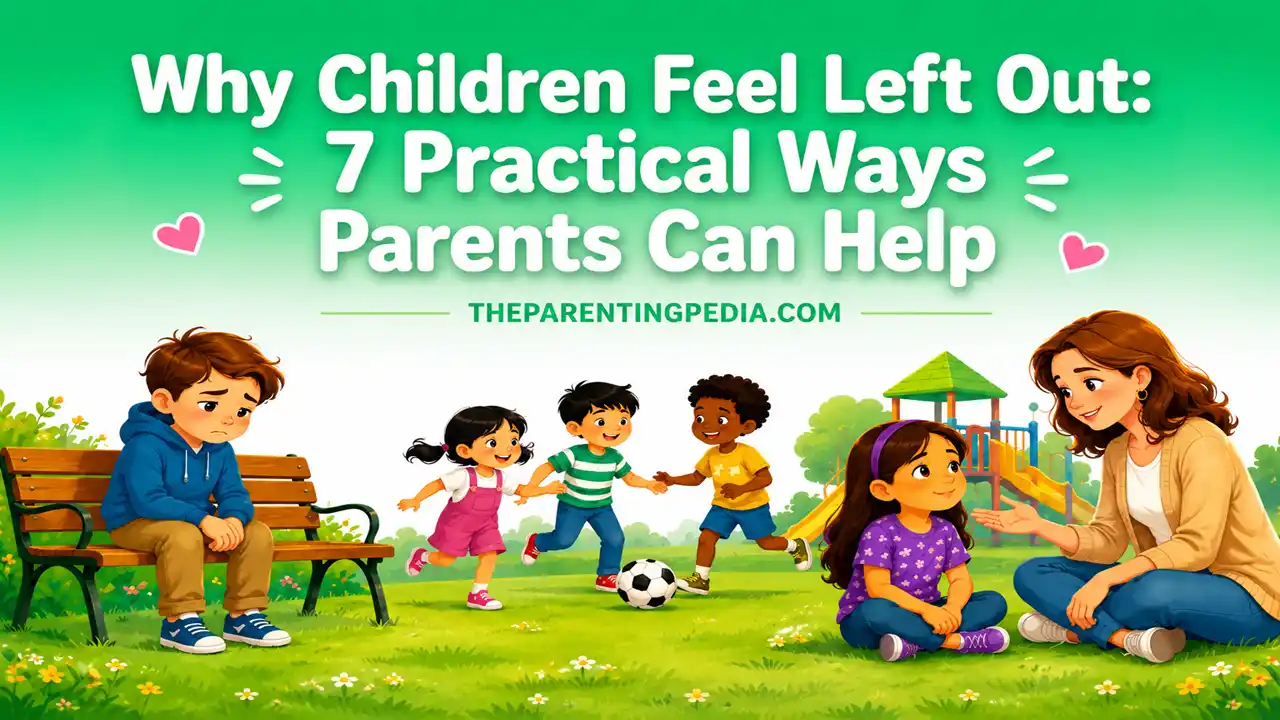
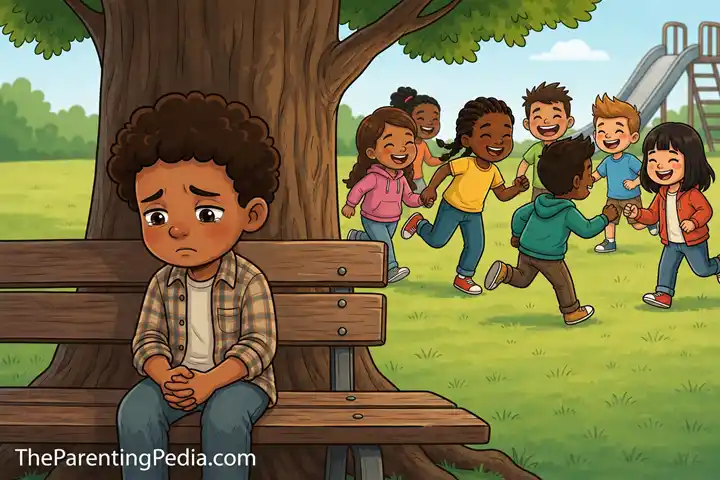
Seeing your child stand alone at a birthday party, school event, or playdate can be heartbreaking. When children feel left out, you may wonder whether other kids are ignoring them, whether your child is struggling socially, or whether you should step in.
Being left out occasionally does not necessarily mean something is wrong. Some children take longer to warm up, prefer smaller groups, or need more practice with social situations. The important thing is to understand what happened and help your child develop the confidence and skills to handle similar situations.
The goal isn’t to make sure your child is included in every group. It is to help them build healthy friendships, handle disappointment, and know when to ask for support.
Table of Contents
Why Do Children Feel Left Out?
There isn’t one reason a child may struggle to feel included.
Some children are naturally shy or cautious around unfamiliar people. Others may not know how to enter an established game or conversation. A child may also have different interests from the children around them or simply prefer one or two close friends instead of a large group.
Some children need more time and practice to feel comfortable around peers, especially when they are unsure how to join a group or start a conversation.
Sometimes another child may not realize that someone wants to join. Other times, children may intentionally exclude someone because of a disagreement or friendship conflict.
Occasional exclusion can happen as children learn how friendships work. However, repeated or deliberate exclusion, especially when combined with teasing, humiliation, threats, or other hurtful behavior, deserves closer attention.
| What Your Child May Experience | What It Could Mean | What Parents Can Do |
|---|---|---|
| Stands alone at a party | They may feel shy or unsure how to join | Practice simple ways to approach a group |
| Says, “Nobody wants me” | They may be feeling rejected or discouraged | Listen and validate their feelings |
| Watches other children play | They may not know how to enter the activity | Teach phrases such as “Can I play too?” |
| Avoids parties or playdates | Social situations may feel uncomfortable | Start with smaller, familiar gatherings |
| Wants to be friends with everyone | They may be focusing too much on being accepted | Talk about healthy and respectful friendships |
| Is repeatedly excluded by the same children | There may be an ongoing friendship problem | Talk with a teacher or trusted adult |
| Becomes very upset after social events | The experience may be affecting their confidence | Listen carefully and consider additional support |
Signs Your Child May Feel Excluded
Children don’t always tell parents directly that they feel left out. Instead, you may notice changes in their behavior.
Look for signs such as:
- Avoiding parties, playdates, or group activities
- Saying, “Nobody likes me” or “I have no friends”
- Becoming upset after social events
- Losing interest in activities they normally enjoy
- Worrying about what other children think
- Avoiding a particular child or group
- Becoming reluctant to attend school or activities
One sign alone does not necessarily mean there is a serious problem. Pay attention to patterns and give your child a safe opportunity to explain what is happening.
7 Practical Ways Parents Can Help
1. Listen Before Trying to Fix the Problem
When your child tells you about a difficult social experience, your first instinct may be to offer advice. Instead, start by listening.
Try saying:
“That sounds really difficult. Do you want to tell me what happened?”
You can ask gentle questions such as:
- “What happened when you tried to join them?”
- “How did that make you feel?”
- “What happened afterward?”
Avoid turning the conversation into an interrogation. Your child needs to know they can talk to you without immediately being judged or blamed.
2. Validate Your Child’s Feelings
Don’t dismiss your child’s experience with phrases such as, “Don’t worry about it” or “Just find someone else to play with.”
Instead, acknowledge their feelings.
You could say:
“I can understand why that hurt.”
Validation doesn’t mean assuming that another child intentionally did something wrong. It simply lets your child know that their feelings matter.
When children feel left out, knowing that a parent understands can make it easier to talk openly about what happened.
3. Teach Your Child How to Join a Group
Some children want to participate but don’t know what to say.
Practice simple phrases at home:
- “Can I play too?”
- “What are you playing?”
- “Can I help?”
- “Do you want to play with me?”
Role-play different situations before a party or playdate. Pretend you’re another child and let your child practice approaching a group, asking to join, and responding calmly if someone says no.
Also explain that one rejection doesn’t mean nobody likes them. They can try another activity or approach another child.
Practicing simple ways to approach other children can help your child feel more prepared in social situations, and parents can also support children in learning friendship skills.

4. Start With Smaller Social Opportunities
Large parties can feel overwhelming for some children. Instead of constantly pushing your child toward large groups, create smaller opportunities to connect.
Arrange a playdate with one or two children your child already knows. You can also choose activities connected to their interests, such as drawing, sports, reading, music, or building.
Smaller groups give children more opportunities to practice conversation, cooperation, and turn-taking without the pressure of a crowded gathering.
5. Build Confidence Without Comparing
Avoid comparing your child with a more outgoing sibling, classmate, or friend.
Saying, “Why can’t you just go talk to them?” may increase anxiety rather than confidence.
Instead, notice your child’s strengths. Maybe they are creative, thoughtful, funny, patient, helpful, or a great listener.
Encourage activities where your child can use those strengths and meet children with similar interests. Confidence often develops through small successes rather than pressure to become more outgoing.
Helping your child recognize their strengths can be an important step toward building stronger self-confidence.
6. Teach What a Healthy Friendship Looks Like
When children feel left out, they may become so focused on being included that they overlook how others treat them.
Talk about the qualities of a healthy friendship:
- Respect
- Kindness
- Listening
- Taking turns
- Cooperation
- Feeling safe
- Respecting personal boundaries
Explain that your child doesn’t have to be friends with everyone. One supportive friendship can be more meaningful than being accepted by a large group.
Help your child understand that repeatedly being mocked, threatened, humiliated, or deliberately excluded is not healthy friendship behavior.
Positive friendships can give children confidence, support, and a sense of belonging as they develop their social skills.
7. Know When to Step In
Parents don’t need to solve every disagreement between children. Small friendship problems can give children opportunities to practice communication and problem-solving.
However, you should step in when exclusion becomes persistent or your child is clearly distressed.
Talk with your child’s teacher or another trusted adult who can observe what is happening at school or during activities.
If your child repeatedly avoids school or activities, experiences significant emotional distress, or reports bullying, consider seeking additional guidance from a pediatrician, school counselor, or qualified mental health professional.
What Should You Say After a Difficult Party?
After a difficult party or gathering, avoid turning the ride home into an interrogation.
Start with something simple:
“How did you feel about today?”
If your child wants to talk, listen without rushing to solve the problem. If they aren’t ready, give them some space and let them know you’re available later.
You could also ask:
“Would you like to practice what you could say next time?”
This helps turn a difficult experience into an opportunity to learn without making your child feel responsible for being excluded.
When Should Parents Seek Extra Support?
Occasional social disappointment is part of growing up. But persistent exclusion deserves closer attention.
Consider seeking additional support if your child:
- Frequently feels isolated
- Becomes very anxious about social situations
- Refuses school or activities
- Experiences ongoing sadness or withdrawal
- Suddenly loses interest in favorite activities
- Reports repeated bullying or deliberate exclusion
A teacher or school counselor may be able to provide useful information because they see social interactions that parents may not.
If the situation is affecting your child’s emotional well-being or daily life, talk with your child’s pediatrician or another qualified professional about appropriate support.
Teachers can also help you understand how your child interacts with classmates and whether they are having ongoing friendship difficulties.

Frequently Asked Questions
Why do children feel left out at parties?
Children may feel excluded because they are shy, unfamiliar with the group, unsure how to join an activity, or dealing with established friendships. Sometimes another child may intentionally leave them out, so it’s important to understand the specific situation.
How can I help my child make friends?
Start with smaller social opportunities, encourage activities based on your child’s interests, practice simple conversation starters, and teach your child what respectful friendship looks like.
Should I contact the other parents?
Not after every disagreement. If exclusion is repeated or you suspect bullying, speak with a teacher, school counselor, or activity leader first. They may be able to provide useful context and help determine the best next step.
Final Thoughts
When children feel left out, it is natural for parents to want to protect them from every painful social experience. But children also need opportunities to learn how friendships work and discover how to handle disappointment.
Listen without judging, teach practical social skills, build confidence through small successes, and help your child recognize healthy friendships.
Remind your child that being left out of one party or group does not determine their worth. With patient support and practice, they can learn to handle difficult social moments and build friendships with people who genuinely appreciate them.
References
- How to Help Your Child Make Friends — Raising Children Network
- Preschoolers Making Friends: What to Expect — Raising Children Network
- Signs of Bullying in Children and Teenagers — Raising Children Network
- Problems With Peers: How to Help Your Child Navigate Social Challenges — American Academy of Pediatrics
- What Parents Can Do to Support Friendships — American Academy of Pediatrics

TheParentingPedia editorial team creates practical, research-informed parenting content to help parents navigate everyday challenges, child development, behavior, and family life. Our articles draw on reputable parenting and child-development sources and are reviewed for clarity, accuracy, and practical usefulness.