

Puberty brings many changes, and teenage body odor during puberty is one that can make teens feel self-conscious. Hormonal changes and increased sweating often mean that teenagers need to pay more attention to their daily hygiene.
For parents, the key is to discuss body odor calmly without making your teen feel embarrassed. Understanding your teen’s child development can make these conversations easier and more supportive.
With simple habits like regular showers, clean clothes, foot care, and deodorant when needed, your teen can learn to manage body odor and feel more confident.
Table of Contents
Why Does Body Odor Increase During Puberty?
During puberty, hormonal changes cause certain sweat glands to become more active. Teens may notice more sweating around the underarms, feet, and groin.
Sweat itself does not usually have a strong smell. Odor develops when sweat mixes with bacteria naturally found on the skin. This is why a child who rarely had noticeable body odor may suddenly need a regular personal hygiene routine.
Understanding this can make teenage body odor during puberty easier for parents and teens to discuss. It is not a sign that your teen is dirty or doing something wrong.
Parents should also learn to recognize the signs of depression in teenagers so they can provide support and seek professional help when needed.
7 Effective Ways to Help Your Teen Manage Body Odor
1. Encourage a Daily Shower Routine
A simple daily shower can remove sweat, oils, and bacteria from the skin. Encourage your teen to pay attention to areas where sweat tends to collect, especially the underarms, feet, groin, and skin folds.
There is no need for an overly complicated routine. A gentle cleanser, clean water, and thorough rinsing are usually enough.
If your teen plays sports, exercises, or sweats heavily during the day, showering afterward can also help them feel clean and comfortable.
2. Introduce Deodorant or Antiperspirant
Deodorant can help reduce or mask body odor, while antiperspirant helps reduce sweating. Depending on your teen’s needs, either may become a useful part of their daily routine.
Let your teen choose a product they like and feel comfortable using. Giving them some control can make personal hygiene feel less like a parental rule and more like part of growing up.
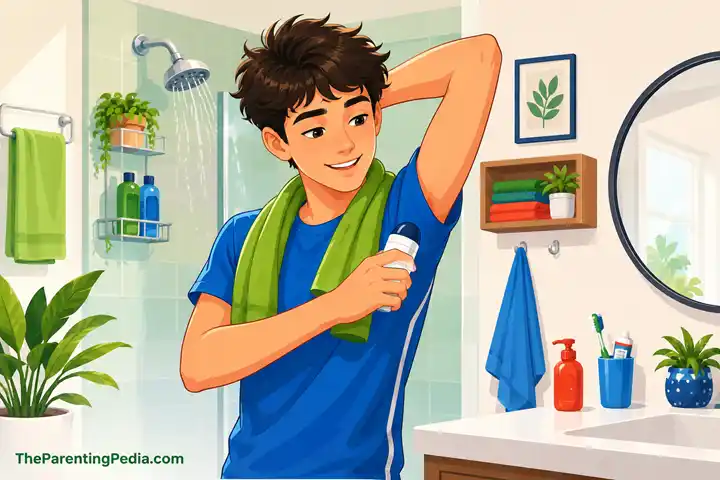
For teenage body odor during puberty, deodorant is generally most effective when applied to clean, dry underarms.
If a product causes burning, itching, redness, or other irritation, stop using it and consider asking a healthcare professional about another option.
Understanding common teenage behavior patterns can help parents respond with greater patience and empathy.
3. Make Clean Clothes a Daily Habit
Good hygiene does not stop after a shower. Clothing can hold sweat and bacteria, especially shirts, underwear, socks, and sports clothing.
Encourage your teen to wear clean underwear and socks each day. Shirts should also be changed regularly, particularly after sports or heavy sweating.

Sports uniforms and workout clothes should be washed regularly rather than worn repeatedly. Keeping a clean shirt in a school or sports bag can also be helpful on busy days.
4. Give Extra Attention to Feet and Shoes
Feet can sweat a lot, and closed shoes can trap moisture. This can create an environment where odor-causing bacteria grow more easily.
Encourage your teen to:
- Change socks every day.
- Change socks after heavy sweating.
- Wash their feet regularly.
- Dry their feet carefully after bathing.
- Allow shoes to dry completely before wearing them again when possible.
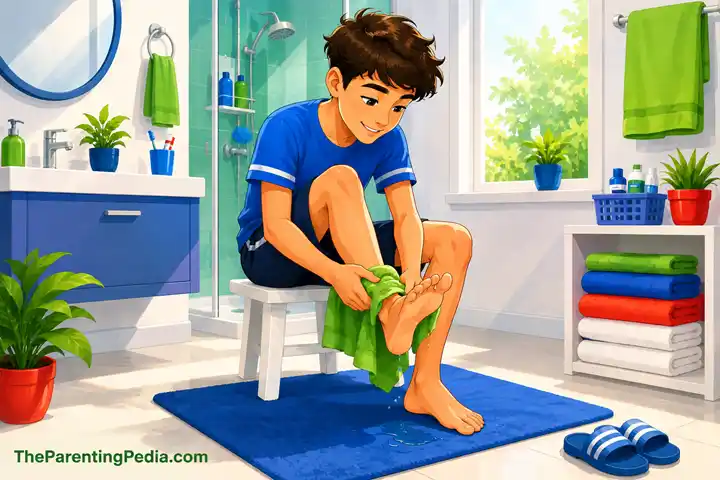
If your teen frequently has strong foot odor, these simple changes may make a noticeable difference.
5. Teach Them to Dry Their Skin Properly
Washing removes sweat and bacteria, but drying the skin properly is also important. Moisture that remains around the underarms, feet, groin, or skin folds can contribute to odor and irritation.
After showering, encourage your teen to gently dry their body with a clean towel. They should pay particular attention to areas that tend to stay damp.
This small step can make managing teenage body odor during puberty easier and can also encourage better overall hygiene habits.
Families in Singapore can also find government resources for parenting, childcare, preschool, family support, and financial assistance through LifeSG’s family and parenting services.
6. Talk About Body Odor Without Embarrassing Them
Your approach matters just as much as the hygiene advice you give.
Avoid teasing your teen, making jokes about their smell, or discussing the issue in front of siblings, friends, or other family members. Puberty can already make teenagers sensitive about their changing bodies.
Instead, choose a private and calm moment. You might say, “Your body is changing as you grow, and this happens to everyone. Let’s find a simple routine that helps you feel fresh.”

When you treat teenage body odor during puberty as a normal growing-up issue, your teen is more likely to listen and develop healthy habits without feeling ashamed.
A calm and respectful parenting approach can also help teenagers feel heard and supported when discussing sensitive issues.
7. Help Your Teen Create a Routine
Teenagers are often busy with school, activities, friends, sports, and homework. A simple routine can make personal hygiene easier to remember.
You could encourage your teen to:
- Shower at a consistent time each day.
- Apply deodorant after drying off.
- Put on fresh clothes each morning.
- Change after sports or heavy exercise.
- Keep extra socks or a shirt in their bag when needed.
Try not to remind them about every step forever. As they become more responsible, gradually allow them to manage their own routine.
The long-term goal is independence. Your teen should eventually understand what their body needs and know how to take care of it without constant reminders.
What Should Parents Avoid?
When dealing with teenage body odor during puberty, avoid making your teen feel dirty or embarrassed.
Do not compare their smell with that of a sibling or friend. Avoid repeatedly saying that they “stink” or using jokes that could hurt their confidence.
It is also not necessary to cover body odor with excessive perfume or body spray. Strong fragrances may simply mask the odor temporarily and can sometimes irritate the skin.
Instead, focus on the cause and practical solutions: clean skin, clean clothes, good foot hygiene, and an appropriate deodorant or antiperspirant.
Most importantly, remember that your teen is learning. A supportive reminder is usually more helpful than criticism.

When Should You Talk to a Doctor?
Most body odor that develops during puberty is completely normal. However, parents should consider speaking with a healthcare professional if the odor is unusually strong, suddenly changes, continues despite good hygiene, or occurs along with other unusual symptoms.
A healthcare professional can check whether excessive sweating, a skin condition, an infection, or another issue may be contributing to the problem.
You should also seek advice if your teen develops persistent redness, itching, swelling, burning, or a rash after using a hygiene product.
There is no need to panic about ordinary puberty-related odor, but unusual or persistent changes are worth discussing with a professional.
Parents and caregivers in South Africa can also explore the National Parenting Support Programme, which provides guidance and resources for supporting children’s growth and development from birth to age five.
How Can Parents Help Their Teen Feel More Confident?
Body odor may seem like a small issue to an adult, but it can feel very significant to a teenager. They may worry about classmates noticing an odor, especially at school or during sports.
Helping them prepare can make a big difference. Keep conversations private, give practical advice, and allow your teen to choose products they feel comfortable using.
You can also remind them that teenage body odor during puberty happens to many people and does not mean something is wrong with them.
Your support can turn an awkward subject into an opportunity to teach your teen an important life skill: taking responsibility for their own personal care.
Supporting your teen through sensitive social and emotional experiences can also help them feel more secure and confident.

FAQs About Teenage Body Odor During Puberty
Is body odor normal during puberty?
Yes. Hormonal changes during puberty can increase sweating and make body odor more noticeable. Good hygiene habits can usually help manage it.
When should a teenager start using deodorant?
There is no specific age when every teenager needs deodorant. It can become useful when noticeable body odor or increased sweating begins.
Why does my teen still smell after showering?
Odor can remain in clothing, socks, shoes, or areas of the body that are not washed or dried properly. If the smell continues despite good hygiene, consider speaking with a healthcare professional.
Can body spray replace deodorant?
Body spray mainly adds fragrance and may temporarily mask an odor. It does not necessarily address sweating or the bacteria that contribute to body odor.
How should I talk to my teen about body odor?
Choose a private moment and speak calmly. Explain that teenage body odor during puberty is a normal part of growing up, then focus on practical solutions instead of criticism or embarrassment.
Conclusion
Teenage body odor during puberty is a normal part of growing up and can usually be managed with simple daily hygiene habits.
Help your teen build a routine that includes showering regularly, wearing clean clothes, caring for their feet, and using deodorant when needed. Most importantly, talk about body odor with patience and respect so your teen learns to care for their changing body without feeling ashamed.
Parents in Latin America and the Caribbean can also explore UNICEF parenting resources for practical guidance on early learning, nurturing care, child safety, and healthy development.
Author’s Note
As a parenting resource, TheParentingPedia.com aims to provide practical, supportive guidance for parents and caregivers. Every child and teenager is different, so parents should consider their child’s individual needs and seek professional advice when something seems unusual or persistent.
Sources & Further Reading
- American Academy of Pediatrics (HealthyChildren.org) — Body Odor in Kids & Teens
Covers why body odor develops during puberty, hygiene habits, deodorant/antiperspirant use, and when parents should consult a pediatrician.
Read the American Academy of Pediatrics guide - Nemours KidsHealth — Deodorant Use for Kids and Teens
Provides guidance on deodorants, antiperspirants, bathing, clean clothing, skin irritation, and when to speak with a doctor.
Read the KidsHealth guide - American Academy of Dermatology (AAD) — How Often Do Children Need to Take a Bath?
Includes bathing recommendations for tweens and teens, particularly after puberty, sports, sweating, or when body odor occurs.
Read the AAD guide

TheParentingPedia editorial team creates practical, research-informed parenting content to help parents navigate everyday challenges, child development, behavior, and family life. Our articles draw on reputable parenting and child-development sources and are reviewed for clarity, accuracy, and practical usefulness.