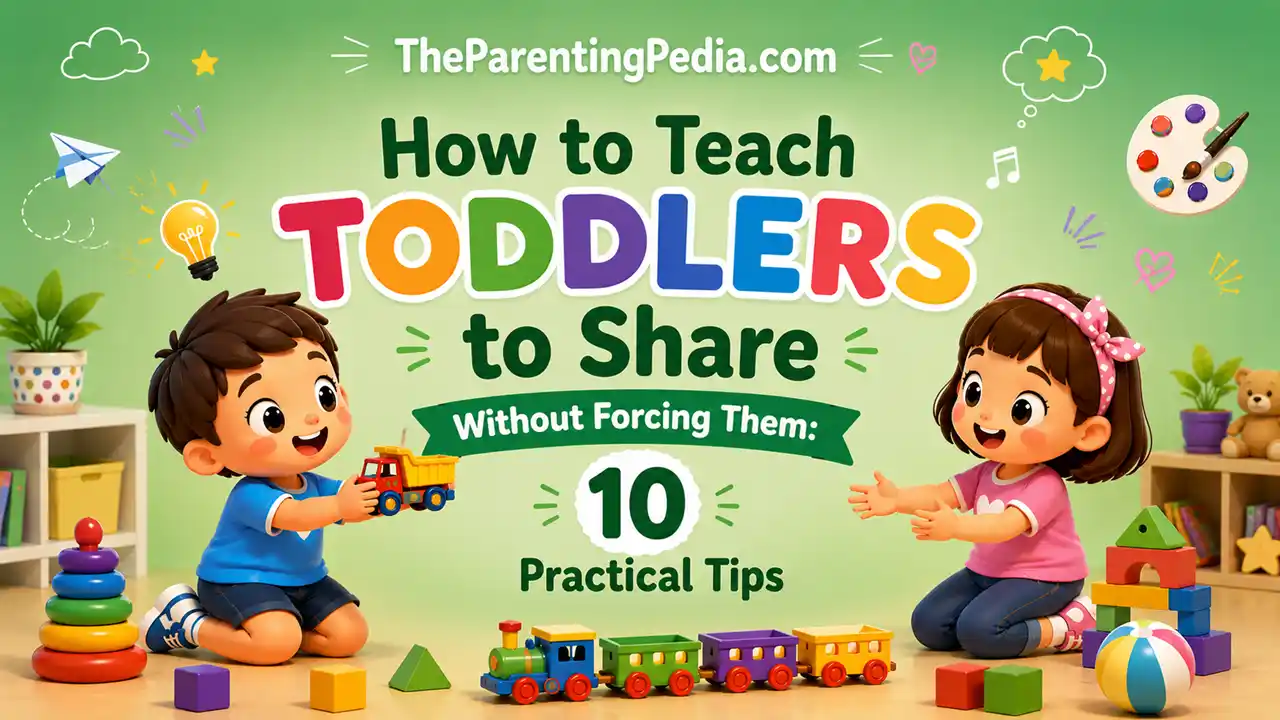
“That’s my toy!” Julie shouted as soon as her cousin Nick reached for her favorite toy during a family gathering. Nick looked confused, while Julie quickly pulled the toy closer and refused to let go. For many parents, moments like this can feel frustrating—but they are a normal part of toddler development.
If you want to Teach Toddlers to Share, the goal isn’t to force them to give up everything they love. Instead, gentle guidance, turn-taking, and everyday play can help toddlers slowly learn how to share, cooperate, and enjoy playing with others.
Table of Contents
Why Is Sharing Difficult for Toddlers?
Toddlers are still developing emotional control and social skills. They may understand that a toy belongs to them but struggle to understand why another child should use it.
Sharing also requires waiting, managing disappointment and thinking about another person’s feelings. These skills develop gradually, so a toddler saying “Mine!” does not necessarily mean they are selfish.
Raising Children Network explains that young children may find sharing difficult and recommends helping them practice sharing and taking turns rather than expecting perfect behaviour.
When Should Toddlers Start Learning to Share?
You can introduce sharing and turn-taking during the toddler years, but expectations should remain realistic.
Start with simple activities. Roll a ball back and forth, take turns adding blocks to a tower or pass crayons between children.
The goal is not to make your toddler share every possession. It is to help them understand simple ideas such as my turn, your turn and our turn.
Some toddlers will become comfortable with sharing earlier than others. Avoid comparing your child with another toddler.
Children learn a lot by watching their parents, so modeling sharing and taking turns can help them understand these behaviors.
10 Practical Ways to Teach Toddlers to Share
1. Model Sharing in Everyday Life
Toddlers learn by watching adults.
Use everyday situations to demonstrate sharing naturally:
“I’m sharing my apple with you.”
“Let’s share these crayons.”
“First my turn, then your turn.”
2. Start With Turn-Taking
For many toddlers, turn-taking is easier to understand than sharing.
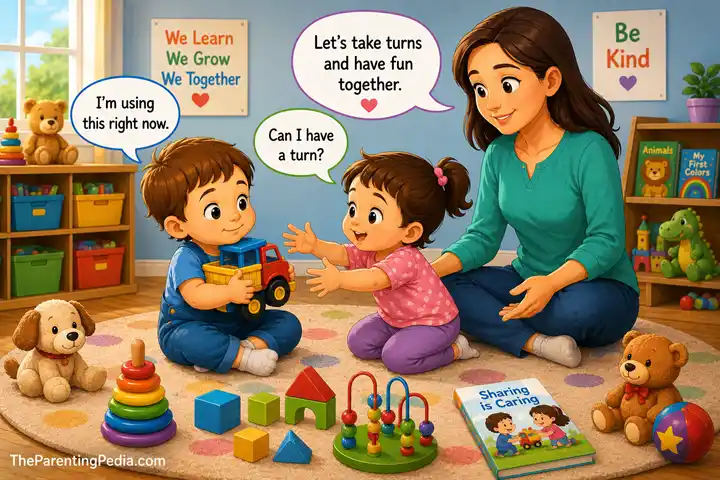
If two children want the same toy, say:
“Your brother is playing with it now. You can have a turn when he’s finished.”
You can practise turn-taking through games such as rolling a ball, building a tower together or adding pieces to a puzzle.
This gives your child an opportunity to practice waiting without feeling that they have permanently lost the toy.
Understanding your child’s emotional reactions can make it easier to respond with patience instead of frustration.
3. Teach Simple Words
Toddlers need easy words they can use when they want something.
Teach phrases such as:
- “My turn.”
- “Your turn.”
- “Can I have it?”
- “I’m still playing.”
- “Help me.”
Practise these phrases when your toddler is calm. During a disagreement, gently remind them to use their words instead of grabbing.
4. Don’t Force a Favorite Toy
If your toddler has a special toy they are not ready to share, forcing them to hand it over can create unnecessary frustration.
Before a playdate, allow your child to put favourite or treasured toys somewhere safe. Then offer other toys that they are comfortable sharing.
This teaches an important lesson: sharing does not mean that children must give up everything they own.
You do not need to turn every moment into a lesson. Simple examples repeated over time can help your toddler understand what sharing looks like.
5. Practise With Low-Pressure Activities
Choose activities where cooperation happens naturally.
Try:
- Building one tower together
- Drawing on one large sheet of paper
- Passing a ball
- Playing with playdough
- Making a simple snack together
- Taking turns with a puzzle
These activities allow toddlers to practise sharing and cooperation without making them feel pressured.
6. Praise Small Successes
When your toddler shares or waits for a turn, notice it.
Instead of simply saying, “Good job,” be specific:
“You gave Mia the blue block. She can have a turn now.”
“You waited while your brother finished.”
Specific praise helps toddlers understand exactly what they did well.
Don’t wait for perfect sharing before giving encouragement. Small steps matter.
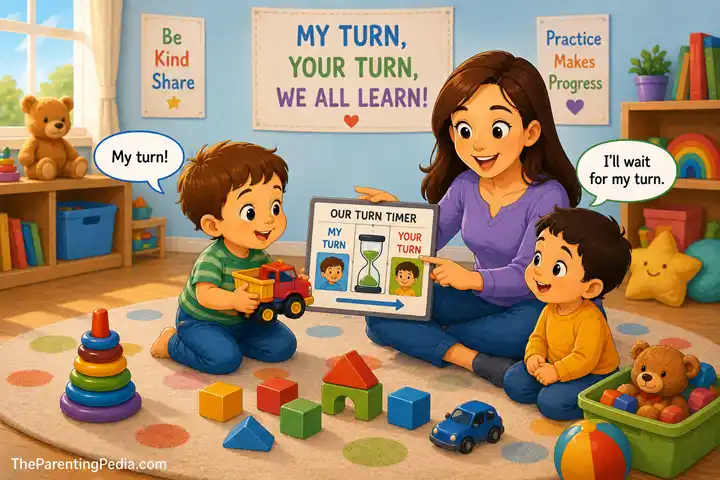
7. Use a Timer When Helpful
A timer can make waiting easier for some toddlers because they can see that their turn is coming.
If two children want the same toy, you might say:
“Emma has a turn first. When the timer rings, it will be your turn.”
Keep turns short enough for young children to manage.
If the timer creates more frustration, simply use verbal reminders instead. The goal is to make turn-taking easier, not to create another source of conflict.
8. Give Your Toddler Choices
Toddlers often resist when they feel they have lost control.
Offer simple choices:
“Would you like to share the blocks or the crayons?”
“Would you like to give your friend the red car or the blue car?”
Giving limited choices allows your child to participate in the decision while still learning cooperation.
You are not removing the boundary. You are giving your toddler an appropriate amount of control within it.
A predictable home environment also helps children feel secure, especially when parents use clear and consistent rules to guide daily routines.
9. Talk About Other People’s Feelings
As your toddler develops, help them notice how their actions affect others.
You might say:
“Look, your sister is smiling because you gave her a turn.”
“Sam is waiting. What could we do?”
Keep these conversations short and simple. Toddlers do not need long explanations about empathy.
Stories, pretend play and everyday situations can also help young children explore feelings and social behaviour.
10. Be Patient and Keep Practicing
Your toddler probably will not become a confident sharer after one successful turn.
Some days may go beautifully. Other days may involve crying, grabbing and a loud “Mine!”
That does not mean your teaching has failed.
Keep modelling, practising and praising progress. Sharing is a skill that develops over time, and toddlers need repeated opportunities to practise it.
A strong relationship with grandparents and other relatives can give children additional emotional support, guidance, and a sense of belonging, especially when family members are actively involved in their lives.
What Should Parents Avoid?
When you want to teach toddlers to share, it can be tempting to say, “You have to share because good children share.”
Try to avoid:
- Forcing your child to hand over a favourite possession
- Calling your toddler selfish
- Comparing them with other children
- Shaming them for saying “Mine!”
- Expecting instant sharing
- Turning every disagreement into a lesson
A toddler refusing to share does not automatically mean they are unkind or badly behaved. They are still learning about ownership, patience and other people’s feelings.
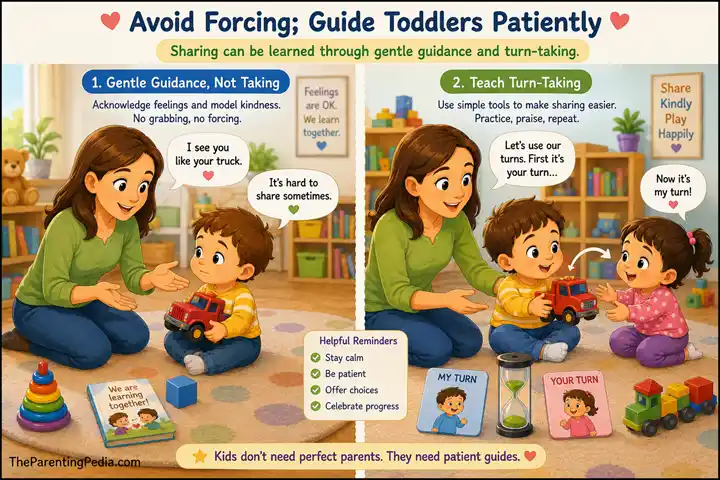
Instead of forcing the outcome, guide the behaviour.
You can say:
“You really want to keep playing with the truck. Your friend can have a turn when you’re finished.”
What If My Toddler Refuses to Share?
Stay calm and acknowledge the feeling first.
Try:
“You really like that toy. You don’t want to stop playing.”
Then offer a clear next step:
“You can finish your turn, and then Lily can have a turn.”
If your toddler still refuses, redirect the children towards another activity when possible.
The goal is to avoid turning sharing into a power struggle. Your toddler may need many opportunities before they become comfortable with the idea.
Frequently Asked Questions
Should I force my toddler to share?
No. It is generally more helpful to model sharing, practise turn-taking and give your toddler opportunities to cooperate gradually.
Why does my toddler always say “Mine”?
Toddlers are still developing their understanding of ownership and other people’s perspectives. Saying “mine” is common during this stage and does not automatically mean your child is selfish.
Is taking turns the same as sharing?
Not exactly, but turn-taking is an important foundation for sharing. A toddler may understand “your turn, my turn” before they understand the broader concept of sharing.
What if my toddler hits when another child takes a toy?
Stop the hitting immediately and calmly say, “I won’t let you hit.” Then help your toddler use words or practise taking turns. If aggressive behaviour is frequent or severe, seek advice from a qualified professional.
Praise your toddler when they make an effort to share or take turns, even if the attempt is small.
Conclusion
To Teach Toddlers to Share, focus less on forcing them to give things away and more on helping them practise cooperation.
Model sharing, introduce turn-taking, use simple words, protect special possessions and praise small successes. Remember that toddlers are still learning patience, empathy and emotional control.
With calm guidance, repeated practice and realistic expectations, your toddler can gradually become more comfortable sharing, taking turns and playing cooperatively with others.
Author’s Note
At TheParentingPedia, we create evidence-informed parenting content designed to help parents and caregivers make confident everyday decisions. This article has been researched using trusted child-development and parenting resources and is intended for general educational purposes. It should not replace personalized advice from a qualified healthcare professional.

TheParentingPedia editorial team creates practical, research-informed parenting content to help parents navigate everyday challenges, child development, behavior, and family life. Our articles draw on reputable parenting and child-development sources and are reviewed for clarity, accuracy, and practical usefulness.