
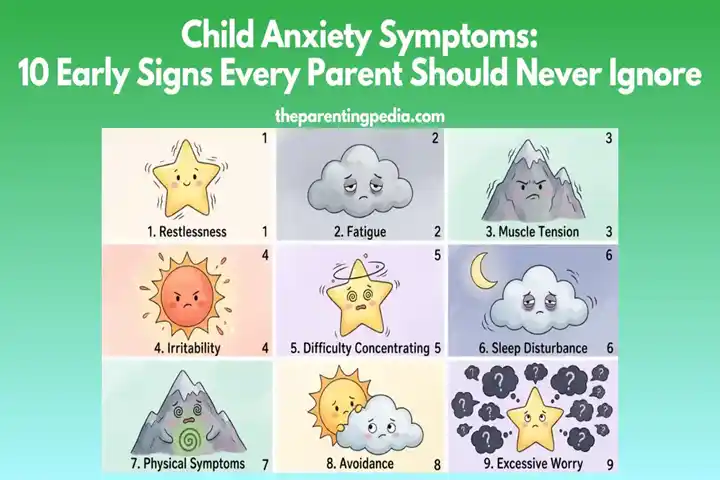
Have you ever noticed your child becoming unusually quiet before school, complaining of stomach aches with no clear medical reason, or refusing to join activities they once enjoyed? While occasional worries are a normal part of growing up, persistent child anxiety symptoms may signal something more. Anxiety in children doesn’t always look like fear or crying—it can appear through physical complaints, changes in behaviour, or emotional outbursts. Recognising these early signs can help parents provide timely support and prevent anxiety from affecting a child’s daily life. In this guide, we’ll explore the warning signs, possible causes, and practical ways to help your child feel more secure and confident.
Table of Contents
What Are Child Anxiety Symptoms?
Child anxiety symptoms are emotional, physical, and behavioural changes that occur when a child feels overwhelmed by worry or fear. It’s perfectly normal for children to feel nervous before an exam, meeting new people, or trying something unfamiliar. However, when these worries become frequent, intense, or interfere with school, friendships, sleep, or family life, they may indicate an anxiety disorder.
Children often struggle to explain their feelings, especially younger ones. Instead of saying, “I’m anxious,” they may complain about headaches, become clingy, avoid certain places, or act irritable. This is why parents should pay attention to patterns rather than isolated incidents.
Understanding these signs early allows families to respond with empathy instead of assuming the child is simply being difficult or seeking attention.
Why Early Recognition Matters
Anxiety doesn’t simply disappear if it’s ignored. Left untreated, it may affect a child’s:
- Academic performance
- Self-confidence
- Friendships
- Sleep quality
- Emotional development
- Overall well-being
The encouraging news is that early support often helps children develop healthy coping skills before anxiety becomes more challenging to manage.
10 Early Child Anxiety Symptoms Every Parent Should Watch F
1. Constant Worry About Everyday Situations
Some children worry far more than expected for their age. They may repeatedly ask questions like:
- “What if something bad happens?”
- “Will you come back?”
- “What if I fail?”
These worries often continue even after parents provide reassurance.
2. Frequent Stomach Aches or Headaches
One of the most overlooked child anxiety symptoms is recurring physical discomfort without a medical cause.
Children experiencing anxiety may complain about:
- Stomach pain
- Nausea
- Headaches
- Muscle tension
These symptoms often appear before school, social events, or unfamiliar situations.
Anxiety can sometimes be mistaken for behavioral issues. Understanding why 3-year-olds throw tantrums can help parents identify when emotions may be the real cause.
3. Difficulty Sleeping
An anxious child may struggle to:
- Fall asleep
- Stay asleep
- Sleep alone
- Stop worrying at bedtime
Some children repeatedly leave their room, ask for reassurance, or experience nightmares.
Poor sleep can increase anxiety the following day, creating a cycle that’s difficult to break.
4. Avoiding School or Social Activities
Children dealing with anxiety may suddenly:
- Refuse school
- Avoid birthday parties
- Skip sports
- Withdraw from friends
Rather than laziness or defiance, this avoidance often stems from overwhelming worry.
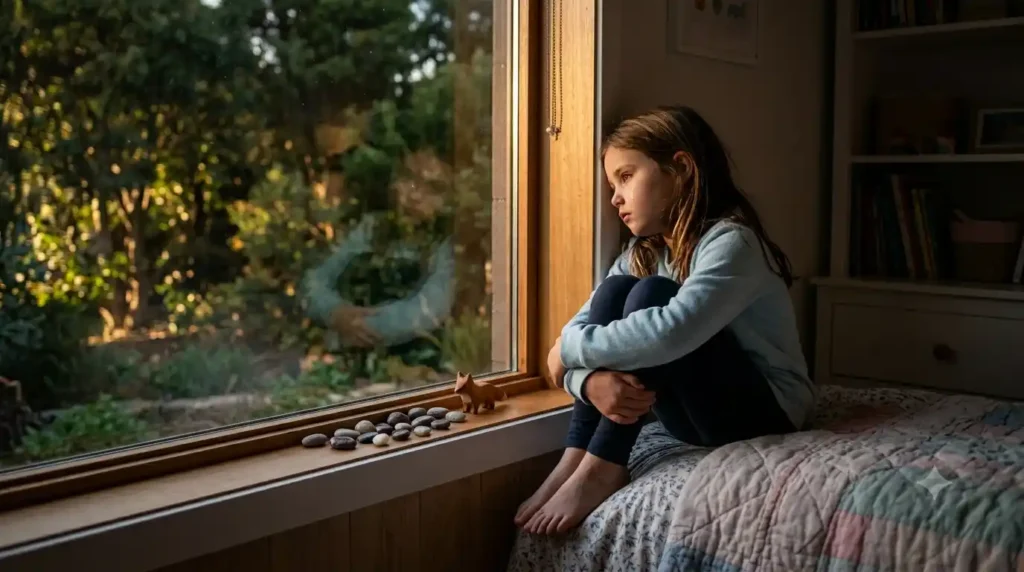
The Centers for Disease Control and Prevention (CDC) provides helpful information about children’s mental health and anxiety.
5. Becoming Extremely Clingy
Some children suddenly become unusually attached to parents or caregivers.
They may:
- Refuse to stay with relatives
- Follow parents everywhere
- Become distressed during school drop-offs
- Fear being separated even briefly
Although separation anxiety is common in younger children, persistent or age-inappropriate clinginess deserves attention.
6. Irritability or Frequent Emotional Outburst
Anxiety doesn’t always look like fear. In many children, it appears as frustration, anger, or frequent meltdowns.
Your child may:
- Become upset over small problems.
- Cry more easily than usual.
- React strongly to minor changes in routine.
- Lose patience quickly.
These emotional reactions often happen because anxious children feel overwhelmed but don’t know how to express their worries.
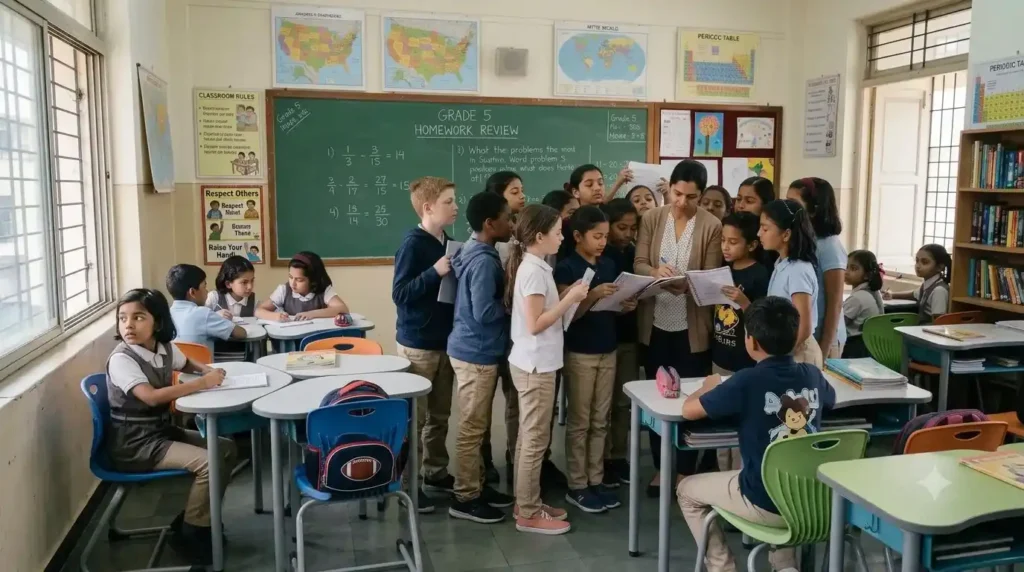
7. Trouble Concentrati
An anxious mind is often busy thinking about “what if” scenarios.
As a result, children may:
- Find it difficult to pay attention in class.
- Forget instructions.
- Make careless mistakes.
- Daydream frequently.
- Take longer to complete homework.
Teachers may mistake anxiety for laziness or poor concentration when the real issue is persistent worry.
Helping children build confidence can reduce everyday worries. Read our guide on how to build confidence in children for practical parenting tips.
8. Seeking Constant Reassurance
Many anxious children repeatedly ask questions such as:
- “Are you sure everything will be okay?”
- “Do you promise you’ll pick me up?”
- “What if something happens?”
Although reassurance helps temporarily, the worries usually return shortly afterward.
Instead of repeatedly saying “Don’t worry,” parents can acknowledge their child’s feelings and gently encourage independent coping skills.
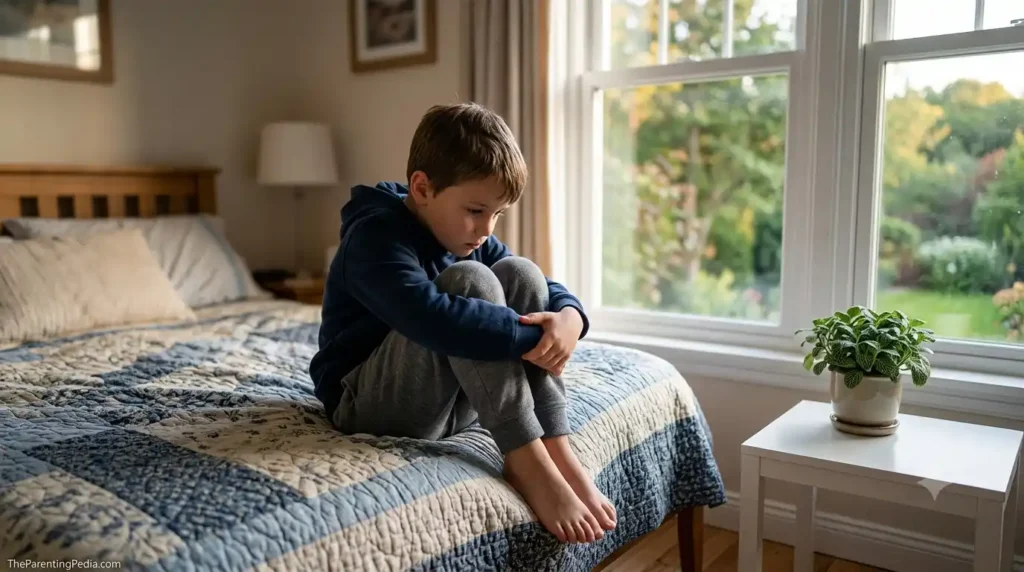
9. Perfectionism and Fear of Making Mistakes
Some children become extremely anxious about getting things “just right.”
They may:
- Erase homework repeatedly.
- Become upset over small mistakes.
- Avoid trying new activities.
- Worry excessively about disappointing parents or teachers.
Healthy encouragement should focus on effort rather than perfection.
Parents can remind children that making mistakes is a normal part of learning and growing.
10. Changes in Eating Habits
Anxiety may also affect appetite.
Some children:
- Eat much less than usual.
- Lose interest in favourite foods.
- Eat more for comfort.
- Complain of feeling sick during meals.
If eating changes continue for several weeks or are accompanied by weight loss, consult your child’s pediatrician.
What Causes Anxiety in Children?
Every child is different, and anxiety rarely has a single cause. Often, several factors work together.
Common causes include:
- Family history of anxiety disorders.
- Major life changes such as moving house or changing schools.
- Academic pressure.
- Bullying.
- Social challenges.
- Family conflict.
- Traumatic experiences.
- Chronic illness.
- Excessive screen time or exposure to distressing news.
Understanding the possible cause helps parents respond with empathy instead of frustration.
How Parents Can Help an Anxious Child
Parents cannot eliminate every worry, but they can create an environment where children feel safe and supported.
Listen Without Judging
Allow your child to explain their worries without interrupting or dismissing them.
Simple responses like:
“I understand that you’re feeling worried.”
can help children feel heard.
Maintain Predictable Routines
Children often feel safer when daily routines remain consistent.
Try to maintain regular:
- Bedtimes
- Meal times
- Homework schedules
- Family routines
Predictability reduces uncertainty, which often fuels anxiety.
Encourage Small Steps
Instead of forcing children to face their fears all at once, encourage gradual exposure.
Celebrate small achievements, such as:
- Speaking to one new classmate.
- Sleeping independently for part of the night.
- Trying a new activity.
Small successes build confidence over time.
Teach Healthy Coping Skills
Help children learn simple techniques such as:
- Deep breathing exercises.
- Gentle stretching.
- Drawing or colouring.
- Journaling.
- Reading together.
- Spending time outdoors.
- Talking openly about emotions.
These healthy habits can reduce anxiety and improve emotional resilience.
Children with anxiety may also appear stubborn or resistant in certain situations. Learning how to handle a stubborn child calmly can help parents respond with patience instead of punishment.
Know When to Seek Professional Help
Consider speaking with your child’s pediatrician or a qualified child psychologist if anxiety:
- Lasts for several weeks.
- Interferes with school or friendships.
- Causes frequent physical symptoms.
- Prevents normal daily activities.
- Leads to panic attacks or intense distress.
Early professional support can make a significant difference and help children develop lifelong coping skills.
The American Academy of Pediatrics (HealthyChildren.org) offers trusted guidance on childhood anxiety and emotional well-being.
Frequently Asked Questions (FAQs)
What are the first signs of anxiety in a child?
Ans. Early signs often include excessive worrying, stomach aches, headaches, sleep problems, clinginess, irritability, and avoiding school or social situations.
Can anxiety cause physical symptoms in children?
Ans. Yes. Anxiety can lead to headaches, stomach pain, nausea, muscle tension, fatigue, and difficulty sleeping, even when no medical condition is present.
Is childhood anxiety normal?
Ans. Some anxiety is a normal part of development. However, if worries are intense, persistent, or interfere with daily life, professional guidance may be beneficial.
How can I calm my anxious child?
Ans. Stay calm, listen without judgment, maintain predictable routines, encourage open conversations, and teach simple coping techniques such as deep breathing or relaxation exercises.
When should parents seek professional help for childhood anxiety?
Ans. If anxiety lasts several weeks, affects school, friendships, sleep, or family life, or causes severe distress, consult a pediatrician or qualified child mental health professional.
Can childhood anxiety be treated successfully?
Ans. Yes. With early support, healthy coping strategies, and professional care when needed, many children learn to manage anxiety successfully and thrive.
Conclusion
Recognizing child anxiety symptoms early can make a meaningful difference in your child’s emotional well-being and confidence. While occasional worries are a natural part of growing up, persistent fear, physical complaints, avoidance, or emotional changes deserve gentle attention rather than dismissal. As a parent, your patience, understanding, and willingness to listen can help your child feel safe enough to express their feelings.
Remember, you don’t have to solve every worry overnight. Small, consistent steps—such as maintaining routines, encouraging open conversations, and teaching healthy coping strategies—can help children gradually build resilience. If anxiety begins to interfere with your child’s daily life, seeking guidance from a pediatrician or qualified mental health professional is a positive step, not a sign of failure.
Every child deserves to feel secure, supported, and understood. With early recognition, compassionate parenting, and the right support when needed, children can learn to manage anxiety, develop emotional strength, and continue growing into happy, confident individuals.

TheParentingPedia editorial team creates practical, research-informed parenting content to help parents navigate everyday challenges, child development, behavior, and family life. Our articles draw on reputable parenting and child-development sources and are reviewed for clarity, accuracy, and practical usefulness.