
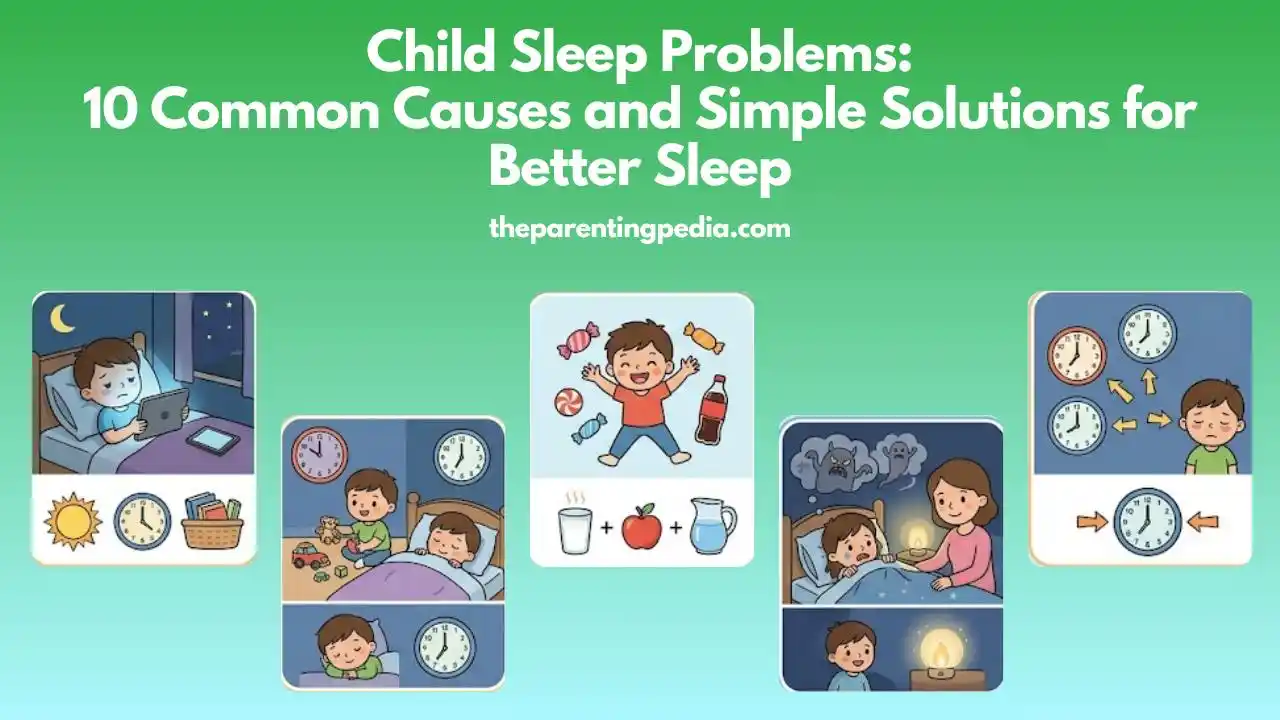
Every parent has experienced nights when their child simply won’t sleep. Whether it’s bedtime battles, frequent night waking, nightmares, or waking up too early, sleep problems can leave the whole family exhausted. While occasional restless nights are completely normal, ongoing sleep difficulties can affect a child’s mood, learning, behavior, and overall health. The good news is that most child sleep problems can be improved with simple, consistent bedtime habits. This guide explains the common causes, warning signs, and practical solutions every parent should know.

Table of Contents
Why Good Sleep Is Important for Children
Sleep is just as important as healthy food and regular physical activity. During sleep, a child’s brain processes new information, strengthens memory, supports emotional regulation, and helps the body grow and recover.
Children with fewer child sleep problems are more likely to…
- Stay focused in school
- Learn new skills faster
- Manage emotions better
- Have stronger immunity
- Be physically active
- Feel happier throughout the day
On the other hand, poor sleep can lead to irritability, difficulty concentrating, frequent illnesses, and behavioral challenges.
Recommended Sleep Duration by Age
| Age Group | Recommended Sleep |
| Infants (4–12 months) | 12–16 hours (including naps) |
| Toddlers (1–2 years) | 11–14 hours |
| Preschoolers (3–5 years) | 10–13 hours |
| School-age Children (6–12 years) | 9–12 hours |
| Teenagers (13–18 years) | 8–10 hours |
These recommendations include naps for younger children and are based on general pediatric sleep guidance.
10 Common Child Sleep Problems
Understanding the causes of child sleep problems is the first step toward helping children sleep better.
1. Difficulty Falling Asleep
Some children take more than an hour to fall asleep because their minds remain active or their bedtime routine changes frequently.
2. Frequent Night Wakings
Waking up once in a while is normal, but waking several times every night may signal a sleep issue.
3. Bedtime Resistance
Many children delay bedtime by asking for another story, another drink, or “just five more minutes.”
Consistency usually solves this habit.
4. Nightmares
Stress, scary movies, or an active imagination may cause frightening dreams that wake children during the night.
5. Night Terrors
Unlike nightmares, night terrors usually happen during deep sleep. Children may cry or scream without fully waking up and often don’t remember the episode.
6. Sleepwalking
Sleepwalking is fairly common in young children and usually improves with age.
7. Snoring or Breathing Problems
Loud snoring or pauses in breathing may indicate sleep-disordered breathing and should be discussed with a healthcare professional.
8. Early Morning Waking
Some children naturally wake early, while others do so because of poor bedtime habits or environmental factors like sunlight.
9. Too Much Screen Time Before Bed
Blue light from phones, tablets, and televisions can delay the production of melatonin, making it harder for children to fall asleep.
10. Anxiety or Stress
School pressure, family changes, or social worries can keep children awake even when they’re physically tired.
Common Reasons Behind Child Sleep Problems
Inconsistent Bedtime
Sleeping at different times every night confuses the body’s natural sleep clock.
Sugary Foods and Caffeine
Chocolate, soft drinks, and sugary snacks close to bedtime may make children more alert.
Lack of Physical Activity
Children who spend very little time playing outdoors may find it harder to fall asleep naturally.
Illness or Allergies
Blocked noses, coughing, eczema, or ear pain may interrupt sleep.
Simple Tips to Reduce Child Sleep Problems
These simple habits can reduce child sleep problems and improve your child’s sleep quality.
Create a Consistent Bedtime Routine
A predictable routine tells the brain it’s time to relax.
For example:
- Warm bath
- Brush teeth
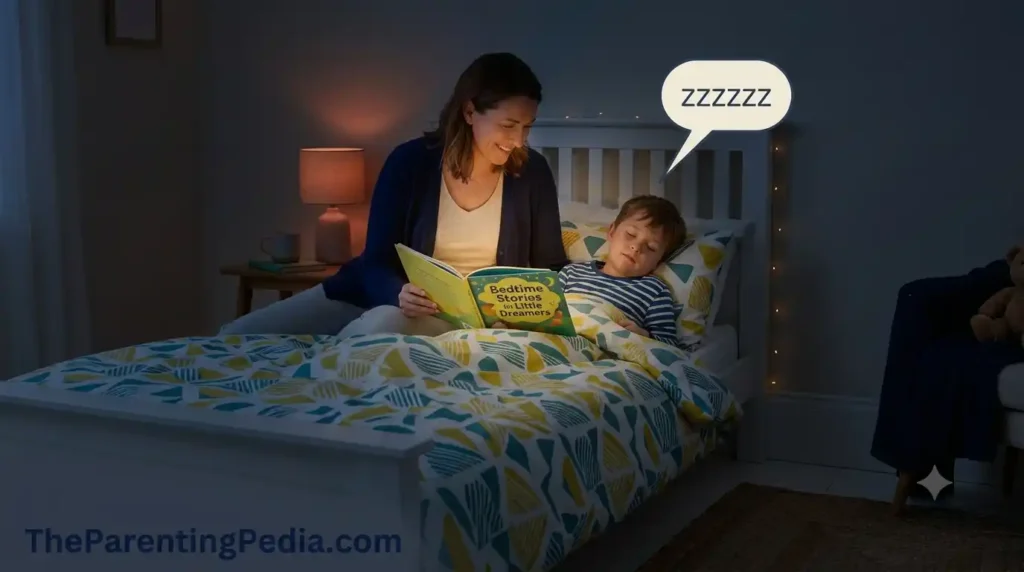
- Read a story
- Gentle cuddle
- Lights out
Creating healthy bedtime habits works even better when children follow a consistent daily routine. Read our guide on morning routine for school going kids to build healthy habits from sunrise to bedtime.
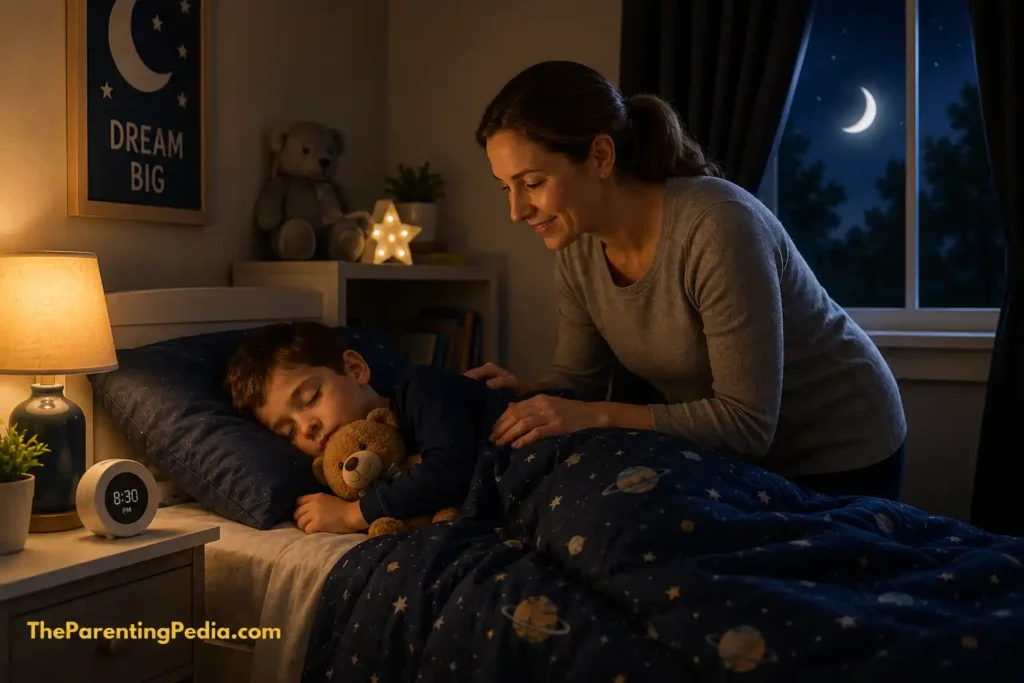
Keep Bedrooms Calm and Comfortable
A cool, quiet, and dark room supports better sleep.
Limit Screens Before Bed
Switch off televisions, tablets, and smartphones at least one hour before bedtime.
Encourage Daily Physical Activity
Outdoor play helps children use their energy and sleep more soundly at night.
Offer Reassurance
If your child feels worried, listen calmly instead of dismissing their fears.
Sometimes a simple conversation before bed can make all the difference.
When Should Parents Seek Professional Help?
Speak with your child’s pediatrician if:
- Sleep problems continue for several weeks.
- Loud snoring occurs regularly.
- Breathing pauses during sleep.
- Daytime sleepiness affects school.
- Nightmares become frequent.
- Sleepwalking creates safety concerns.
The American Academy of Pediatrics offers reliable, evidence-based guidance on healthy sleep habits for children and families. Early guidance can prevent long-term sleep and behavioral issues.
Frequently Asked Questions (FAQs)
How many hours should a child sleep every night?
The amount depends on age, but most school-age children need between 9 and 12 hours of sleep each night.
Why does my child keep waking up at night?
Night waking may happen because of nightmares, anxiety, illness, poor sleep habits, or an uncomfortable sleep environment.
Is screen time affecting my child’s sleep?
Yes. Blue light from electronic devices can delay sleep and make it harder for children to fall asleep quickly.
Are nightmares normal in children?
Yes. Occasional nightmares are a normal part of childhood, especially during the preschool and school-age years.
When should I worry about my child’s sleep problems?
If child sleep problems continue for more than a few weeks or affect daily life, consult your pediatrician.
What is the best bedtime routine for children?
A simple routine that includes a warm bath, brushing teeth, reading a story, and going to bed at the same time every night usually works well for most children.
Emotional wellbeing also affects sleep quality. Learn how to recognize child anxiety symptoms early so you can support your child’s emotional and sleep health together.
Note: This article is for educational purposes and should not replace professional medical advice. If your child’s sleep problems continue or worsen, consult a qualified pediatrician or sleep specialist.
Conclusion
Most child sleep problems can be improved with simple bedtime routines and healthy sleep habits. Although bedtime struggles can feel frustrating, small changes made consistently often lead to big improvements. By creating calming routines, limiting screen time, encouraging active play, and responding to children’s worries with patience, families can build lifelong healthy sleep habits. If sleep problems continue despite these efforts, seeking professional advice is a positive step toward helping your child grow, learn, and thrive.

TheParentingPedia editorial team creates practical, research-informed parenting content to help parents navigate everyday challenges, child development, behavior, and family life. Our articles draw on reputable parenting and child-development sources and are reviewed for clarity, accuracy, and practical usefulness.