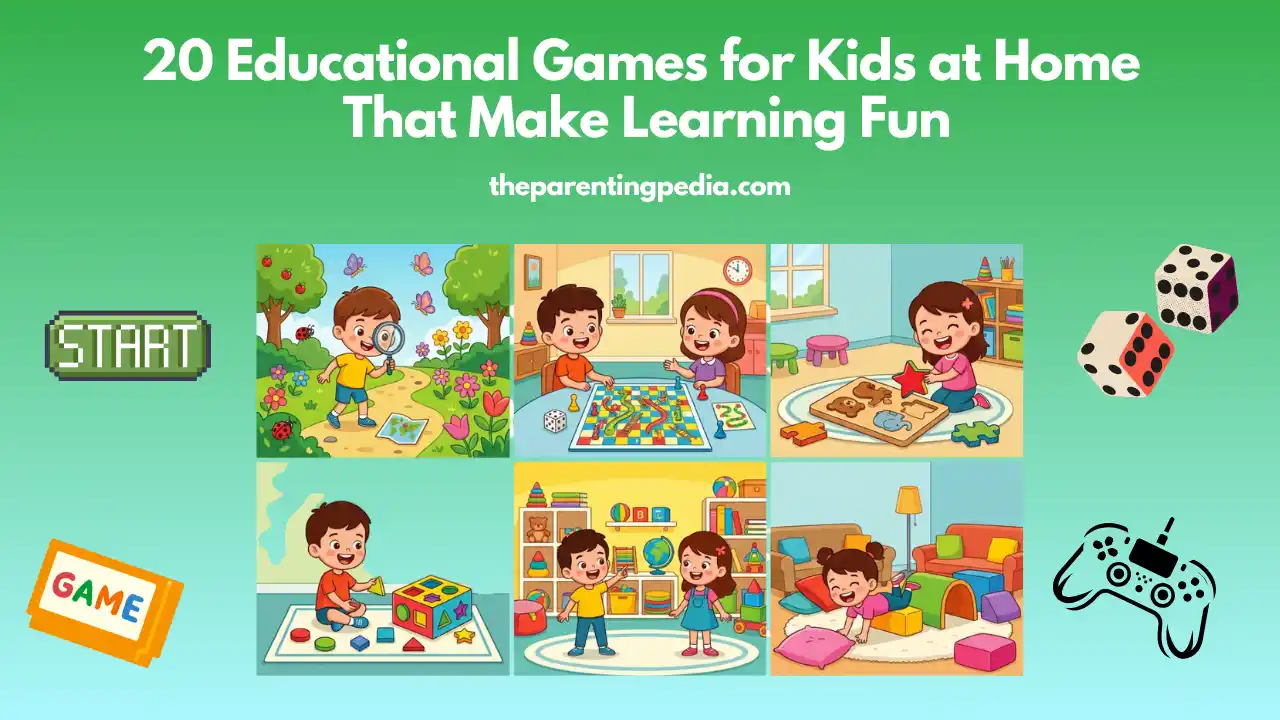
Learning does not only happen in schools or through heavy school books. Kids learn much faster and better when they are having fun through play. Today, many Indian parents worry because their kids spend too much time on mobile phones and televisions. A great way to fix this problem is by introducing Educational Games for Kids at Home. These activities keep children busy, teach them new skills, and do not cost a lot of money.
Parents can also improve learning by using effective parenting techniques that encourage children to listen and participate willingly.
Table of Contents
Why Educational Games for Kids at Home Matter
Playing smart games is very useful for growing children. It helps them develop their minds without feeling stressed. Here is why you should start playing them:
- Improves Memory: Kids learn to remember rules, patterns, and pictures easily.
- Better Concentration: It teaches children to sit still and focus on one task.
- Solves Problems: Kids learn how to think and find answers to small challenges by themselves.
- Boosts Creativity: It helps them build new ideas and try different things.
- Better Communication: Playing with others helps them talk and express their feelings clearly.
- Cuts Screen Time: It naturally keeps them away from phones and tablets.
Signs Your Child Needs More Educational Activities
Sometimes, parents do not realize that their child is getting bored or needs better mental exercise. Watch out for these simple signs:
- Your child sits with a mobile phone for hours.
- They watch too much television every day.
- Your child gets angry, irritated, or annoyed very quickly.
- They show a total lack of focus or concentration in daily life.
- They do not seem to learn any practical, everyday skills.
10 Fun Educational Games to Play at Home
The table below gives a quick overview of the top 10 activities you can try with your children:
| Game Name | Main Activity | Key Milestone / Benefit |
| 1. Memory Cards | Flip and match pairs face down | Expands short-term visual memory |
| 2. Alphabet Games | Word building and rhyming | Grows vocabulary and speech |
| 3. Ludo | Roll dice and race tokens | Teaches patience and social play |
| 4. Chess | Two-player strategy board | Increases deep concentration |
| 5. Treasure Hunt | Follow clues to find objects | Improves logical reasoning |
| 6. Building Blocks | Construct towers and shapes | Boosts creative engineering |
| 7. Number Games | Count fruits and add numbers | Builds early math confidence |
| 8. Puzzles | Fit jigsaw pieces together | Sharpens problem-solving |
| 9. Carrom | Strike coins into pockets | Sharpens hand-eye coordination |
| 10. Role-Play | Act like doctors or teachers | Sparks imagination and confidence |
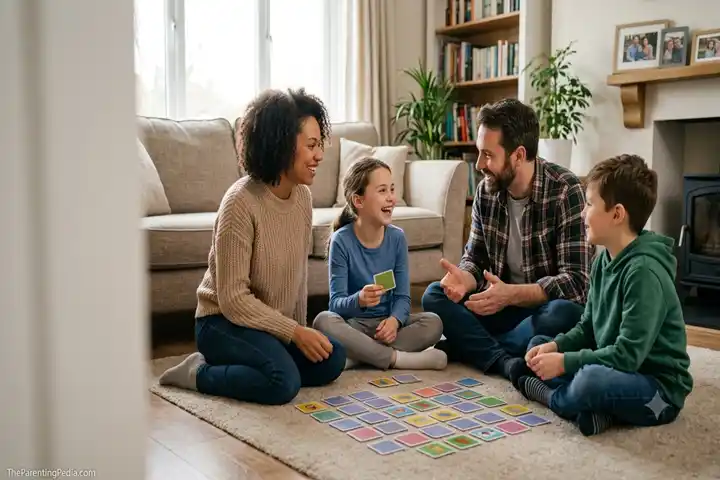
1. Memory Card Game
Put cards face down on the table and ask your child to find matching pairs. The person with the most pairs wins. This activity expands short-term memory and focus.
2. Alphabet and Word Games
Do small activities like spelling words, making rhyming strings, or naming objects that start with a specific letter. It grows their vocabulary and communication skills.
3. Ludo
This is a traditional board game where players roll a dice and move tokens to the home base. It teaches young children patience and family bonding.
4. Chess
A strategic board game played on a checkered grid. It trains the young brain to think ahead and increases deep concentration powers.
5. Treasure Hunt
Hide an item in the house and give your child clues or a basic map to find it. It improves logical reasoning and observation skills.
6. Building Blocks
Give them blocks to build towers, houses, or shapes. This activity boosts creative abilities and hand-eye coordination.
7. Number Games
Ask them to count fruits, identify numbers, or solve basic math challenges. It makes kids interested in mathematics and builds mental focus.
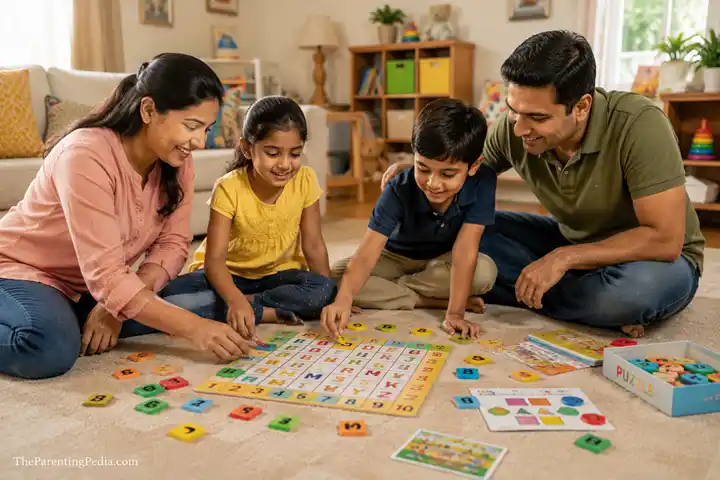
8. Puzzle Games
Let your child put together jigsaw pieces to complete a big picture. Puzzles build patience and critical problem-solving skills.
9. Carrom
A traditional strike-and-pocket board game loved in Indian homes. It develops excellent hand-eye coordination and spatial judgment.
10. Role-Playing Games
Let kids pretend to be doctors, teachers, or shopkeepers using household items. It improves imagination, creative thinking, and inner confidence.
For more free educational resources and printable activities, parents can explore Khan Academy Kids.
Selecting Games Based on Your Child’s Age
Activities must fit your child’s growth stage to remain effective:
Toddlers (2 to 5 Years)
Focus on simple tactile play. Use building blocks, shape-matching sets, alphabet songs, and easy picture cards.
School-Age Kids (6 to 12 Years)
Introduce games with clear rules like Ludo, Chess, complex jigsaw puzzles, and indoor treasure hunts.
Teenagers (13 to 18 Years)
Encourage them to play chess, fast quiz contests, strategy board games, and multi-player family challenges.
If your child refuses to join educational activities, these practical tips can help you handle the situation calmly.
Quick Activities Using Simple Household Items
You do not need to buy costly gifts to play these games. Just use items found in your kitchen or living room:
- Counting Items: Ask them to count fresh vegetables and fruits.
- Sorting Tasks: Let them separate clothes or buttons by colors or sizes.
- Matching: Ask them to match everyday pairs like socks or container lids.
- Finding Shapes: Help them identify circular plates or rectangular tables.
Common Mistakes Parents Make
Sometimes, parents make simple mistakes that take away the joy of learning. Avoid doing these things:
- Expecting Perfection: Do not force your child to play perfectly on day one.
- Comparing Kids: Never judge your child by comparing them with peers.
- Over-Helping: Let them try to solve game challenges by themselves.
- Buying Expensive Toys: Do not buy high-cost toys blindly without clear logic.
- Putting Pressure: Keep games casual and fun instead of making them stressful.
- Giving Free Phone Access: Do not let your child use mobile phones freely.
The UNICEF Parenting website also shares practical ideas for playful learning and child development at home.
Clear Benefits of Educational Play
- Intellectual Growth: Better concentration, sharper memory, and easier problem-solving.
- Emotional Growth: Higher self-confidence, independent thinking, and less daily stress.
- Social Growth: Higher responsibility, sweet cooperation, and better talking skills.
Frequently Asked Questions (FAQs)
Why are educational games important for children?
Educational games are important because they naturally teach kids skills like creativity, confidence, and communication. Instead of boring studies, these games help children build their brainpower through simple, joyful play.
Which educational games can Indian families make their children play?
Indian parents can easily introduce traditional indoor games like Ludo, Chess, Carrom, Puzzles, and Building Blocks. These are cheap, easy to find, and highly fun for the whole family.
Which game is best for developing concentration in children?
Chess is the most effective game to grow a child’s concentration power. It requires the player to sit patiently, think deeply about the next move, and focus without getting distracted.
By which signs can parents know that the child needs to play educational games?
If your child sits with a mobile phone all day, gets annoyed quickly, or cannot focus on simple tasks, they need these games. These signs show they lack proper mental engagement.
What is the minimum amount of time a teenager should spend in educational games?
A teenager should spend a minimum of 1 hour playing educational or strategic board games daily. This gives their growing mind a healthy break from school pressure and phone screens.
Do I need a big budget to start educational games at home?
No, you do not need to spend money on costly items or gifts. You can use simple kitchen vegetables, fruits, socks, or basic home objects to create fun learning games for free.
You can also try more creative learning activities at home for kids to keep children engaged every day.
Parenting Tip: Every child learns differently. Choose games that match your child’s interests and age rather than comparing them with others. Consistent play and positive encouragement create the best learning environment.
Conclusion
In short, educational games are the perfect tool to keep your children active, smart, and happy. They help build essential lifetime skills without requiring any expensive investments. You can easily run these activities using basic items found inside your home. Classic games like chess, ludo, and word puzzles sharpen concentration and build great family bonds. Start playing today to raise a curious, confident, and sharp child.

TheParentingPedia editorial team creates practical, research-informed parenting content to help parents navigate everyday challenges, child development, behavior, and family life. Our articles draw on reputable parenting and child-development sources and are reviewed for clarity, accuracy, and practical usefulness.