
Imagine this: It’s evening, you’re tired after a long day, dinner is almost ready, and your child suddenly refuses to switch off the TV or finish their homework. You ask politely, then firmly, but they keep saying, “No!” Moments like these are common in homes around the world. While it’s natural to feel frustrated, shouting at or punishing your child often makes the situation worse. If you’ve ever wondered how to handle a stubborn child calmly, you’re not alone.
The good news is that stubbornness is usually not a sign of bad parenting or a bad child. In many cases, it is a normal part of growing up as children learn to express their independence and emotions. Child development experts generally agree that calm communication, consistent boundaries, and positive guidance are more effective than harsh discipline. By understanding the reasons behind stubborn behavior, parents can respond with patience and build a stronger relationship with their child.
Table of Contents
Why Should Parents Handle a Stubborn Child Calmly?
Responding calmly benefits both parents and children in many ways.
- Strengthens the parent-child relationship.
- Builds trust and emotional security.
- Reduces unnecessary arguments and conflicts.
- Teaches children healthy emotional control.
- Encourages respectful communication.
- Improves children’s confidence and decision-making.
- Creates a peaceful and positive family environment.
When children know they are safe to express their feelings, they are more willing to listen and cooperate.
Why Do Children Become Stubborn?
Every stubborn behavior has a reason. Instead of asking, “Why is my child behaving like this?”, ask, “What is my child trying to communicate?”

1. Desire for Independence
As children grow, they naturally want to make their own choices. Saying “No” is often their way of showing independence rather than disrespect.
2. Seeking Attention
Children need love, attention, and connection. If they feel ignored, they may act stubborn simply to get your attention—even if it’s negative attention.
3. Lack of Sleep or Routine
Poor sleep, hunger, or an irregular daily routine can make children tired, frustrated, and less cooperative.
4. Emotional Stress
School pressure, family disagreements, changes at home, or friendship problems can affect a child’s behavior and increase stubbornness.
5. Strict or Inconsistent Parenting
Very strict parenting or changing rules frequently can confuse children. They may become more resistant when expectations are unclear.
Signs of Stubborn Behavior in Children
Your child may be displaying stubborn behavior if they:
- Frequently say “No” to simple requests.
- Refuse to follow instructions.
- Argue over small issues.
- Throw frequent tantrums.
- Become angry or frustrated easily.
- Ignore family rules.
- Refuse to compromise.
- Blame others instead of accepting responsibility.
Remember, occasional stubbornness is a normal part of childhood. It becomes a concern only when it regularly affects daily life or relationships.
7 Ways Indian Parents Can Handle a Stubborn Child Calmly
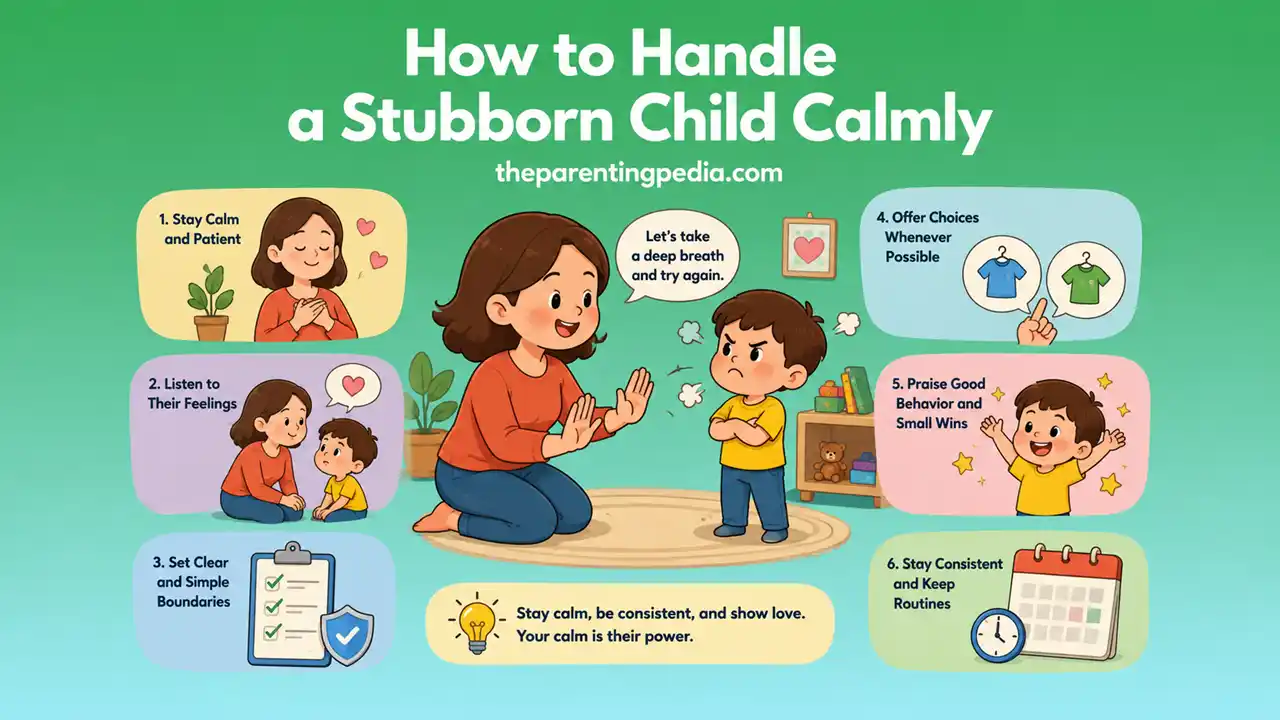
1. Stay Calm Before You Respond
When a child raises their voice, parents often do the same. Instead, pause for a few seconds, take a deep breath, and speak calmly. Children often mirror their parents’ emotions. Your calm response helps them regain control over their own feelings.
Staying calm becomes easier when you understand the reasons behind your child’s emotional reactions.
2. Listen Before You Correct
Sometimes children don’t want solutions—they simply want to be heard.
Give Your Child Time to Speak
Allow your child to explain their feelings without interrupting. Even if you don’t agree, listening shows respect and helps reduce resistance.
3. Offer Limited Choices
Children enjoy having some control over their decisions.

Let Them Choose Between Two Good Options
Instead of saying,
“Wear your shoes now.”
Try saying,
“Would you like to wear your blue shoes or your black shoes?”
They still follow your instruction while feeling involved in the decision.
4. Avoid Power Struggles
Not every disagreement needs to become a battle.
Choose Your Battles Wisely
If the issue isn’t harmful, consider letting it go. Saving your energy for important situations helps reduce daily conflicts and keeps your relationship positive.
Building a strong emotional connection every day can also improve your child’s behavior and cooperation.
5. Praise Positive Behavior
Parents often notice mistakes but forget to appreciate good behavior.
Focus on What Your Child Does Right
Simple praise such as,
“I’m proud of how politely you shared your toys today,”
encourages children to repeat positive actions.
6. Keep Rules Clear and Consistent
Children feel more secure when expectations remain the same.
Create Simple Family Rules
Keep household rules easy to understand and follow them consistently. Avoid changing rules based on your mood or convenience.
7. Spend Quality Time Together
Many children become stubborn because they are looking for attention rather than trying to misbehave.
Build a Strong Emotional Connection
Spend 15–20 minutes each day talking, reading, or playing with your child without distractions like mobile phones or television. Quality time strengthens trust and reduces attention-seeking behavior.
According to the NHS, understanding children’s emotions and responding calmly can help parents manage challenging behaviour more effectively.
Common Parenting Mistakes to Avoid
Even loving parents sometimes make mistakes. Avoid these common habits:
- Shouting or losing your temper.
- Using harsh physical punishment.
- Comparing your child with other children.
- Arguing over every small issue.
- Giving mixed messages or changing rules frequently.
- Ignoring your child’s feelings.
Replacing these habits with patience, empathy, and consistency creates a healthier home environment.
Age-Based Tips for Handling Stubborn Children
Toddlers (2–5 Years)
Keep Instructions Short
Always use simple words and one instruction at a time.
Maintain Daily Routines
Regular meals, naps, and bedtime help prevent unnecessary tantrums.
School-Age Children (6–12 Years)
Encourage Open Communication
Ask questions, listen carefully, and explain the reasons behind family rules.
Teach Responsibility
Give age-appropriate responsibilities to build confidence and cooperation.
Teenagers (13–18 Years)
Respect Their Opinions
Teenagers want independence. Listen to their ideas before making decisions together.
Guide Instead of Controlling
Offer advice and support rather than trying to control every choice they make.
Encouraging children to express their feelings openly also strengthens trust and emotional well-being.
Benefits of Handling a Stubborn Child Calmly
Emotional Benefits
- Reduces stress and anxiety.
- Improves emotional regulation.
- Builds self-confidence.
Behavioral Benefits
- Encourages cooperation.
- Develops responsibility.
- Improves problem-solving and decision-making.
Relationship Benefits
- Strengthens the parent-child bond.
- Builds trust and respect.
- Encourages open communication.
- Creates a happier family environment.
When Should Parents Seek Professional Help?
Most children go through phases of stubborn behavior, and these usually improve with patient and consistent parenting. However, professional guidance may be helpful if:
- Your child’s aggressive behavior becomes frequent or severe.
- Tantrums regularly interfere with school, family life, or friendships.
- Your child shows extreme anger, anxiety, or sadness.
- Communication has become very difficult despite your efforts.
- Teachers or caregivers report ongoing behavioral concerns.
- You suspect an underlying developmental or emotional issue.

The National Center for Child Health and Development (Japan) provides valuable guidance on children’s emotional and behavioural development to support positive parenting.
Frequently Asked Questions (FAQs)
How can parents handle a stubborn child calmly?
Stay calm, listen carefully, set clear rules, offer simple choices, and use positive reinforcement instead of shouting or harsh punishment.
Why do children become stubborn?
Children may become stubborn because they want independence, need attention, feel tired, experience emotional stress, or receive inconsistent parenting.
Should parents punish stubborn children?
Harsh punishment usually increases fear and resistance. Calm communication, consistent discipline, and positive guidance are more effective in encouraging good behavior.
Is stubborn behavior normal in children?
Yes. Mild stubbornness is a normal part of child development as children learn to express opinions and become more independent.
When should parents seek professional help?
Parents should consult a healthcare professional if stubborn behavior becomes severe, affects daily life or school performance, or is accompanied by aggression or emotional distress.
Can positive parenting reduce stubborn behavior?
Yes. Positive parenting helps children feel secure, improves communication, strengthens trust, and encourages long-term positive behavior.
Conclusion
Raising a stubborn child can be challenging, but it is also an opportunity to build trust, patience, and a stronger parent-child relationship. In most cases, stubborn behavior is not bad behavior—it is often a child’s way of expressing emotions, seeking independence, or asking for attention.
By staying calm, setting consistent boundaries, and responding with empathy, you can help your child develop confidence, emotional resilience, and positive behavior over time. Every child is unique, and with love, patience, and consistency, lasting progress is possible.
You may also enjoy these practical parenting tips for first-time moms and dads to build a stronger relationship with your child.
Start by speaking with your child’s pediatrician, school counselor, or a qualified child psychologist. Early support can help identify the cause and provide practical strategies for both parents and children.

TheParentingPedia editorial team creates practical, research-informed parenting content to help parents navigate everyday challenges, child development, behavior, and family life. Our articles draw on reputable parenting and child-development sources and are reviewed for clarity, accuracy, and practical usefulness.