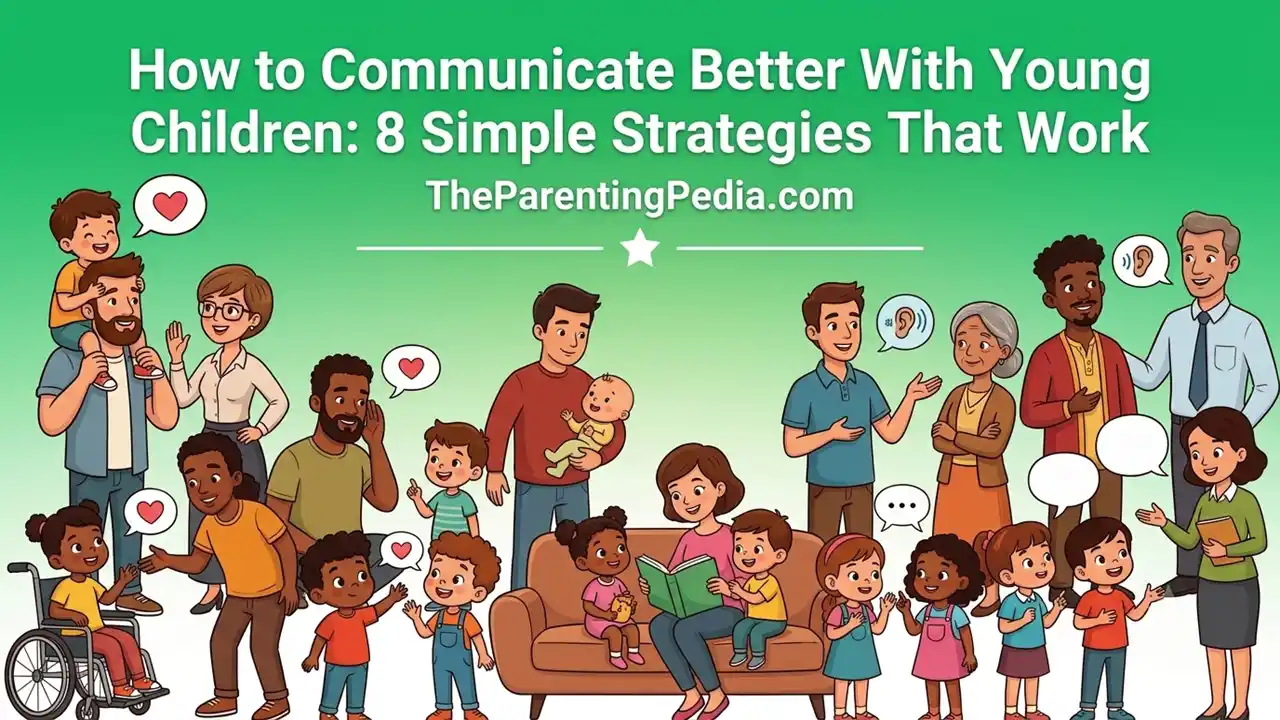
Young children are still learning how to express their thoughts, feelings, and needs, so everyday conversations can sometimes become frustrating for both parent and child. Learning how to communicate better with young children can make these moments calmer while helping children feel understood and supported.
The good news is that better communication does not require complicated techniques. Small changes in how you listen, speak, and respond can make a meaningful difference.
Table of Contents
Why Better Communication Matters
Communication is more than simply getting children to follow instructions. It helps parents understand what children are trying to express and gives children opportunities to develop language, emotional awareness, and social skills.
Young children may not always have the words to explain what is bothering them. A child who says, “I don’t want to go!” may actually be tired, worried, disappointed, or overwhelmed.
When parents slow down and listen, they can respond to the underlying need instead of reacting only to the behavior.
Creating an open communication environment at home can help children feel safer sharing their thoughts and feelings.
8 Simple Strategies to Communicate Better With Young Children
1. Get Down to Your Child’s Level
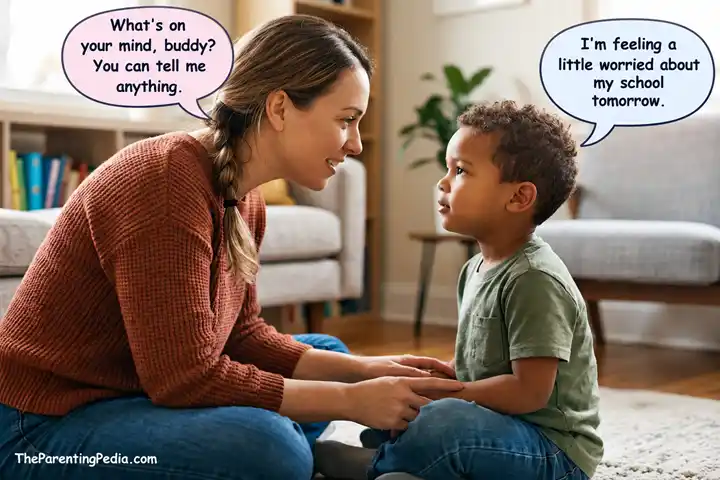
When you need to talk to your child, try getting physically closer and making gentle eye contact. Sitting or kneeling at their level can make the interaction feel more personal and less intimidating.
Instead of calling instructions from across the room, walk over and say, “It’s time to put the toys away.”
This simple change can help your child focus on what you are saying.
2. Use Simple, Clear Words
Young children can struggle with long explanations, especially when they are tired or upset. Keep instructions short and specific.
Instead of saying, “How many times do I have to tell you that you need to clean everything up before we can leave?” try:
“Please put the cars in the box.”
Clear language makes it easier for children to understand exactly what you expect.
3. Listen Without Interrupting
Children need opportunities to finish their thoughts, even when their stories seem long or confusing.
When your child tells you about something that happened, resist the urge to immediately correct, question, or offer advice. Listen first.
For more practical guidance, parents can learn how good communication helps children feel important and valued.
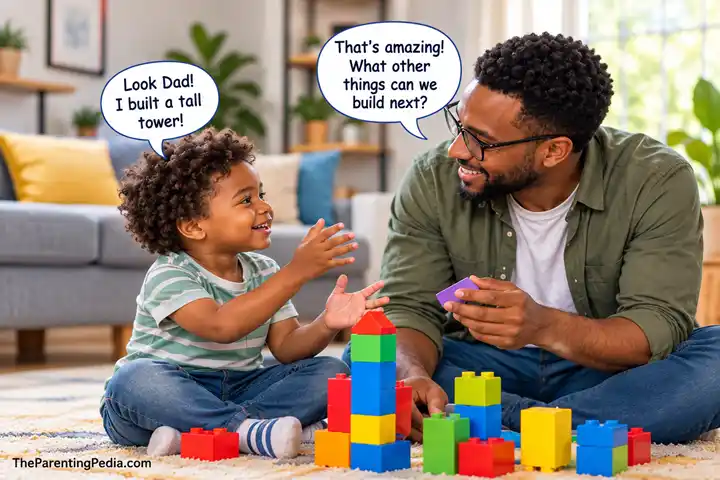
You can say, “I’m listening. Tell me what happened.”
Learning how to communicate better with young children includes making space for their voices, not just delivering instructions.
4. Give Your Child Time to Respond
After asking a question, give your child a few moments to think. Young children may need extra time to understand the question and find the words they want to use.
Instead of asking several questions in a row, pause and wait.
For example:
Parent: “What happened at preschool today?”
Child: “Nothing.”
Rather than immediately asking another question, you might wait and then say, “Was there anything funny today?”
A little patience can encourage children to share more.
5. Name and Validate Feelings
Children often need help putting emotions into words. When you notice a feeling, give it a simple name.
“You’re frustrated because your tower fell down.”
“You’re disappointed that we have to leave the park.”
Validating a feeling does not mean allowing every behavior. You can acknowledge the emotion while maintaining a boundary:
“I know you’re angry, but I won’t let you hit.”
This teaches children that feelings are acceptable while unsafe behavior is not.
6. Ask Questions That Encourage Conversation
Questions that can be answered with “yes” or “no” do not always encourage children to talk. When appropriate, ask questions that invite them to explain or describe something.
Try:
- “What was your favorite part of today?”
- “How did you feel when that happened?”
- “What do you think we should do?”
- “Tell me about what you built.”
You do not need to turn every conversation into an interview. A few thoughtful questions during everyday activities can naturally encourage communication.
Parents can also try simple talking and listening activities to encourage children to share their thoughts and feelings.
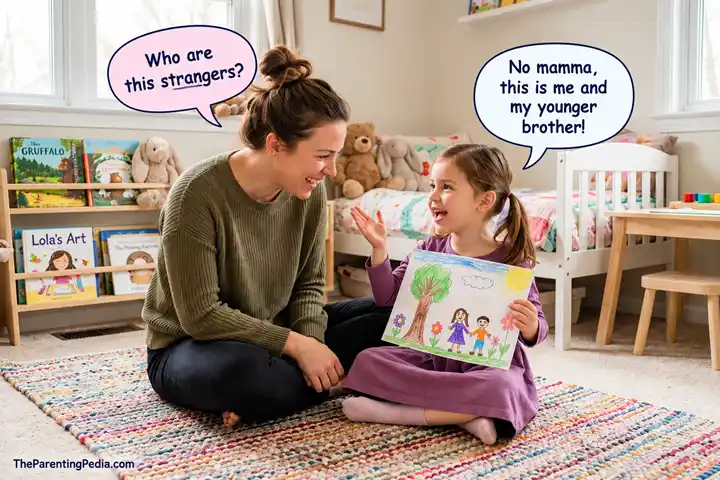
7. Use Positive and Respectful Language
The way parents speak to children can influence how children learn to communicate with others.
Instead of labeling a child as “bad” or “naughty,” describe the behavior and explain what needs to change.
“You threw the toy. Toys are not for throwing. Let’s put it here.”
Similarly, replace threats and repeated criticism with calm, direct language whenever possible.
Respectful communication does not mean being permissive. Parents can be warm and firm at the same time.
8. Model the Communication You Want to See
Children learn a great deal by watching adults. If you want your child to listen, speak respectfully, and manage disagreements calmly, demonstrate those behaviors yourself.
If you make a mistake, you can say:
“I was frustrated and I spoke too loudly. I’m sorry. Let me try that again.”
This shows children that communication can be repaired after difficult moments.
Small daily conversations can also help children feel heard, respected, and supported.
When Communication Feels Difficult
Even the best communication strategies will not prevent every tantrum, argument, or refusal. Young children are still developing emotional regulation and language skills.
When your child is extremely upset, fewer words may work better. Keep your voice calm, focus on safety, and save longer explanations for later.
How to communicate better with young children is not about saying everything perfectly. It is about being consistent, patient, and willing to reconnect after challenging moments.
Frequently Asked Questions
How can I communicate better with a young child?
Start by listening carefully, using simple language, giving your child time to respond, and acknowledging their feelings. Consistently modeling respectful communication can also help.
What should I do if my child refuses to talk?
Avoid forcing the conversation immediately. Give your child some space and try again later when they are calmer. You can say, “I’m here when you’re ready to tell me.”
How can I communicate with a child who gets upset easily?
Keep your voice calm and your message short. Acknowledge the feeling first, then explain the boundary or expectation once your child is able to listen.
Conclusion
Learning how to communicate better with young children starts with small, everyday changes. Get down to their level, listen patiently, use clear words, name feelings, and give them opportunities to express themselves.
You will not handle every conversation perfectly—and you do not need to. What matters most is creating a relationship where your child knows they can be heard, respected, and guided with patience.
Author’s Note
TheParentingPedia.com provides practical, evidence-informed parenting information for parents, caregivers, and families. This article is intended for general educational purposes and does not replace individualized professional advice.
Sources & Further Reading
- Raising Children Network — guidance on communicating with children, listening, conversation, and nonverbal communication. Raising Children Network
- BabyCenter — parent-focused guidance and questions around children’s communication and development. BabyCenter
- Verywell Family — parenting communication and child-development resources. Verywell Family

TheParentingPedia editorial team creates practical, research-informed parenting content to help parents navigate everyday challenges, child development, behavior, and family life. Our articles draw on reputable parenting and child-development sources and are reviewed for clarity, accuracy, and practical usefulness.