
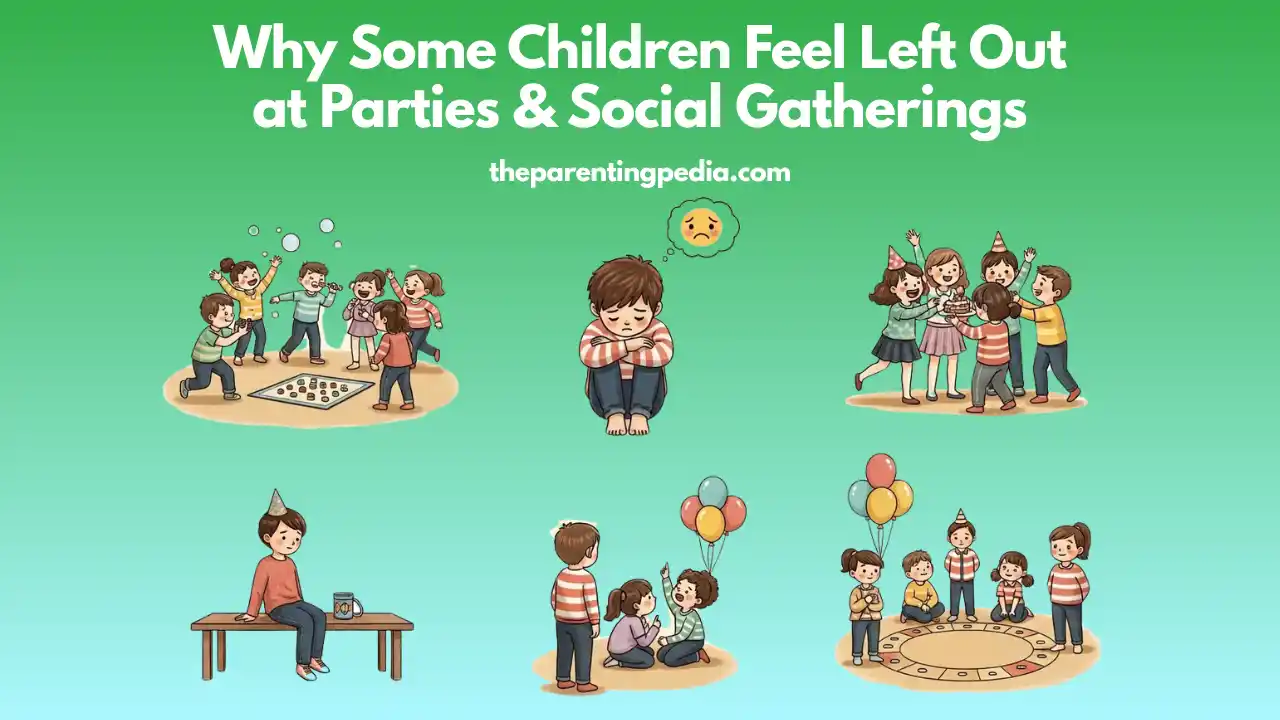
Many children feel left out at parties, and this feeling can also happen during social gatherings too. In many cases, this behavior is connected to issues like low confidence in kids, which affects how they interact socially.
It was supposed to be a joyful evening.
The house was filled with laughter, balloons floated in every corner, and children ran around excitedly with plates of cake in their hands. It was one of those birthday parties where everything looked perfect—colorful, loud, and full of life.
But in the middle of all that happiness, there was one child who didn’t quite belong.
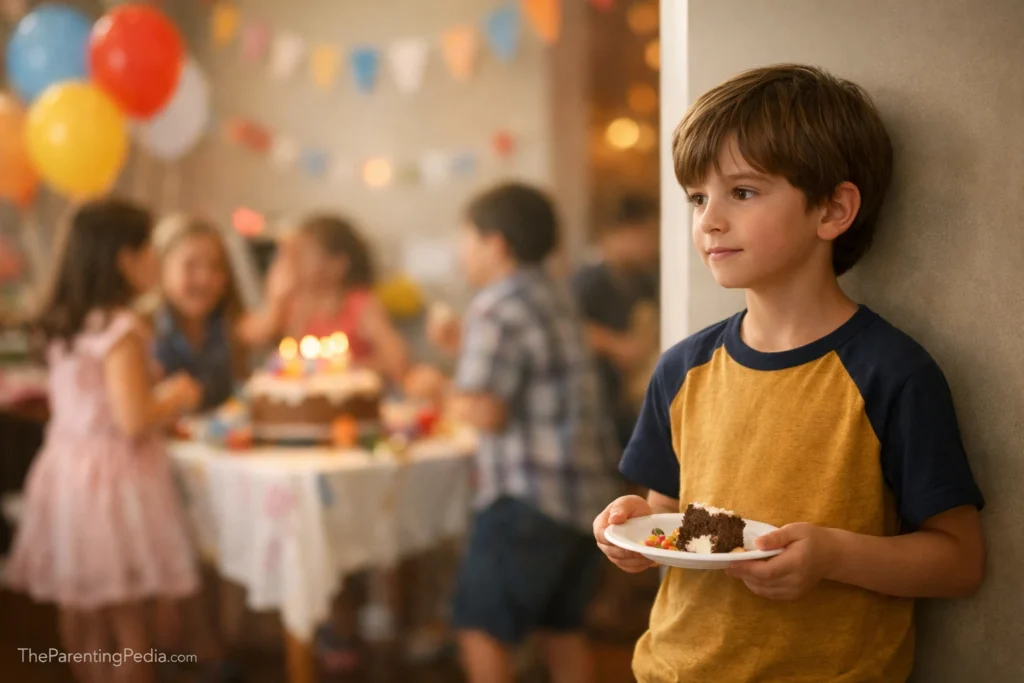
Alex stood quietly near the wall.
He wasn’t crying. He wasn’t complaining. He wasn’t even calling for his parents.
He was just watching.
Watching other kids laugh together. Watching them form groups, share jokes, and jump into games without hesitation. For a moment, he stepped forward—almost as if he wanted to join. But then he stopped. Took a step back. And returned to his quiet corner.
His mother saw it all.
That pause. That silent hesitation. That invisible wall between her child and the rest of the world.
And in that moment, she felt something every parent fears—
“Why does my child feel so alone, even in a room full of people?”
If your child struggles with confidence in social situations, you should also read why some children have low confidence and how to build it.
This moment doesn’t happen only at birthday parties.
It happens in social gatherings all the time—family functions, school events, weddings, playdates, or even simple get-togethers. In fact, many parents begin to notice how children feel left out at parties and social gatherings, even when everything around them seems cheerful and welcoming.
Some children naturally blend in. They talk, laugh, and connect without effort.
But others…
They stand on the side. They observe. They wait.
And often, they feel left out.
The truth is, this is more common than most parents think.
And more importantly—it’s not because something is “wrong” with your child.
There are deeper emotional and social reasons behind it.
As the saying goes,
“Every child is a different kind of flower, and all bloom in their own time.”
Understanding this is the first step toward truly helping your child.
Many children feel left out at parties and social gatherings due to reasons like social anxiety, lack of confidence, or past experiences—but with the right support, parents can help them feel more comfortable and included.
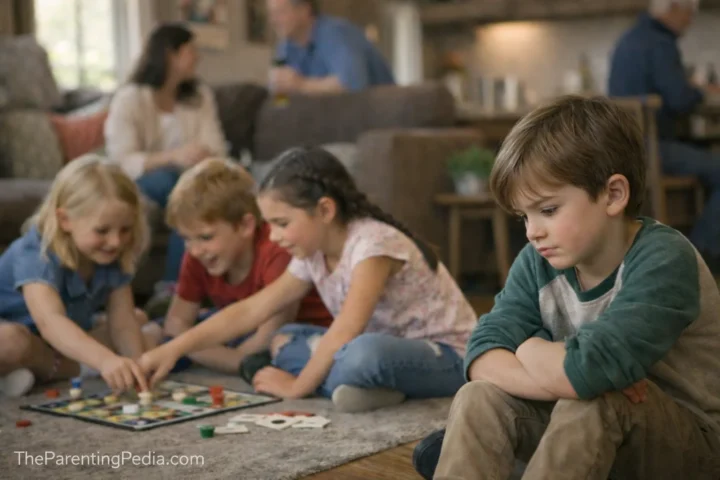
Why Do Some Children Feel Left Out at Parties and Social Gatherings?
Every child experiences social situations differently.
For some, parties and gatherings are exciting and full of opportunities.
For others, they can feel overwhelming, confusing, and even stressful.
Imagine walking into a room where everyone already seems to know each other. Conversations are flowing, groups are formed, and laughter fills the air.
Now imagine being a child who doesn’t know how to enter that space.
That’s what many children feel.
They want to join—but don’t know how.
They want to speak—but fear being ignored.
They want to connect—but feel like outsiders.
And slowly, they start believing something painful:
“Maybe I don’t belong here.”
Common Signs Your Child Feels Left Out
Children don’t always express their feelings with words.
Instead, they show it through behavior.
Here are some signs you may notice during parties or social gatherings:
- Staying close to parents instead of mixing with others
- Standing alone or sitting quietly in a corner
- Watching other kids play but not joining
- Avoiding eye contact or conversations
- Looking uncomfortable, anxious, or withdrawn
- Asking to leave early without a clear reason
- Saying things like “No one talked to me” or “I didn’t have fun”
These may look like small behaviors—but they often carry deep emotions.
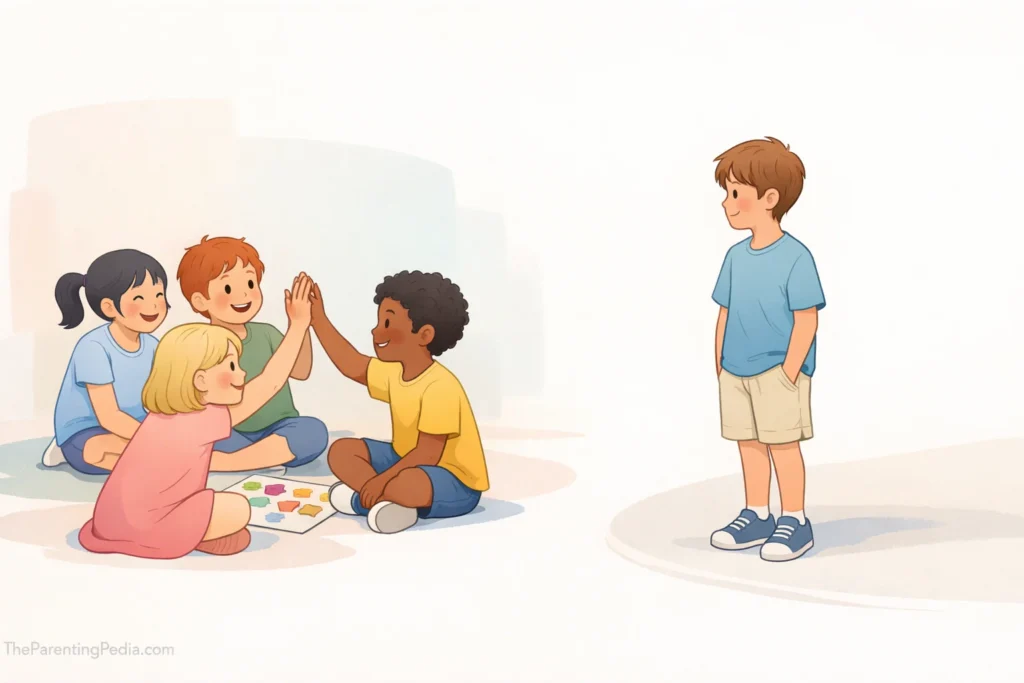
Real Reasons Behind This Feeling
Understanding the “why” is the most important part.
Because once you understand the reason, helping becomes easier.
According to experts, children develop social confidence gradually through safe and supportive environments. American Psychological Association research on child development
Social Anxiety and Fear of Rejection
Some children overthink social situations.
They worry about:
- Saying the wrong thing
- Being laughed at
- Being ignored
This fear becomes so strong that they stop trying altogether.
As the saying goes, “Fear builds walls where there should be bridges.”
Lack of Social Skills
Not every child naturally knows how to interact.
Skills like:
- Starting a conversation
- Joining a group activity
- Sharing and taking turns
These are learned over time. A child who hasn’t developed these skills may feel lost in group settings.
Many children feel left out at parties even when they are surrounded by people they know.
Parents can support children by teaching social skills step by step, as suggested by pediatric experts. HealthyChildren.org social development tips
Past Negative Experiences
One bad experience can stay in a child’s mind for a long time.
Maybe they were ignored once.
Maybe someone didn’t let them join.
Maybe they felt embarrassed.
These memories create hesitation.
The child starts expecting rejection—even before trying.
Personality Differences (Introvert vs Extrovert)
Some children are naturally quiet and observant.
They prefer small groups over big crowds.
They take time to feel comfortable.
And that’s completely normal.
But in busy parties and social gatherings, their quiet nature can make them feel left out.
Why Children Feel Left Out at Parties in Overstimulating Environments
Loud music, too many people, bright lights, and constant noise can overwhelm some children.
Instead of feeling excited, they feel tired, confused, or stressed.
So they step back—not because they don’t want to join, but because they need space.
How Feeling Left Out Affects a Child Emotionally
Feeling left out is not just a moment—it can leave a lasting impact.
A child may start thinking:
- “No one likes me”
- “I’m not good enough”
- “Others are better than me”
Over time, this can affect:
- Self-confidence
- Emotional security
- Willingness to try again
And slowly, the child may begin to avoid social situations completely.
As another saying goes, “What hurts silently often grows deeply.”
Sometimes, children who feel left out also find it difficult to express their emotions clearly, which is why understanding how to build emotional intelligence in children is important.
What Parents Should NOT Do
When parents see their child struggling, the instinct is to fix it quickly.
But sometimes, the wrong approach can make things worse.
Avoid doing this:
- ❌ Forcing your child to join others immediately
- ❌ Saying “Go play, don’t be shy”
- ❌ Comparing them with outgoing children
- ❌ Ignoring their feelings or brushing them off
- ❌ Getting frustrated or embarrassed in public
These actions may seem small—but they can increase pressure and reduce confidence.
How Parents Can Truly Help Their Child
Now comes the most important part—what you can do.
Prepare Them Before Social Gatherings
Preparation reduces fear.
Before attending a party or event:
- Tell them what will happen
- Explain who will be there
- Suggest simple ways to start interacting
When a child knows what to expect, they feel safer.
When children feel left out at parties, they may start avoiding social situations.
Teach Simple Social Skills
Give them easy tools like:
- “Hi, can I join?”
- “What are you playing?”
- “Can we play together?”
Practice these at home.
Confidence grows with practice.
Start Small, Not Big
Don’t expect your child to suddenly become social in large gatherings.
Start with:
- One friend
- Small playdates
- Short interactions
Then gradually increase exposure.
Be Their Emotional Safe Space
After the event, don’t judge—just listen.
Ask:
- “How did you feel?”
- “What was difficult?”
- “What made you uncomfortable?”
Sometimes, a child doesn’t need solutions—they need understanding.
Encourage, Don’t Pressure
There is a big difference between encouragement and pressure.
Encouragement says:
“Try when you feel ready.”
Pressure says:
“Do it now.”
And children respond better to encouragement.
A Real-Life Story Many Parents Will Relate To
A boy once attended a wedding with his parents.
Hundreds of people. Loud music. Kids running everywhere.
But he stayed close to his father.
His father didn’t push him. Didn’t say, “Go play.”
Instead, he walked with him. Introduced him gently to one child.
They spoke for a minute. Then played for five.
That five minutes turned into laughter.
And slowly, the boy became part of the group.
Not because he was forced—
but because he was supported.
Small Everyday Habits That Build Social Confidence
Helping your child doesn’t happen only at parties or social gatherings.
It happens daily.
Simple habits can make a big difference:
- Encourage conversations at home
- Let them express their thoughts freely
- Praise small efforts, not just big results
- Allow them to make small decisions
- Teach empathy and listening skills
Confidence is built in small moments—not big ones.
When Should Parents Be Concerned?
Feeling left out occasionally is normal.
But you may need to pay attention if:
- Your child avoids all social situations
- They show extreme anxiety or fear
- They have no interest in interacting at all
- Their self-confidence is very low
In such cases, gentle guidance—and sometimes professional help—can make a difference.
If your child often avoids social situations completely, you may also want to explore how to help children deal with social anxiety.
Final Thoughts
Every child is unique.
Some children are loud and expressive.
Others are quiet and thoughtful.
And both are perfectly okay.
Feeling left out at parties and social gatherings is not a flaw—it’s a sign that your child needs support, understanding, and patience.
As a parent, your role is not to change your child’s personality…
But to help them feel strong, safe, and confident in who they are.
Because when a child feels accepted at home,
they slowly learn to find their place in the world.
Understanding why children feel left out at parties helps parents support them better.
FAQs
Why does my child feel left out even in small social gatherings?
Even small groups can feel overwhelming if a child lacks confidence or social skills. They may not know how to join conversations or games. Past experiences or fear of rejection can also make them hesitate. It’s more about comfort than group size.
Should I force my child to socialize more?
No, forcing can increase anxiety and make social situations stressful. Instead, gently encourage and support small steps. Let your child move at their own pace. Confidence builds better with patience, not pressure.
Is this behavior normal in children?
Yes, it’s completely normal and common. Many children feel shy or unsure in social settings at some stage. Every child has a different personality. With time and support, most children improve naturally.
How long does this phase last?
There’s no fixed timeline—it varies for every child. Some adjust quickly, while others take more time. Small improvements happen gradually. Consistent support and positive experiences help them grow.
Can schools help with this issue?
Yes, schools provide opportunities for interaction through group activities. Teachers can gently guide children to participate. Friendships built at school also boost confidence. A supportive environment makes a big difference.
What is the best way to build confidence in my child?
Start with small steps and encourage effort, not perfection. Listen to your child and validate their feelings. Give them chances to express themselves. A safe and supportive home builds strong confidence.
Snap it, link it, share it! 🚀 Super easy & 100% free. Start sharing smarter today 👉 https://imagelink.online

About the Author
Kaushiik Sampat is the founder of The Parenting Pedia and writes about parenting, child behavior, emotional development, and family well-being. Through practical guides and research-based insights, he helps parents make informed decisions that support children’s healthy growth and learning.