
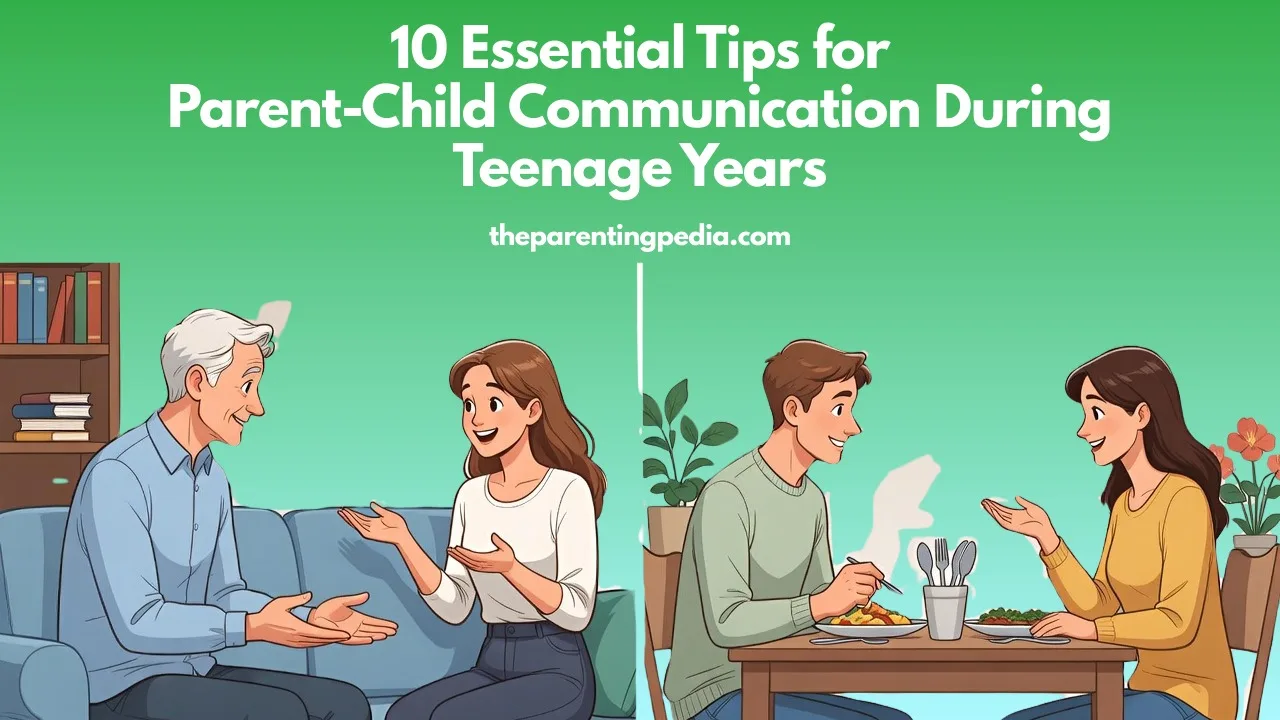
Parent-child communication during teenage years can be challenging yet extremely important for building trust and emotional connection between parents and children.discovery and independence but also one filled with misunderstandings and mood swings. Many parents find it challenging to keep the bond strong while giving their teens the freedom they seek. That’s why improving parent-child communication during teenage years becomes crucial. Good parent-child communication builds trust, strengthens emotional connections and helps teenagers feel supported even when they face pressures in life. Let’s explore ten essential tips that can help parents communicate effectively with their teens and nurture a loving and respectful relationship.
Parents should understand emotions better to improve communication, especially by learning about emotional intelligence in children.

Essential Tips for Parent-Child Communication with Teenagers
1. Listen More, Talk Less
The foundation of strong parent-child communication starts with genuine listening. Parents often rush to give advice or correct their teen, but what teenagers need most is to be heard. Listening without interrupting allows teens to express themselves freely. When parents listen attentively with open body language, eye contact and patience, teens feel respected. This encourages them to share more about their lives, fears and experiences. By practicing active listening, parents show that they value their child’s feelings and opinions which strengthens the parent-child bond.
Setting healthy boundaries is easier when parents follow proper
screen time recommendations for children.
2. Create a Safe and Judgment-Free Environment
During teenage years, emotions can be intense. Teens might express views or make mistakes that surprise or disappoint their parents. However, for effective parent-child communication, it is important to respond calmly. When parents judge or criticize too quickly, teens may shut down emotionally. Instead, parents should create a safe space where their teen feels free to talk without fear of being scolded or mocked. A simple line like, “I am here to listen, not to judge,” can go a long way in maintaining healthy parent-child communication.
Good communication also helps in handling difficult behaviors like TYPES OF TODDLER TANTRUMS, which can continue in different forms during teenage years.
3. Choose the Right Time to Talk
Timing matters. Trying to start serious conversations when a teenager is tired, angry or distracted often leads to conflict. Parents should choose calm moments, such as during a walk or a quiet evening at home. When conversations feel natural rather than forced, parent-child communication becomes easier and more productive.

4. Be Honest and Open
Teenagers value honesty. Parents do not need to share every detail of their lives, but being open about feelings, mistakes and experiences helps teens feel connected. When parents admit they do not have all the answers, it shows humility. Honest discussions create emotional safety and improve parent-child communication over time.
Parents can build stronger relationships by focusing on how to build confidence in children from an early age.
5. Respect Their Growing Independence
Teenagers are learning who they are. They want independence and the ability to make choices. When parents control every decision, teens may rebel or shut down. Parents should guide rather than command. Giving choices within safe limits shows respect. This balance helps maintain healthy parent-child communication without power struggles.
Also Read: Understanding Effective Child Discipline Strategies
6. Keep Conversations Regular, Not Only During Problems
Many parents talk to their teens only when there is a problem like their school grades, concern regarding their behavior or rules. This can make communication feel negative. Regular casual conversations about daily life, hobbies or interests help normalize talking. When communication is consistent, parent-child communication feels natural, not stressful.
Understanding mental health is important, especially when dealing with serious issues like DEPRESSION IN TEENAGERS.
7. Control Emotions During Difficult Talks
Teenagers can say things that hurt or shock parents. Reacting with anger or shouting often makes things worse. Staying calm helps keep discussions productive. Parents should take deep breaths and respond thoughtfully. Calm responses show maturity and strengthen parent-child communication, even during disagreements.

8. Use Clear and Simple Language
Teenagers may misunderstand long lectures or complex explanations. Clear, simple language works better. Parents should explain expectations, rules and consequences in a straightforward way. When teens understand what is being said, confusion reduces and parent-child communication improves.
9. Encourage Expression Without Fear
Teenagers should feel safe expressing opinions, emotions and even mistakes. If parents react with punishment every time, teens may hide the truth. Parents should encourage honesty by responding with understanding first, then guidance. A safe environment strengthens parent-child communication and emotional bonding.
10. Be a Role Model for Good Communication
Teenagers learn more from what parents do than what they say. When parents communicate respectfully with others, apologize when wrong and manage emotions well, teens observe and learn. Good behavior sets an example and reinforces strong parent-child communication naturally.
Why Parent-Child Communication Matters During Teenage Years?
Strong parent-child communication helps teenagers develop confidence, emotional intelligence and problem-solving skills. It reduces risky behavior, improves mental health and builds trust that lasts into adulthood. Teenagers who feel understood are more likely to seek guidance when facing challenges. Parents who communicate well can guide without controlling, support without pressuring and discipline without damaging the relationship.
Parents can follow simple strategies to improve communication with teenagers, as explained in this guide by the CDC on effective parent-teen communication.
Common Mistakes Parents Should Avoid
Parents often make mistakes without realizing it, especially during the challenging teenage years. Some common errors include comparing their teen to others, which can lower confidence and create resentment. Ignoring emotions and focusing only on behavior can make teens feel misunderstood. Using threats instead of calm discussion often leads to fear rather than respect. Dismissing feelings as “drama” can discourage teens from sharing openly.
These actions may seem small but can have a lasting impact on the relationship. By becoming more aware and avoiding these habits, parents can protect and strengthen parent-child communication during these sensitive and important years.
Building Long-Term Trust
Trust is built slowly through consistency. When parents keep promises, respect privacy and show empathy, teens feel secure. This trust strengthens parent-child communication and keeps the relationship strong even after the teenage years end. Over time, this sense of security encourages teenagers to open up about their thoughts, challenges and experiences without fear. Parents who remain patient and supportive create a safe emotional space where honesty grows. As a result, parent-child communication becomes deeper, more meaningful, and long-lasting, helping both parents and teens understand each other better.
Building strong relationships with teenagers becomes easier when parents understand proven communication tips shared by the Raising Children Network communication guide for teens.
Conclusion
The teenage years are challenging, but they are also a powerful opportunity to build a deeper bond. With patience, understanding and effort, parents can create meaningful connections with their children. Strong parent-child communication does not mean avoiding conflict, it , means handling conflict with respect and care. When parents listen, guide and support, teenagers grow into confident adults who value their relationship with family. By practicing these ten essential tips, parents can navigate the teenage years with confidence and create a relationship built on trust, understanding and love.
FAQ
What are 5 tips for teens communicating with parents?
Teens can improve parent-child communication by following a few simple tips. First, speak honestly about feelings instead of hiding them. Second, choose the right time to talk when both sides are calm. Third, listen to parents without interrupting. Fourth, express disagreements respectfully without anger. Finally, be patient and understanding, as parents also try to help. These habits build trust and make conversations smoother and more meaningful.
What are the 7 habits of successful teens?
Successful teens build strong habits that guide their growth. They set clear goals, stay organized and manage time wisely. They take responsibility for actions and maintain a positive mindset. Good communication and healthy relationships are important. They stay disciplined, keep learning and avoid distractions. Finally, they care for their physical and mental well-being, creating a balanced and productive life.
How can parents start a difficult conversation with teenagers?
Parents should begin calmly, choose the right time, and avoid blaming language. Starting with open-ended questions helps teenagers feel safe and more willing to talk.
Why do teenagers avoid talking to their parents?
Teenagers may avoid communication due to fear of judgment, desire for independence, or feeling misunderstood. Building trust and listening without interrupting can help.
How often should parents talk to their teenagers?
Daily short conversations are better than long occasional talks. Regular communication builds trust and keeps the relationship strong.
What are common communication mistakes parents make?
Common mistakes include interrupting, judging, giving too many lectures, and not listening properly. These can push teenagers away emotionally.
How can parents improve trust with their teenagers?
Parents can improve trust by being honest, respecting privacy, staying consistent, and supporting their children without over-controlling them.
“Snap it, link it, share it! 🚀 Super easy & 100% free. Start sharing smarter today 👉 https://imagelink.online“

About the Author
Kaushiik Sampat is the founder of The Parenting Pedia and writes about parenting, child behavior, emotional development, and family well-being. Through practical guides and research-based insights, he helps parents make informed decisions that support children’s healthy growth and learning.