
Thunderstorms can be frightening for many children. Loud thunder, unexpected lightning flashes and strong winds create an environment that can overwhelm a young mind. A child during thunderstorms may feel anxious, unsafe or even panicked, and parents often wonder how to comfort them in a way that truly works. This step-by-step guide offers simple, gentle and effective methods to help parents support their child emotionally and physically during stormy weather.
Understanding Why Thunderstorms Scare Children
Before trying to calm a child, it helps for parents to understand the fear behind the reaction. A child during thunderstorms may not fully grasp what is happening outside, so the sounds and shakes feel unpredictable and dangerous. Children naturally have active imaginations and in the absence of understanding, their minds may create worst case scenarios. Some children are sensitive to sound or sudden changes, which makes storms even more intense for them. Instead of dismissing the fear as irrational, parents can acknowledge that these emotions are real. When fear is recognized and validated rather than minimized, the child begins to feel supported and understood.

Practical Steps Parents Can Follow to Calm Their Child During Thunderstorms
Step 1: Stay Calm and Present
Children pay close attention to their parents. If a parent looks worried or stressed, the fear becomes stronger for the child. Staying calm is the first step to comforting a child during thunderstorms. A relaxed tone of voice, soft eye contact and slow movements signal safety. Even if the parent is not fond of storms themselves, showing stability gives confidence to the child. Simply sitting beside the child and saying, “I am here with you,” can create a sense of comfort before any other technique begins.
Step 2: Explain What Is Happening in Simple Terms
Knowledge reduces fear. When a child during thunderstorms understands what causes thunder and lightning, the mystery becomes less frightening for children. Parents do not need to provide scientific details to kids. Instead, simple explanations work best such as “Thunder is just the sound clouds make when they bump into each other.” or “Lightning is like nature’s big flashlight.”
Some children appreciate hearing that houses are designed to keep people safe from storms, which decreases their fear. They can also be told that rain helps plants grow and fills rivers, reminding them that storms have a purpose.
Step 3: Create a Comforting Environment
A cozy setting can make a big difference. Parents can guide the child during thunderstorms to a familiar and comfortable place perhaps the couch, a blanket or their bed with a favorite toy. Dimming bright lights, giving a warm blanket and allowing the child to sit close helps them feel secure. Some children calm down when listening to soothing music, nature sounds (that are not thunder) or soft bedtime stories. Keeping the senses relaxed makes the storm feel farther away.
Step 4: Use Distraction and Engagement
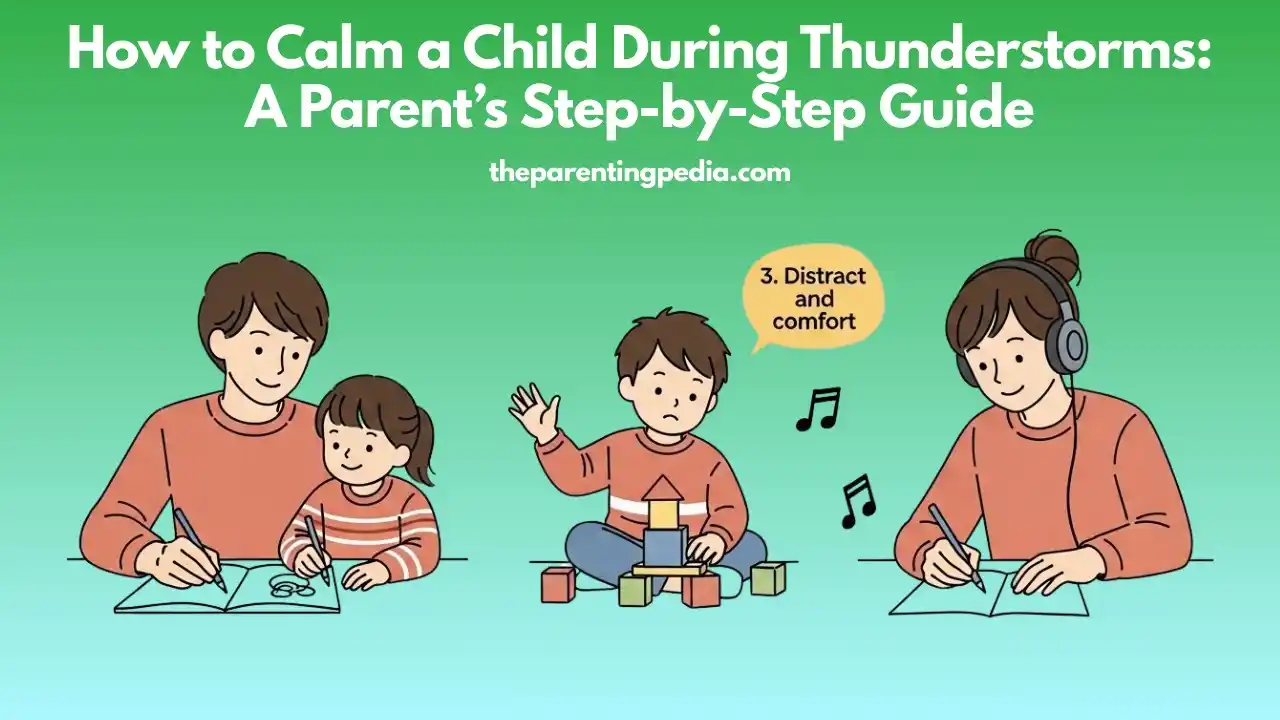
Distraction does not ignore the fear, it simply shifts the child’s attention to something more positive and helps the child during thunderstorms focus on comfort rather than worry. Creating engagement allows the child’s mind to move away from the storm and toward an enjoyable activity. Useful distractions include reading a book together, coloring or drawing, playing a familiar game, building with blocks or puzzles or watching a gentle movie. These activities keep the brain busy and relaxed, reducing the fear and anxiety caused by the storm.
Also Read: Challenges Faced by Parents of Children with ADHD
Step 5: Try Deep Breathing or Relaxation Techniques
When a child during thunderstorms becomes overwhelmed, the body reacts with rapid breathing or tension and parents can help by practicing calm breathing together. They can guide the child to inhale slowly through the nose for three seconds, hold the breath for one second and then exhale slowly through the mouth for three seconds. Some children find deep breathing easier when it is paired with playful techniques such as blowing bubbles, smelling pretend flowers or pretending to inflate a balloon. These activities help regulate the body’s reaction to fear and deep breathing sends a signal to the brain that the child is safe.
Step 6: Use Positive Associations
Positive associations help transform thunderstorms from frightening to manageable. Parents can introduce fun routines that only happen during storms such as making hot chocolate, reading a special “storm-only” story, playing a favorite card game or holding a cozy “movie and blanket” moment. When a child during thunderstorms begins to expect something positive, the fear gradually fades and is replaced with anticipation and comfort.
Step 7: Validate Feelings and Build Resilience
It is important to acknowledge the child’s emotions instead of saying things like “There is nothing to be scared of.” Instead, parents can say supportive statements such as “I know storms sound loud and that can feel scary” and “It is okay to feel this way, I am here with you.” Showing understanding helps the child during thunderstorms feel heard. Over time, parents can gently encourage resilience by praising small steps such as staying in their own room for a few minutes or listening to thunder without covering their ears.
Step 8: Maintain a Routine After the Storm
After the storm passes, returning to normal routines helps the child feel grounded. Talking briefly about how well they handled the storm reinforces confidence. Children benefit from hearing that they were brave, even if they cried or held onto their parent. These positive memories build emotional strength for future storms.
When to Seek Additional Support
Most children eventually adapt to storms with reassurance and practice. However, if a child during thunderstorms consistently shows extreme distress, nightmares, refusal to sleep alone or panic even at the mention of rain, it may be helpful to seek advice from a therapist or pediatrician. This does not mean anything is wrong, it simply means the child has extra coping strategies.
Extra Tips for Comfort and Safety
Parents can also use simple actions to reinforce feelings of safety and stability during stormy weather. They can:
- Keep curtains closed so lightning flashes are less visible.
- Avoid mentioning storm damage seen in news reports.
- Allow the child to hold a comfort item like a stuffed toy.
- Stay away from loud conversations about weather emergencies.
- Offer physical comfort such as a hug if the child wants it.
These small gestures contribute to a sense of safety for the child during thunderstorms, helping them understand that their home and family offer security.

Conclusion
Every child is different, so there is no single solution that works for everyone. Parents may need to try a combination of strategies until they find what fits. What truly matters is patience, empathy, and presence. A child during thunderstorms may not completely overcome their fear right away, but every storm becomes easier when they know they are not facing it alone. With time, repetition, and support, children learn that thunderstorms may be loud and bright, but they are temporary and they are safe.
FAQ
How to comfort a child during a thunderstorm?
To comfort a child during a thunderstorm, stay calm, sit close and reassure them they are safe. Explain the storm in simple terms and use comforting distractions like stories or games. Soft lighting, warm blankets, deep breathing and physical affection can ease fear and help the child feel supported until the storm passes.
What are 5 safety tips for thunderstorms?
Stay indoors away from windows and doors. Avoid using electrical appliances and water sources. Keep phones charged for emergency updates. If outside, seek shelter immediately and avoid tall trees or open fields. Prepare an emergency kit with essentials like flashlights, water and first-aid supplies to stay safe during severe storms.
How to Calm a Child During Thunderstorms
If kids seem worried, have them snuggle up with you or a pet. You can also suggest they write or draw their feelings or listen to music. Be ready with flashlights in case the power goes out so kids can read, play games, do puzzles, or make crafts. Try breathing exercises.
How to calm anxiety during a thunderstorm?
Identify a comfortable and fun place in the house to go to during non-emergent storms that is relaxing and positive; finding a place away from windows, and the sights and sounds of the storm is often helpful. If it’s not a bedroom, consider bringing pillows, blankets and other items to make the space feel cozy.
What are things you should avoid doing in a lightning storm?
If You Are Inside a Building
> Stay away from windows and doors.
> Avoid using a corded telephone, except for emergencies.
> Avoid showering, bathing, washing dishes, or doing laundry.
> Avoid contact with metal objects (yard equipment, motorcycles,
bicycles, etc.).
Get inspired by simple yet powerful business opportunities you can explore now.