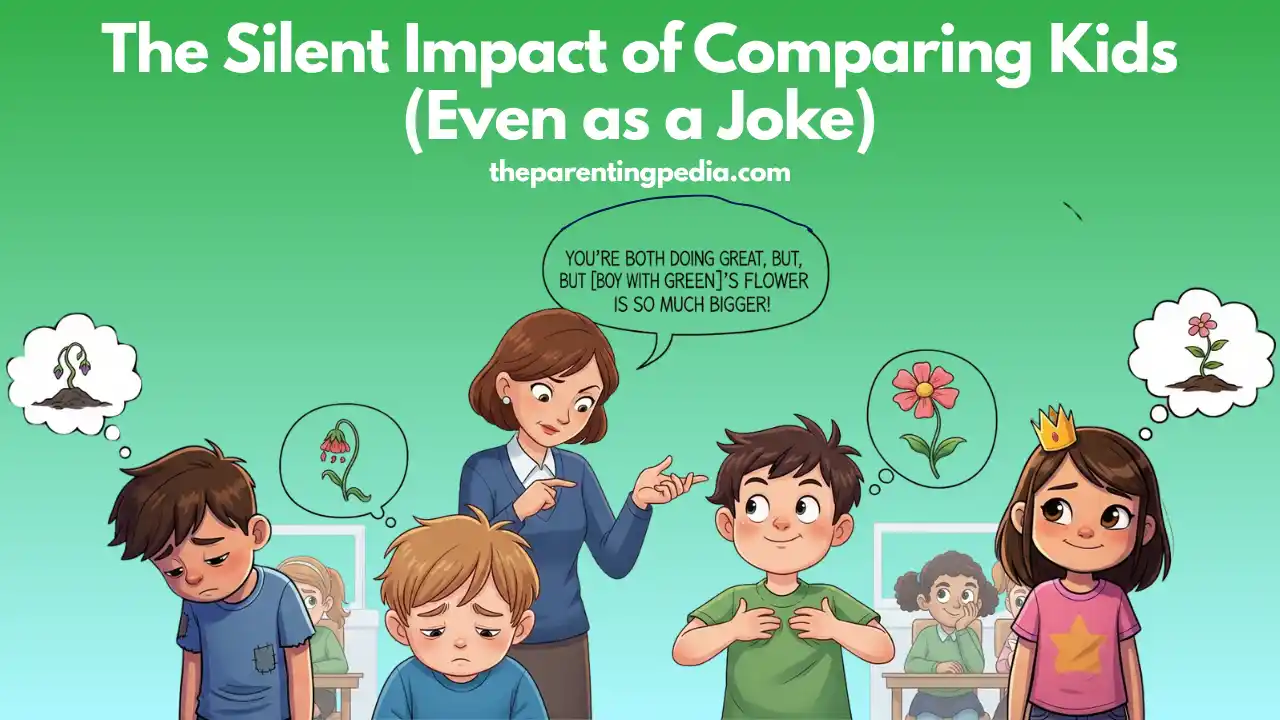
Every parent wants their child to grow into a confident, capable, and successful individual. The silent impact of comparing kids (even as a joke) is deeper than it appears. In that journey, parents guide, correct, and sometimes push their children to do better. But in the process, one common habit quietly slips in — comparison.
Parents often compare their children with others without realizing the consequences. This habit can slowly affect a child’s confidence, emotional health, and overall development.
It often sounds harmless.
“Why can’t you be like your brother?”
“Look how well she studies.”
“He is so disciplined, learn from him.”
Research also supports that repeated comparison can harm a child’s emotional development (American Psychological Association).
Sometimes these words are said seriously. Sometimes they are said casually. And many times, they are said as a joke.
But here’s something important most parents don’t realize:
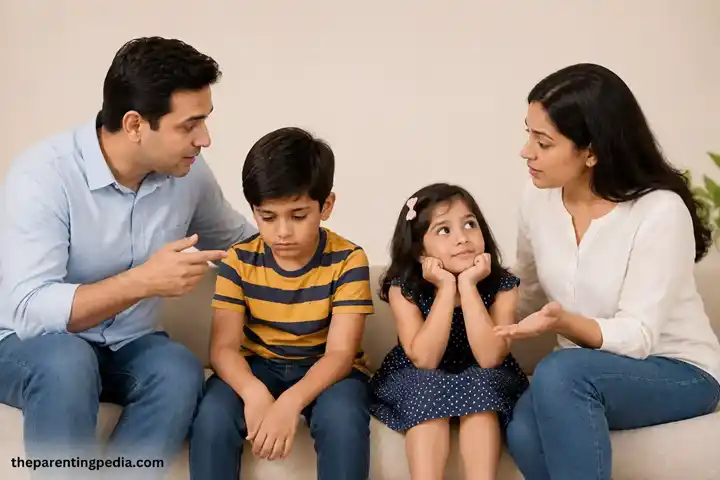
Children don’t hear comparison as a joke — they hear it as a judgment about who they are.
They may not respond immediately. They may stay silent. But internally, they begin to question themselves.
Am I not good enough?
Why am I different?
Will I ever be appreciated?
This is where the silent impact of comparing kids begins. It doesn’t show instantly, but over time, it slowly affects a child’s confidence, emotional security, and sense of identity.
Table of Contents
What Does Comparing Kids Really Mean?
Comparing kids means measuring one child against another instead of understanding each child as a unique individual.
It is not always obvious or harsh. In fact, it often happens in everyday conversations without parents realizing it.
Common Everyday Examples
- “Your sister finishes her homework faster.”
- “See your friend, he studies every day.”
- “Your cousin speaks so confidently.”
- “Look how neat she is compared to you.”
Sometimes comparison is indirect:
- Praising one child in a way that makes another feel less
- Repeating someone else’s achievements
- Highlighting differences in front of others
To parents, these may seem like small comments.
But to a child, they often mean:
“I am not good enough the way I am.”
Why Do Parents Compare Children?
Understanding the reason behind comparison is the first step toward changing it.
External factors like excessive screen exposure can also influence behavior patterns, as explained in screen time recommendations for children.
1. The Intention to Motivate
Most parents compare because they want their child to improve.
They believe:
“If I show them someone better, they will try harder.”
But instead of motivation, children often feel:
- Pressure
- Stress
- Fear of disappointing parents
2. Social Pressure
Today’s environment is highly competitive.
Parents constantly see:
- Other children scoring higher
- Learning faster
- Performing better
This creates a silent pressure:
“My child should also match up.”
And that pressure turns into comparison at home.
3. Learned Behavior from Childhood
Many parents grew up hearing similar comparisons.
So it becomes a habit.
But what felt normal then may not be healthy now.
4. Lack of Awareness
Sometimes parents simply don’t realize how deeply their words affect their child.
They think:
“It’s just one sentence.”
But children remember how words made them feel.

The Silent Impact of Comparing Kids in Everyday Parenting
The effects of comparison are not always visible immediately. They develop slowly and affect different areas of a child’s emotional growth.
1. Low Self-Esteem and Self-Doubt
When children are constantly compared, they begin to believe:
“Others are better than me.”
This affects:
- Confidence
- Decision-making
- Participation
They may stop trying because they feel they will never be “good enough.”
Many parents don’t notice early signs, but these feelings often develop into low confidence in children over time.
2. Jealousy and Relationship Issues
Comparison can damage relationships.
Children may feel:
- Jealous of siblings
- Competitive instead of supportive
- Emotionally distant
Instead of bonding, they begin comparing themselves constantly.
3. Fear of Failure
Compared children often develop fear.
They think:
“If I fail, I will be compared again.”
So they:
- Avoid new challenges
- Stop taking risks
- Prefer safe choices
4. Emotional Withdrawal
Some children don’t react loudly.
Instead, they:
- Become quiet
- Stop sharing feelings
- Withdraw emotionally
Parents may not notice this change immediately.
5. Loss of Identity
Every child is unique.
But comparison sends a message:
“You should be like someone else.”
So children:
- Hide their true interests
- Stop exploring their talents
- Try to fit into expectations
If ignored, this emotional withdrawal can later turn into serious issues like depression in teenagers.
A Deep Real-Life Story – When Comparison Changes a Child
Ayaan and Sara were siblings.
Ayaan was excellent in academics. He was disciplined, organized, and always scored high marks.
Sara was different.
She loved art, music, and storytelling. She was expressive and imaginative.
At first, their differences were appreciated.
But slowly, comparisons began.
Daily Conversations at Home
At the study table:
“Ayaan has already finished. Why are you so slow?”
At dinner:
“Learn something from your brother.”
At family gatherings:
“Ayaan is very focused. Sara is always distracted.”
Everyone laughed.
Sara smiled too.
But inside, she was absorbing everything.
The Moment That Changed Everything
One day, Sara made a beautiful painting.
She was excited.
She ran to her father and said:
“Look what I made!”
He glanced at it and said:
“Nice… but focus on studies like Ayaan.”
That moment stayed with her.
Not because it was harsh.
But because it made her feel:
“What I love doesn’t matter.”
The Silent Change
Over time, Sara:
- Stopped painting
- Became less expressive
- Avoided participation
- Lost confidence
Whenever she tried something new, a thought stopped her:
“I won’t be as good anyway.”
The Breaking Point
At school, her teacher asked:
“Why don’t you participate anymore?”
Sara replied softly: “I’m not good enough.”
What Parents Didn’t Realize
Her parents never shouted.
They never punished her harshly.
But their repeated comparison created a belief:
“I am less.”
And that belief changed how she saw herself.
Signs Your Child May Be Affected by Comparison
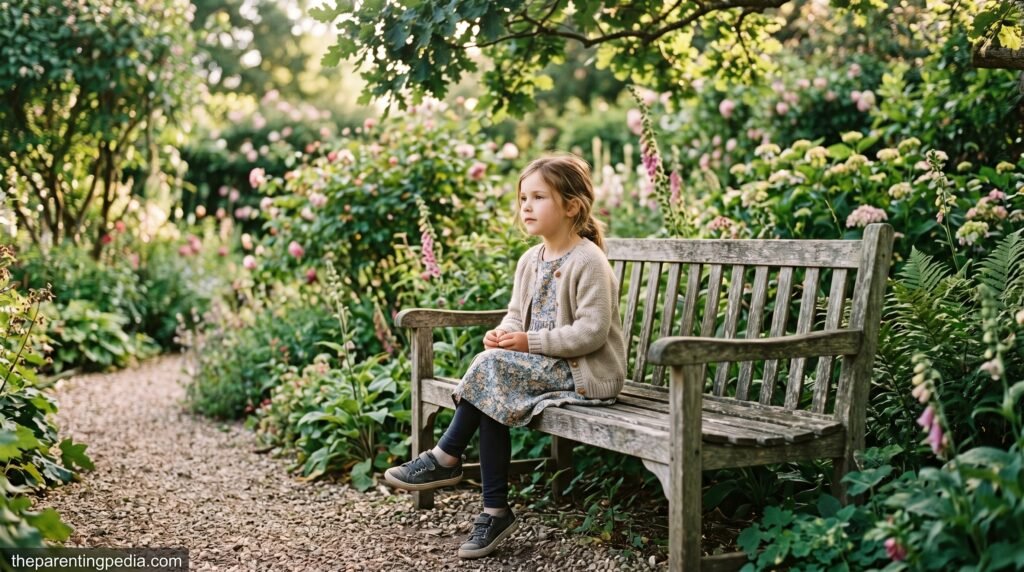
Children may not say it directly, but their behavior shows it.
Warning Signs to Watch
- Low confidence
- Saying “I can’t do it”
- Avoiding challenges
- Comparing themselves with others
- Becoming quiet
- Losing interest in activities
Step-by-Step: What Parents Should Do Instead
Step 1: Focus on Effort
Say:
“I’m proud of your effort”
Instead of comparing results.
Step 2: Appreciate Individual Strengths
Every child has something unique.
Recognize and support it.
Step 3: Avoid Labels
Don’t label children as:
- Smart
- Weak
- Lazy
These labels shape identity.
Step 4: Encourage Progress
Say:
“You’ve improved a lot”
Compare progress, not people.
Step 5: Create Emotional Safety
Let your child feel safe to:
- Fail
- Try again
- Express feelings
Step 6: Think Before Speaking
Ask yourself:
“Will this help or hurt?”
Step 7: Give Equal Attention
Spend time with each child individually.
Better Alternatives to Comparison
Use encouraging language:
- “I believe in you”
- “You’re improving”
- “Keep trying”
- “I’m proud of you”
Long-Term Benefits of Not Comparing Kids
Children develop:
- Confidence
- Emotional strength
- Healthy relationships
- Independence
- Self-belief
According to child health experts at HealthyChildren.org, positive parenting builds long-term emotional strength.
Common Parenting Mistakes to Avoid
- Comparing siblings
- Using comparison as motivation
- Making jokes about abilities
- Ignoring emotional impact
FAQs – The Silent Impact of Comparing Kids
1. Is comparing kids harmful?
Yes, even small comparisons can affect a child’s self-esteem over time. It can create feelings of not being “good enough” and lead to emotional stress.
2. Can comparison motivate children?
It may motivate for a short time, but it usually creates pressure and fear. True motivation comes from encouragement, not comparison.
3. What if I already compared my child?
It’s okay—what matters is what you do next. Start using positive and supportive language to rebuild your child’s confidence.
4. Do jokes affect children?
Yes, children often take words seriously, even when said jokingly. Repeated jokes can hurt their feelings and impact their self-worth.
5. How can I stop comparing?
Become aware of your words and pause before speaking. Focus on your child’s unique strengths instead of others.
6. What should I say instead?
Use encouraging phrases that highlight effort and progress. This helps your child feel valued and confident in their own abilities.
Conclusion – Your Words Shape Your Child’s Inner Voice
The silent impact of comparing kids is real.
It doesn’t happen instantly.
It doesn’t make noise.
But it stays.
In their thoughts.
In their confidence.
In their identity.
As a parent, your words matter more than you think.
👉 Choose encouragement over comparison
👉 Choose understanding over judgment
Because every child deserves to feel:
“I am enough.”

TheParentingPedia editorial team creates practical, research-informed parenting content to help parents navigate everyday challenges, child development, behavior, and family life. Our articles draw on reputable parenting and child-development sources and are reviewed for clarity, accuracy, and practical usefulness.