
If you’re wondering how to get kids to do chores without arguing, you’re not alone. Getting children to help with chores can sometimes feel like a daily battle. You ask them to clean their room or help around the house, and suddenly there is resistance, delay, or even arguments. Many parents face this challenge, and it can become stressful for everyone.
The good news is that chores do not have to lead to conflict. With the right approach, you can turn chores into a positive and even enjoyable part of your child’s routine. In this article, you will learn simple ways to encourage children to do chores without arguing, while also helping them build responsibility and confidence.

Table of Contents
Why Chores Matter for Children
Before we talk about how to avoid arguments, it is important to understand why chores are important.
Chores are not just about keeping the house clean. They help children learn life skills. When children help with daily tasks, they learn responsibility, discipline, and teamwork.
Chores also:
- Build confidence in children
- Teach time management
- Help them feel like part of the family
- Prepare them for adulthood
When children understand the purpose of chores, they are more likely to cooperate.
According to American Academy of Pediatrics, children who take part in daily household tasks develop stronger life skills and independence over time.
Start with Age-Appropriate Tasks
One of the most common reasons children argue is because the task feels too hard or confusing.
Make sure the chores you assign match your child’s age and ability.
Toddlers (2–3 years)
- Put toys back in place
- Help carry light items
- Wipe small surfaces
Preschoolers (4–5 years)
- Arrange toys and books
- Help set the table
- Fold small clothes
School-age children (6–10 years)
- Make their bed
- Pack their school bag
- Help with simple cleaning
Tweens and teens
- Do laundry
- Clean their room
- Help with cooking
When children feel capable, they are less likely to resist.
You can also read How to Build Responsibility in Children
Use Positive and Clear Communication
How you ask matters a lot. If you sound angry or demanding, children may react negatively.
Instead of saying:
- “Clean your room right now!”
Try saying:
- “Let’s clean your room together so we can relax later.”
Use a calm tone and simple words. Clear instructions help children understand what to do without confusion.
Use “When–Then” Statements
This is a very effective and simple method.
Instead of forcing, connect chores with something they like.
For example:
- “When you finish your homework, then you can play.”
- “When you clean your toys, then we will watch your favorite show.”
This method reduces arguments because children know what to expect.
Make Chores Fun and Interesting
Children naturally enjoy activities that feel playful and exciting. When chores are presented as boring or forced tasks, they are more likely to resist. But when you turn chores into something fun, children start seeing them in a completely different way.
For example, instead of simply asking your child to clean their room, you can turn it into a small challenge. Say something like, “Let’s see how fast you can pick up all your toys before this song ends.” This creates excitement and gives them a goal to achieve.
You can also introduce simple games like:
- Timer challenges
- “Beat the clock” cleaning
- Treasure hunt while picking items
- Role-playing like “cleaning superhero”
One parent shared that when she started playing music during cleaning time, her children began dancing while doing chores. What used to be a daily argument turned into a fun family activity.
Another simple idea is to give chores creative names. Instead of saying “fold clothes,” you can say “laundry mission.” Small changes like this can make a big difference in how children respond.
This is one of the most effective simple ways to encourage children to do chores without arguing, because it removes pressure and replaces it with enjoyment.
Be a Role Model
Children learn by watching you.
If they see you doing chores with a positive attitude, they will copy you. If you complain, they will also complain.
Show them that chores are a normal part of life. Say things like:
- “Let’s work together and finish this quickly.”
When chores feel like teamwork, children feel more involved.
Create a Daily Routine

Children feel more comfortable when they know what to expect.
Set a fixed time for chores each day. For example:
- After school
- Before dinner
- Before bedtime
When chores become part of a routine, children stop seeing them as something extra.
Consistency reduces arguments.
Creating a routine is important for children’s overall growth. Read more in Daily Routine for Kids: Healthy Habits Guide
Give Choices to Your Child
Children like to feel in control. Giving them small choices can reduce resistance.
For example:
- “Do you want to clean your room first or set the table first?”
- “Do you want to fold clothes or arrange toys?”
This simple trick works well because the child feels respected.
Use Praise and Encouragement
Children respond very well to appreciation.
When your child completes a task, say:
- “Great job!”
- “I am proud of you.”
You can also use:
- Stickers
- Reward charts
- Small rewards
Focus on effort, not perfection.
This is one of the easiest simple ways to encourage children to do chores without arguing.
Studies by Harvard University Center on the Developing Child show that positive encouragement helps children build confidence and long-term good habits.
Break Tasks into Small Steps
Sometimes children argue because the task feels too big.
Instead of saying:
- “Clean your room”
Break it into steps:
- Pick up toys
- Arrange books
- Make the bed
Small steps feel easier and less stressful.
Avoid Constant Reminders
Repeating the same instruction again and again can lead to frustration.
Instead:
- Give one clear instruction
- Wait patiently
- Follow up calmly
Too many reminders can turn into arguments.
Stay Calm and Patient
Children may still resist sometimes, and that is normal.
Do not shout or punish immediately. Stay calm and handle the situation with patience.
If you react with anger, the situation can get worse.
A calm approach helps children learn better behavior over time.
Work Together as a Family
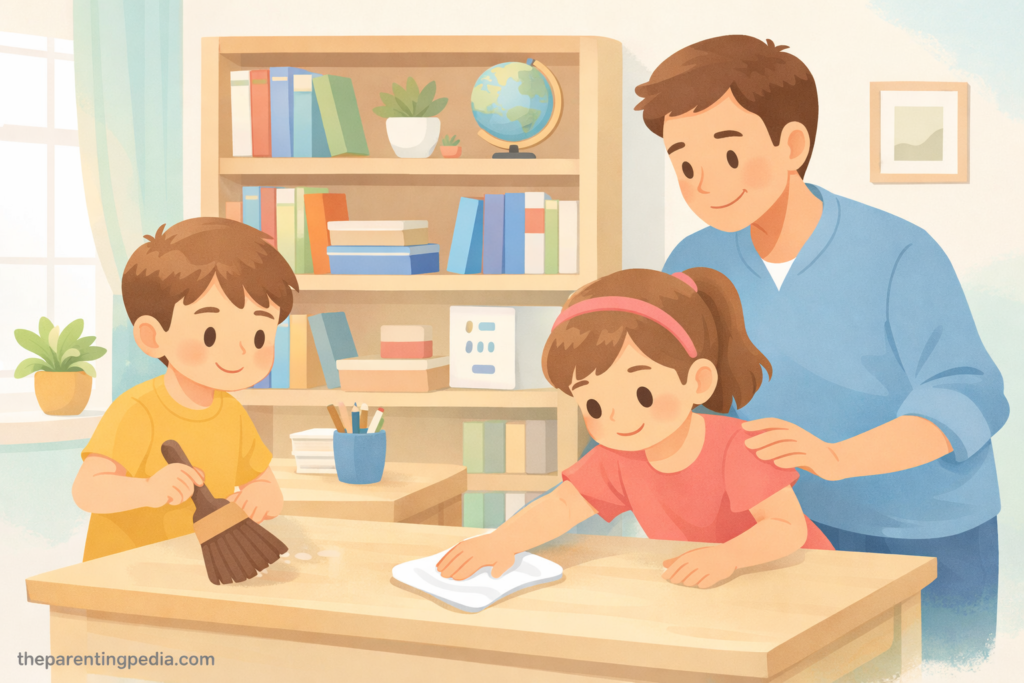
Chores should not feel like a punishment. Instead, treat them as family teamwork.
Say things like:
- “We all live here, so we all help.”
When everyone participates, children feel included and valued.
Use Visual Charts and Lists
Visual tools can help children stay on track.
You can create:
- Chore charts
- Daily checklists
- Reward boards
These tools make chores more organized and clear.
Avoid Common Mistakes
To truly follow simple ways to encourage children to do chores without arguing, avoid these mistakes:
- Giving too many tasks at once
- Expecting perfection
- Comparing children with others
- Using chores as punishment
- Not appreciating their effort
Small changes can make a big difference.
Teach Responsibility, Not Just Obedience
The goal is not just to make children follow instructions. The goal is to teach them responsibility.
Help them understand:
- Why chores matter
- How they help the family
- Why being responsible is important
When children understand the purpose, they cooperate better.
You can also read How to Talk to Children Without Shouting
What to Do When Your Child Still Refuses to Do Chores
Even after trying all the methods, there will be days when your child simply refuses to help. This is completely normal and part of growing up. The key is how you handle these moments without turning them into arguments.
First, stay calm and avoid reacting immediately. When parents react with anger, children often become more defensive. Instead, take a pause and speak in a calm tone. For example, you can say, “I understand you don’t feel like doing it right now, but this is something we need to finish.”
Second, try to understand the reason behind the refusal. Sometimes children are tired, distracted, or just want attention. A quick conversation can often solve the problem faster than forcing them.
You can also use natural consequences. For example, if toys are not cleaned up, they may not be available the next day. This teaches responsibility without shouting or punishment.
Another helpful method is to give them a short break. Say, “Take 5 minutes, then we will do it together.” This reduces resistance and makes the task feel less forced.
One parent shared that instead of arguing, she started sitting with her child and doing the first step together. After a few minutes, the child continued on their own. Sometimes, starting is the hardest part for children.
Remember, consistency is more important than perfection. Some days will be easy, and some days will be challenging. Stay patient and keep using positive methods.
Handling refusal calmly is one of the most important simple ways to encourage children to do chores without arguing, because it teaches cooperation instead of fear.
Conclusion
Encouraging children to help with chores does not have to be stressful. With patience, clear communication, and a positive approach, you can make chores a smooth part of daily life.
By using these simple ways to encourage children to do chores without arguing, you not only reduce conflicts but also help your child grow into a responsible and confident individual.
Remember, small steps and consistency are the key. Over time, your child will start helping willingly without arguments.
Frequently Asked Questions (FAQs)
1. How can I get my child to do chores without arguing every time?
The best way is to stay calm and avoid forcing. Use simple methods like giving choices, making chores fun, and using “when–then” statements. Over time, your child will understand expectations and cooperate more easily.
2. Why do children refuse to do chores even when they understand them?
Children may refuse because they feel bored, tired, or want control over their time. Sometimes the task feels too big or unclear. Breaking tasks into small steps and using positive language can reduce resistance.
3. Should I reward my child for doing chores or not
Rewards can be helpful, especially in the beginning. Simple praise, stickers, or small incentives can motivate children. However, the lon-term goal should be to build responsibility, not dependence on rewards.
4. What are the best chores for different age groups?
Younger children can do simple tasks like picking up toys, while older children can handle responsibilities like cleaning their room or helping in the kitchen. The key is to match chores with the child’s age and ability.
5. How do I handle it if my child keeps delaying chores?
Instead of repeating instructions, set clear expectations and use routines. You can say, “When your chores are done, then you can play.” This creates a natural consequence without arguments or pressure.
6. Is it okay to use chores as a punishment?
It is better to avoid using chores as punishment. This can make children dislike helping. Instead, present chores as a normal part of family life and encourage a positive attitude toward them.
7. How can I make chores a regular habit for my child?
Consistency is the key. Set a fixed time for chores, create a routine, and use charts or checklists. When children know what to expect daily, they are more likely to follow without arguing.
Learning how to get kids to do chores without arguing takes patience, but small consistent steps can make a big difference.
⚡ “Fast, simple, and free — link your images with Imagelink.online

Kaushik Sampat (KayEss) is the founder of TheParentingPedia, where he writes about parenting, child development, education, and family well-being. Drawing on years of hands-on parenting experience and grounding every article in current research from trusted sources in pediatrics and child psychology, he turns complex findings into clear, practical guides. His mission is simple: help parents cut through conflicting advice and make confident, informed decisions that support their children’s healthy growth.