Easy science experiments for kids at home are a great way to make learning fun, interactive, and engaging using simple kitchen items. These activities help children explore basic scientific concepts while enjoying hands-on experiments in a safe and creative environment.
Parents are always looking for creative ways to keep their children engaged while also helping them learn something valuable. One of the best ways to do this is through Easy science experiments for kids at home using simple kitchen ingredients. These activities not only entertain kids but also introduce them to basic scientific concepts in an exciting and memorable way.
Children are naturally curious, and fun science experiments give them the opportunity to explore, ask questions and discover how things work. The best part is that parents do not need expensive equipment or special materials. Everyday items found in the kitchen can be turned into amazing learning tools.
Table of Contents

Why Parents Should Encourage Science Experiments at Home
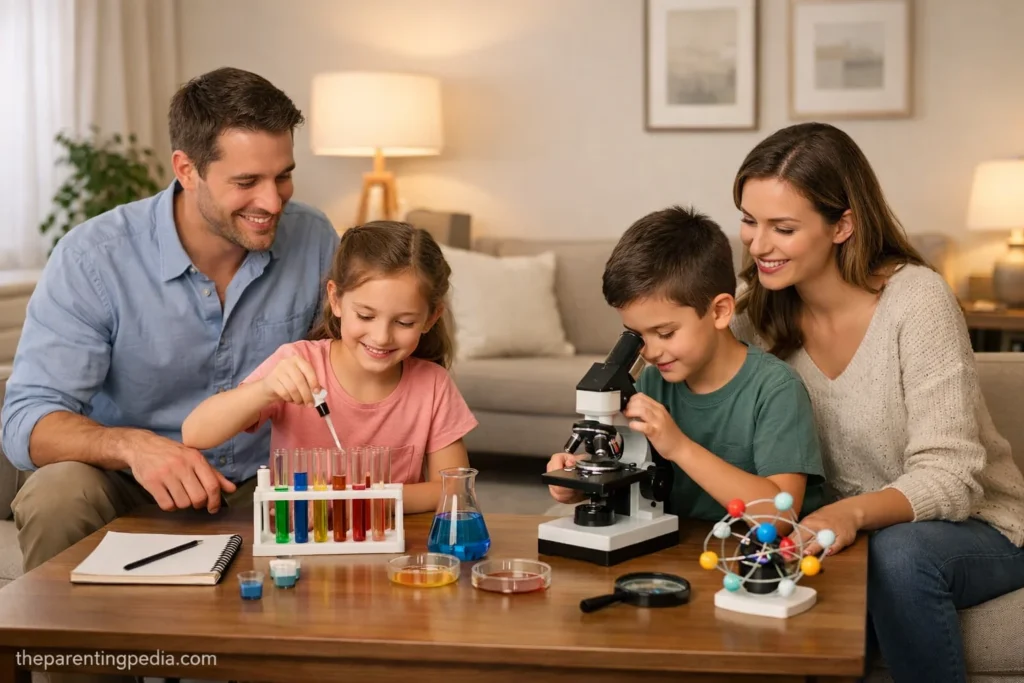
When parents introduce fun science experiments at home, they help children develop important skills such as critical thinking, problem-solving and observation. These experiments also build confidence as kids see the results of their actions.
Learning through fun science experiments is different from reading books or watching videos. It is hands-on, interactive and much more engaging. Children remember what they do, not just what they hear or see. Here are most popular fun science experiments that kids absolutely love:
Looking for more creative ideas? Explore fun indoor activities for kids at home
1. Baking Soda and Vinegar Volcano
What parents need:
- Baking soda
- Vinegar
- A small container
- Food coloring (optional)
Steps:
- Place the container on a tray.
- Add baking soda into the container.
- Pour vinegar slowly.
- Watch the volcano erupt!
What kids learn:
This experiment shows a chemical reaction between an acid (vinegar) and a base (baking soda), producing carbon dioxide gas.
You can also improve learning with how to improve problem-solving skills in children
2. Rainbow in a Glass
This colorful activity is one of the most visually exciting fun science experiments.
What parents need:
- Sugar
- Water
- Food coloring
- Clear glass
Steps:
- Prepare sugar solutions with different amounts of sugar.
- Add different colors to each solution.
- Carefully pour each layer into a glass.
What kids learn:
Children understand the concept of density. Liquids with more sugar are heavier and settle at the bottom.
Help your child learn faster with effective learning techniques for kids
3. Floating Egg Experiment
This is a simple yet surprising fun science experiments activity.
What parents need:
- Egg
- Water
- Salt
- Glass
Steps:
- Fill a glass with water and place the egg inside. It will sink.
- Add salt and stir well.
- Place the egg again—it will float!
What kids learn:
Salt increases the density of water, making it easier for objects like eggs to float.
Also Read: Teaching Kids Mindfulness And Meditation
4. Magic Milk Experiment
This is one of those fun science experiments that feels like magic.
What parents need:
- Milk
- Food coloring
- Dish soap
- Cotton swab
Steps:
- Pour milk into a plate.
- Add drops of food coloring.
- Dip a cotton swab in soap and touch the milk.
What kids learn:
This experiment shows how soap breaks down fat molecules, causing the colors to move.
Struggling to reduce device usage? Read how to reduce screen time in children
5. Homemade Lava Lamp
Kids enjoy this creative and colorful example of fun science experiments.
What parents need:
- Oil
- Water
- Food coloring
- Effervescent tablet (like an antacid)
Steps:
- Fill a bottle with oil and water.
- Add food coloring.
- Drop in the tablet and watch the bubbles.
What kids learn:
Oil and water do not mix, and the bubbles demonstrate gas formation.
6. Invisible Ink with Lemon Juice
This is one of the most exciting fun science experiments for curious minds.
What parents need:
- Lemon juice
- Cotton swab
- Paper
- Heat source (like a bulb)
Steps:
- Write a message using lemon juice.
- Let it dry.
- Hold the paper near heat to reveal the message.
What kids learn:
Heat causes the lemon juice to oxidize and turn brown, making the writing visible.
You can also try simple fun learning activities at home to keep your child engaged daily.
7. Balloon Inflation Without Blowing
This is a surprising addition to fun science experiments at home.
What parents need:
- Balloon
- Baking soda
- Vinegar
- Bottle
Steps:
- Put vinegar in a bottle.
- Add baking soda inside the balloon.
- Attach the balloon to the bottle and release the baking soda.
What kids learn:
The reaction produces carbon dioxide gas, which inflates the balloon.
Support your child’s growth with importance of play in child development
8. Pepper and Soap Trick
A quick and easy example of fun science experiments is pepper and soap trick.
What parents need:
- Water
- Black pepper
- Soap
Steps:
- Sprinkle pepper on water.
- Touch the water with a soapy finger.
What kids learn:
Soap reduces surface tension, causing the pepper to move away quickly.

Tips for Parents to Follow
To make the most of these fun science experiments, parents should keep a few things in mind:
- Always supervise children during experiments.
- Encourage kids to ask questions.
- For more fun ideas, check fun indoor activities for kids at home
- Let children predict what will happen before starting.
- Discuss the results afterward in simple terms.
Parents should focus on making learning enjoyable rather than perfect. The goal of fun science experiments is to spark curiosity, not to achieve perfect results.
Making Science a Daily Habit
Parents can turn everyday moments into fun science experiments. Cooking, cleaning, and even playing can become learning opportunities. For example, watching water boil or observing ice melt can teach children about states of matter. By regularly engaging in fun science experiments, children begin to see science everywhere. This helps them develop a lifelong interest in learning and discovery.
If you enjoyed these activities, you’ll also love this practical guide for parents to build confidence and positive habits in children.
Conclusion
Bringing science into the home does not require special tools or a laboratory. With simple kitchen items and a little creativity, parents can introduce their children to the wonders of science through fun science experiments.
These activities are more than just entertainment. They help children think, explore and understand the world around them. When parents take the time to guide their children through fun science experiments, they are building strong foundations for future learning.
In the end, the joy, excitement and curiosity that come from these fun science experiments are what truly make them valuable. Parents can feel confident knowing they are combining learning with fun in the best possible way.
You can also boost learning using effective learning techniques for kids
FAQ
What are the easiest science experiments for kids?
The easiest science experiments for kids include baking soda and vinegar volcano, floating egg in salt water, magic milk with food coloring and pepper with soap trick. These fun science experiments use simple kitchen items, are safe, quick to do and help children learn basic science concepts through hands-on activities. They also encourage curiosity, improve observation skills and make learning enjoyable, allowing children to explore science in a playful, interactive and memorable way at home.
What science experiments use household items?
Many simple science experiments use household items like baking soda, vinegar, salt, milk, oil and food coloring. Kids can create a volcano reaction, make a rainbow density jar, float an egg in salt water or try the magic milk experiment. These fun science experiments are easy to set up, safe for children and help them understand basic concepts like chemical reactions, density and surface tension in an enging way.
What are some easy science experiments kids can do at home using kitchen items?
Kids can try simple experiments like baking soda and vinegar volcano, floating egg test, magic milk experiment, and homemade slime using everyday kitchen ingredients. These activities are safe, fun, and help children understand basic scientific concepts.
Are kitchen science experiments safe for young children?
Yes, most kitchen science experiments are safe when supervised by an adult. Using non-toxic ingredients like baking soda, food coloring, and milk ensures a safe learning environment while making science exciting for kids.
What can children learn from kitchen science experiments?
Children learn important concepts like chemical reactions, density, surface tension, and cause-and-effect relationships. These experiments also improve curiosity, observation skills, and problem-solving abilities.
Do I need special equipment for these science experiments?
No, most experiments use common kitchen items such as bowls, spoons, water, vinegar, baking soda, and food coloring. This makes them affordable and easy to perform at home without any special tools.
How often should kids do science experiments at home?
Kids can do science experiments 1–2 times a week to keep learning fun and engaging. Regular hands-on activities help reinforce concepts and build a strong interest in science over time.
Share smarter, not harder! 🔗 Upload any image & get a quick link you can post anywhere 🌍 https://imagelink.online

Kaushik Sampat (KayEss) is the founder of TheParentingPedia, where he writes about parenting, child development, education, and family well-being. Drawing on years of hands-on parenting experience and grounding every article in current research from trusted sources in pediatrics and child psychology, he turns complex findings into clear, practical guides. His mission is simple: help parents cut through conflicting advice and make confident, informed decisions that support their children’s healthy growth.