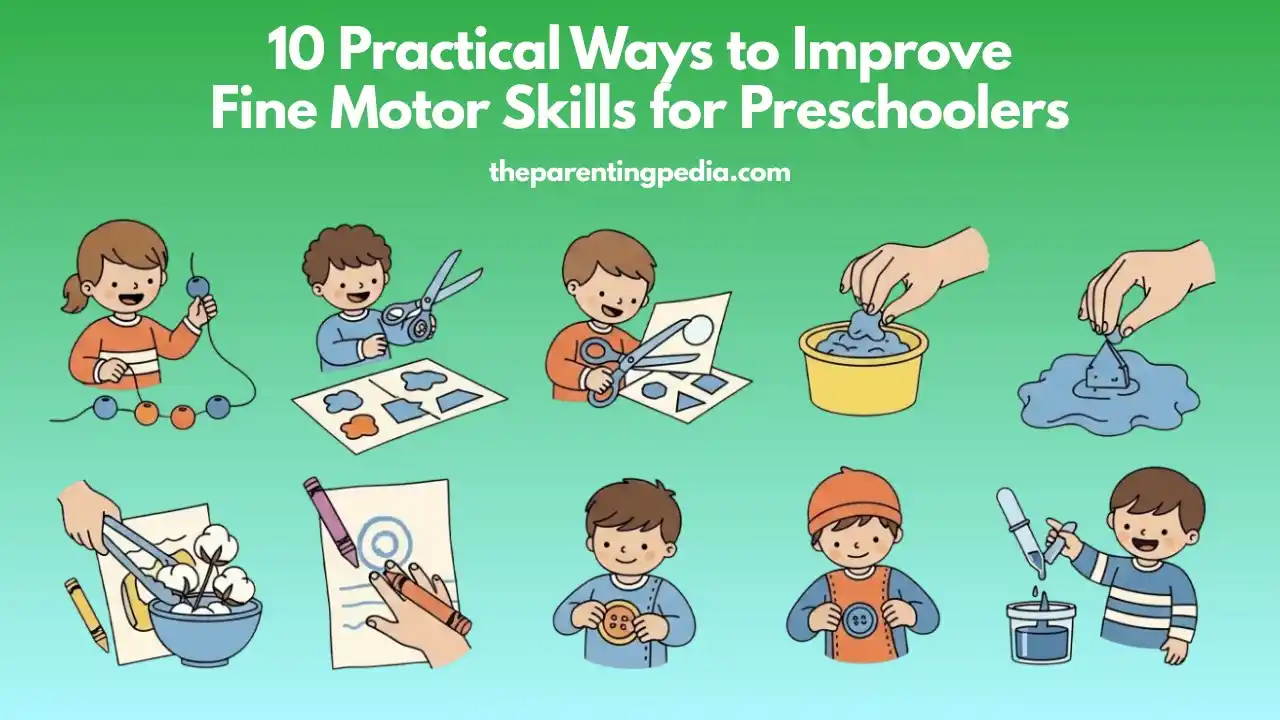
Fine motor skills play a big role in a child’s early growth. These skills help children strengthen the small muscles in their hands, fingers and wrists and prepare them for daily tasks such as writing, buttoning clothes and feeding themselves. When preschoolers get suppo13rt at home, they are more confident and ready for school activities. The following list gives parents simple and practical ways to improve fine motor skills for preschoolers through fun and playful learning.
Table of Contents
Simple Daily Play Ideas to Strengthen Motor Skills
1. Playdough and Clay Play
One of the easiest activities for building motor skills is playing with playdough or clay. Preschoolers can squeeze, roll, pinch, stretch and shape the dough to train muscles in their hands. Parents can encourage the child to make small balls, animals or pretend food. Adding tools like plastic knives, cookie cutters and rollers makes the activity even more engaging.
2. Bead Threading and Lacing
Threading beads onto string or yarn helps children work on hand eye coordination and finger control. Parents can start with large wooden beads and gradually move to smaller beads as the child’s motor skills improve. Lacing cards shaped like animals, vehicles or shapes are also a fun alternative to keep children interested.
3. Using Scissors Safely
Cutting paper with child-safe scissors is an important way to strengthen hand muscles. Parents can begin with simple tasks like cutting straight lines and then progress to cutting shapes. Offering colorful paper, magazine pictures or printable cutting sheets makes practice enjoyable. Supervision is important but parents should allow children to gain confidence by practicing regularly.
4. Finger Painting and Brush Painting
Painting helps develop both creativity and motor skills in children. Finger painting encourages children to use their fingers to move paint around on the paper. Brush painting teaches children how to grip a tool, dip it into paint and control strokes. Parents can introduce dot painting, sponge painting or water painting on pavement or other outdoor hard surfaces to add variety.
5. Puzzle Play
Puzzles help children learn how to rotate pieces, match shapes and use finger strength. Chunky wooden puzzles are great for beginners while jigsaw puzzles are better for children who are more advanced. As children move pieces around, fit them together and remove them again, their motor skills slowly strengthen.
Also Read: Essential Newborn Care Tips for First Time Parents
6. Building with Blocks
Stacking and constructing with blocks teaches children how to control their hands while connecting pieces together. This activity improves grip, pressure control and finger strength. Parents can suggest challenges such as building a tower taller than their toy dinosaur or creating a house for their favorite stuffed animal to keep the child motivated and playful while improving motor skills.
7. Drawing, Coloring and Tracing
Drawing and coloring prepare children for early writing. Crayons, markers, chalk and colored pencils all build coordination and finger control in children. Tracing shapes, letters and lines gently guides preschoolers to hold writing tools correctly. A fun approach is to ask children to draw their family, their favorite animals or their house. When parents praise effort rather than perfection, children feel more confident and improve their motor skills naturally.
8. Cooking and Kitchen Tasks
Many simple kitchen activities can support motor skills development in children. Preschoolers can help with tasks such as stirring batter, pouring ingredients, kneading dough, picking up small foods like raisins or cereal pieces and tearing lettuce or herbs. Parents can also provide child friendly utensils such as plastic tongs, measuring spoons or egg slicers to make the tasks safe and exciting. Cooking together strengthens family bonds while promoting important skills in children.
“Need a quick & reliable way to share images? 📸 Get instant shareable links for your files with zero hassle. Try now 👉 https://imagelink.online
9. Outdoor Fine Motor Play
Outdoor play also offers fun ways to strengthen motor skills. Children can pick up sticks, collect leaves, scoop sand, transfer water between containers and use chalk on sidewalks. Activities like hanging clothes with clothespins or watering plants with a small spray bottle build hand strength without children even realizing they are practicing. These tasks connect children to nature and movement while supporting healthy muscle development.
10. Everyday Self-Care Practice
Self-care tasks build independence and confidence while improving motor skills. Simple routines such as buttoning shirts, zipping jackets, snapping clips, brushing teeth and opening food containers allow preschoolers to work on their hands and fingers daily. Children may need extra time to complete these tasks and although parents may feel tempted to step in, giving children time to try on their own offers valuable learning opportunities.
How to Keep Children Motivated?
Not every preschooler enjoys the same activities. Parents can rotate different tasks each week to keep things fresh and fun. Using themes like ocean animals, dinosaurs, fairy tales or holidays can bring more excitement to practice. It also helps to allow children to make choices about what they want to do first. When children feel in control, they are more likely to stay focused and practice independently. Parents can also create simple rewards such as stickers on a chart, extra park time or choosing a bedtime story. These positive moments encourage the child to keep trying and improving day by day.
Signs of Improvement in Children
As children work on motor skills, progress may appear in many small ways such as holding crayons with more control, drawing with greater detail, buttoning or zipping with less help, cutting paper more smoothly, completing puzzles more quickly or playing with blocks or beads with increased confidence. Children grow at different speeds, so comparing them to others is not helpful. The focus should be on consistent improvement and providing a nurturing space for children to learn.
When to Seek Extra Support?
Some children need more time to strengthen motor skills and that is completely normal. However, if a preschooler avoids using their hands, becomes extremely frustrated during fine motor activities or struggles to hold small objects, parents may want to talk with a teacher or pediatrician. Early support can make daily tasks and later schoolwork easier and more enjoyable.
Conclusion
Finding enjoyable and practical activities is the key to improving motor skills in preschoolers. Whether a family uses art, outdoor play, puzzles, cooking or building toys, each experience helps children grow stronger and more independent. When parents stay patient, encouraging and playful, children gain confidence and develop the hand strength they need for future learning. Improving fine motor skills is not just about building early writing skills, it also helps children engage more independently in everyday life.
FAQ
What activities can you do to develop fine motor skills?
Activities that help develop fine motor skills include playing with playdough, threading beads, using child-safe scissors, coloring and drawing and completing simple puzzles. Children can also build with blocks, pick up small objects with tweezers or tongs, and practice buttoning or zipping clothing. Cooking tasks like stirring, pouring, or tearing herbs are also useful. These hands-on activities strengthen finger muscles and improve coordination.
What strategies are best for teaching motor skills?
Effective strategies for teaching motor skills include breaking tasks into small steps, offering hands-on practice and using fun, engaging activities like games or crafts. Repetition helps skills develop, while positive encouragement builds confidence. Providing child-sized tools, creating a supportive environment and giving children time to explore movements at their own pace also strengthen learning and coordination in children.
What strategies are best for teaching motor skills?
Help children develop movement skills.
Children can improve their gross motor skills (e.g. ability to move around a room) with activities that encourage hopping, galloping, jumping and kicking. These may include obstacles courses, music or dancing. Match activity level of difficulty to each child’s skill level.
What activities help preschool children develop their fine and gross motor skills?
If your child’s fine motor skills need a little extra help, try these fun activities.
> Play-dough and putty. Play-dough and putty are often used as part of the heavy work component of a sensory diet.
> Painting.
> Playing with sponges.
> Rice races.
> Water play.
> Gardening and planting.
Which type of play uses a child’s fine motor skills?
Early Manipulative Play. Manipulative Play in the early stages is about learning to use your hands. Fine motor skills develop through a number of different stages from sensory awareness to in-hand manipulation and tool-use. These skills are essential for the development of other activities of daily living.
Get inspired by simple yet powerful business opportunities you can explore now.

TheParentingPedia editorial team creates practical, research-informed parenting content to help parents navigate everyday challenges, child development, behavior, and family life. Our articles draw on reputable parenting and child-development sources and are reviewed for clarity, accuracy, and practical usefulness.